Forget about bloggers and multi-million dollar budgets! A new platform, Divine, already dubbed the successor to Vine, is on the horizon, and it could revolutionize the market for banner advertising in short videos. Launched with the support of Jack Dorsey, this social network not only brings back the six-second video format but also offers a unique approach to monetization, where CPM cheaper than 50 rubles could become a reality, and mass reach for pennies—the new norm. Let’s figure out how it works.
Almost ten years after Vine’s closure, its ideological successor, Divine, has emerged. This platform is supported by Jack Dorsey himself, and its team consists of Twitter veterans. The main feature is a strict rejection of AI in recommendation algorithms and a focus on human creativity.
Co-founder and CEO Evan Henshaw-Plath, known as Rabble, states: “We removed the pressure of having to create content that would be picked up by an advertising algorithm, and we found that people actually want to create.”
Key features of Divine:
Decentralized protocol: Like many of Dorsey’s recent projects, Divine is built on an open protocol, giving users greater control over their content.
Vine archive: Thanks to its close ties with Vine’s founding company, Divine can serve as an archive for the iconic app.
Community focus: During closed testing, the platform emphasized creative initiatives, such as the “Midnight Insomniacs Club.”
Taco Bell: The First Major Partner and a New Monetization Model
The main question that always hung over Vine: how to monetize six-second videos? Divine seems to have found the answer in innovative brand integration without filming. The first official partner of the platform is the fast-food chain Taco Bell, which is launching its “Decades” menu with dishes from 2016.
“Divine will not only solve Vine’s monetization problems but will also strive for innovation in collaboration between brands and creators,” states the press release.
How does this work for brands?
Instead of intrusive advertising, Divine offers brands to “creatively contribute to communities.” The Taco Bell campaign is a prime example: by using the code TACO-BELL, users get early access to the platform before its official launch on August 20. This is not just advertising; it’s a native banner in Shorts that becomes part of the user experience.
Benefits for Brands:
Low CPM: This model allows for reach without creating a video, which significantly reduces the cost per contact.
Alternative to Influencers:Don’t pay an influencer for expensive integration. Here, brands interact directly with the community.
Transparent Statistics: Open protocols can provide more transparent statistics on banner interactions.
Banner Advertising in Short Videos: Prospects for Arbitrageurs
For digital arbitrageurs and marketers, Divine opens up new horizons. Imagine: auto-placement on hundreds of videos with the possibility of getting a CPM cheaper than 50 rubles. This is real math, where pennies for a million impressions are no longer a fantasy.
This platform is ideal for:
Promoting mobile applications: Short, catchy videos and non-skippable banners.
Advertising crypto projects: A decentralized audience open to new technologies.
Infobusiness: Fast and wide reach of the target audience.
Testing hypotheses for 1000 rubles becomes not just possible, but mandatory. Instead of creating expensive videos, you can focus on creative banners that organically fit into Divine’s nostalgic atmosphere.
Frequently Asked Questions
What is Divine and how does it differ from Vine?
Divine is a new platform for sharing short videos (up to 6 seconds), which is called the ideological successor to Vine. Key differences: Jack Dorsey’s support, strict rejection of AI in recommendations, a decentralized protocol, and a new monetization model through native brand integrations, rather than traditional advertising.
How can brands advertise on Divine?
Instead of traditional banner or video advertising, Divine offers brands to “creatively contribute to communities.” The Taco Bell example shows that this can be providing exclusive access to the platform or content in exchange for brand interaction, which is essentially a native banner in Shorts.
Will CPM on Divine really be cheaper than 50 rubles?
Potentially, yes. By abandoning expensive influencer integrations and focusing on mass, organic reach through creative banners, the cost per contact can be significantly lower than on other platforms. This allows for cheap reach and mass reach for pennies.
Will Divine avoid Vine’s monetization fate?
Divine’s founders claim that their monetization model, based on deep brand integration into the community and value provision, will help avoid the problems Vine faced. A focus on programmatic video banners and non-skippable formats could be the key to success.
Conclusion
Divine is not just another attempt to revive Vine. It’s a new approach to banner advertising in video that could revolutionize the market. With an emphasis on human creativity, decentralization, and innovative brand integrations, the platform offers unique opportunities for those looking for the lowest CPM in shorts and striving for transparent statistics.
It’s time to order banner advertising and become part of this movement before pennies per million impressions become an unaffordable luxury. Stay tuned for updates and get ready to test new hypotheses – this could be your chance for “white schemes” in the world of short videos.
Banner advertising in short videos is not magic, but pure math. While influencers ask for millions for a single video, you can buy a million impressions for less than lunch in the capital. CPM below 50 rubles, reach for pennies, and hypothesis testing for 1000 rubles. Forget about bloggers and filming days: we break down how this works using TikTok, Reels, and YouTube Shorts as examples.
What is banner advertising in short videos
This is overlay advertising: a static or animated banner on top of a video. You don’t pay for content production—only for impressions. You can place a banner in TikTok or Reels through programmatic platforms that automatically distribute your creative across hundreds of videos.
The main advantage is transparent statistics. You see real reach, CPM, and CTR in real time. No inflated numbers or “gray” schemes—only white-hat platforms.
Why this is more profitable than influencers
An influencer with a million followers charges 100–300 thousand rubles for a single video. And reach is not guaranteed. banner advertising in video gives a CPM from 30 to 50 rubles. For 10,000 rubles, you get 200–300 thousand impressions. The math is obvious.
I tested both schemes: with bloggers, I burned my budget without results, and with banners, I got a steady flow of leads at a price 5 times lower. That’s why arbitrage specialists are switching to automated placement.
Where to place: TikTok, Reels, YouTube Shorts
Each platform has its own features. On TikTok, banners are shown in the recommendation feed, on Reels—inside stories, on YouTube Shorts—in the vertical player. CPM varies everywhere, but on average stays within 30–50 rubles per thousand impressions.
For info-business, mobile apps, and crypto projects, this is an ideal channel: mass reach for pennies. Automated placement on hundreds of videos allows scaling without manual work.
How to launch banner advertising without filming
You don’t need production. One static banner in JPG or PNG format is enough. Platforms will select sites and videos for your audience themselves. The whole process takes 15 minutes.
Hypothesis testing for 1000 rubles is real. Launch 2–3 creatives with different offers, look at the statistics, and scale the winner. This way, you avoid wasting your budget on ineffective formats.
Case studies: who is already making money on banners
Info-business promotes webinars with a CPM of 40 rubles. Mobile games get installs for 15 rubles each. Crypto projects collect ICO applications. All this—without a single video.
One of my clients, an info-businessman, invested 50,000 rubles and got 1.2 million impressions in a week. CTR 1.5%, lead price—80 rubles. With influencers, he would have spent the same money on one video with a dubious result.
Frequently asked questions
How much does banner advertising cost on TikTok?
CPM on TikTok ranges from 30 to 70 rubles depending on geo and targeting. On average—50 rubles. This is tens of times cheaper than with bloggers.
Can I place a banner without creating a video?
Yes, this is the main scenario. You upload a banner, choose an audience, and launch the campaign. The platform itself finds videos for display.
What statistics are available?
Transparent: impressions, clicks, CTR, CPM, conversions. You see everything in real time and can optimize the campaign on the fly.
Conclusion
Banner advertising in short videos is the lowest CPM in shorts. Forget about bloggers and filming: the real math speaks for itself. Don’t pay an influencer—buy reach for pennies. Order banner advertising today and get the first results within an hour.
In 2026, buying engagement boosting remains an accessible tool for promotion: the average price for 1000 views starts at $1.40 on TikTok and reaches $6.70 on YouTube. However, not everything is that cheap: comments and followers will cost several times more. We break down the latest Surfshark research and find out which metrics are worth buying and which to ignore.
Engagement Boosting Prices: What Costs What in 2026
Surfshark collected data from numerous engagement boosting services and found that fake activity remains “very affordable” for the average user. The cheapest type of boosting is views, while the most expensive are comments. At the same time, the price range across platforms is significant, opening up opportunities for savings.
Views: Cheapest on TikTok
The average price for 1000 views is $1.40 on TikTok and goes up to $6.70 on YouTube. This makes views the cheapest and most easily faked metric, so trusting them is the least safe. If you see a channel with millions of views but minimal engagement, that’s a reason to doubt the quality of the audience.
Comments: The Most Expensive Type of Boosting
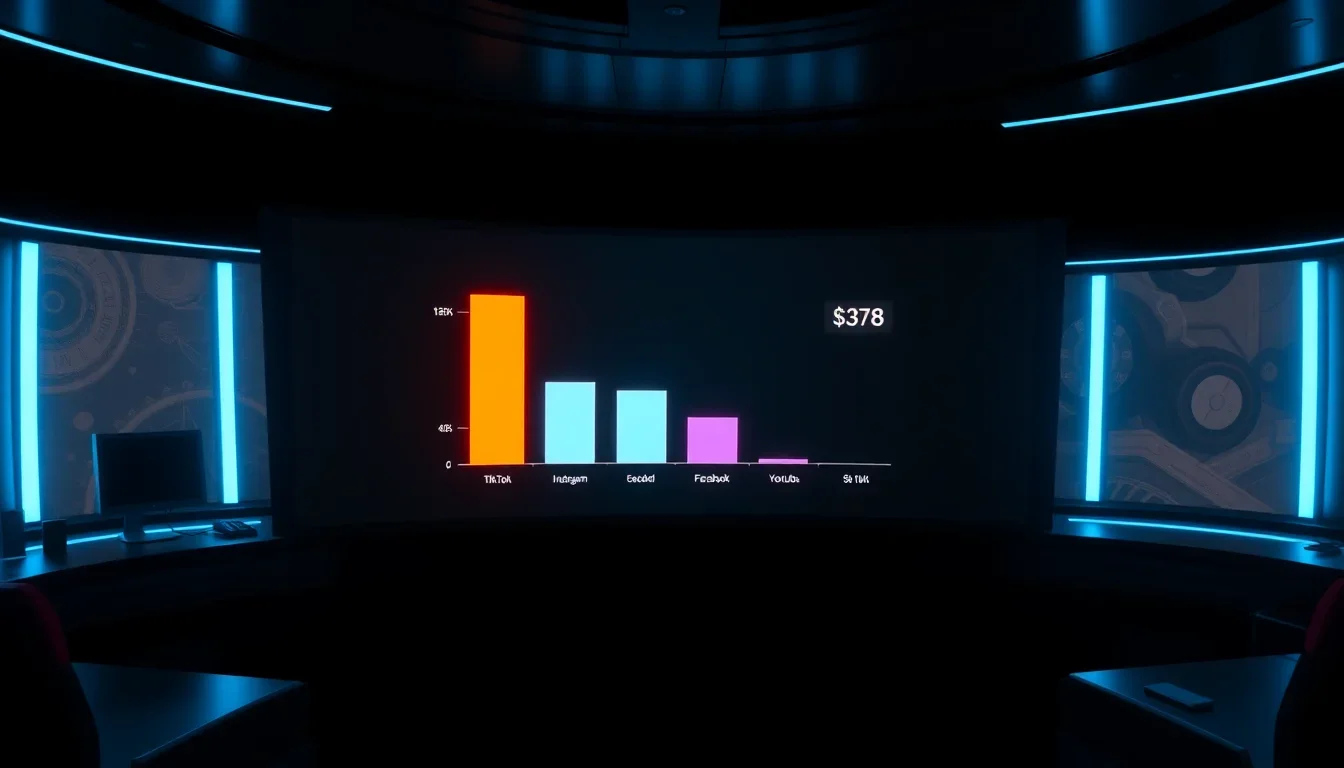
Comments are the most costly service. For 1000 random positive comments, the average asking price is:
$93 on YouTube
$104 on Instagram
$140 on TikTok
$287 on Facebook
The high price is explained by the complexity and labor intensity of creating fake comments. Facebook is likely the hardest platform for boosting, while YouTube is the easiest. This is why the presence of real comments is considered a more reliable quality signal than views.
Reposts and Shares: TikTok Leads in Price
For 1000 reposts on TikTok, the average asking price is $68, on Instagram and Facebook — $37 each, on X — $27, and on YouTube — only $17. YouTube’s strong recommendation algorithm makes sharing less significant, so it’s cheaper. For marketers, this means: if your goal is virality, TikTok will be the most costly but also the most effective channel.
Likes and Followers: Average Price Range
Likes occupy a middle position: from $10 to $25 per 1000. Followers on Facebook, TikTok, Instagram, and X cost $14-20 per 1000. But YouTube is a clear outlier: fake followers there cost an average of $78 per 1000, which is 4 times more expensive than on other platforms. The reason is YouTube’s unique system, where the number of subscribers is considered an achievement and directly affects monetization.
What Does This Mean for an Arbitrage Specialist?
The numbers show: views are the cheapest and least reliable way to boost, while comments are the most expensive and relatively reliable. If you see a channel with lots of views but few comments, that’s a reason to think about traffic quality.
For testing hypotheses, buying views is cheaper than launching a full campaign, but remember: platforms remove bots by the billions. Boosting can give a false sense of progress, so always compare costs with real conversion.
Frequently Asked Questions
How much does 1 million banner impressions cost?
It depends on the platform, but CPM is usually above $50. Boosting views is cheaper but doesn’t bring real users. Banner advertising, even at a high price, brings real people who can take a targeted action.
What CPM should be considered profitable?
A profitable CPM is one that pays off. Compare the cost per real engaged user, not just per impression. If 1000 impressions cost $5 but conversion to sales is zero, that’s worse than $50 per 1000 impressions with a 5% conversion.
What’s cheaper: banner or influencer?
A banner is usually cheaper in terms of CPM, but an influencer provides audience trust. Calculate unit economics: cost per targeted action. With an influencer, the cost per follower or lead may be lower despite the high price for integration.
Should I use AI for video clipping?
AI clipping is cheaper than manual work, but check the quality. For mass posting, AI videos can be a budget alternative, but they rarely generate high engagement. Use AI for rough work, and leave final editing to a human.
Conclusion: Count Money, Not Likes
Boosting is a tool, but it doesn’t replace a real strategy. If you want to test hypotheses cheaply, use boosting for initial validation, but always evaluate ROI. Don’t fall for pretty numbers; check statistics and calculate how much money each spent ruble brings.
Quality content and organic growth are the best way to save on boosting. Invest in what works for the long term, not in instant illusions of popularity.
Start small: test boosting on one platform, measure real conversion, and only then scale your budget. Remember that sustainable growth is built on audience trust, not bots.
Banner advertising in Shorts and other short video formats is becoming a powerful tool for brands seeking massive reach without huge budgets. The restaurant chain Sweetgreen proved this in practice by launching video banners on the Atmosphere TV platform during the 2026 FIFA World Cup. This case is a vivid example of how banner advertising in video can draw attention to a product and increase foot traffic to offline locations.
Why Banner Advertising in Video Proved Effective
Sweetgreen launched new wraps in May 2025, and the World Cup became the perfect moment to promote them. Vice President of Marketing Katie Sheehan noted that portable dishes like wraps are better suited for sports content than salads. Video banners allowed the brand to integrate into the atmosphere of sports broadcasts without resorting to traditional influencer videos.
The campaign was part of a broader wraps promotion, including social media and TikTok. However, it was the video banners on Atmosphere TV screens that provided message repetition, which, according to Sheehan, is critical for ad recall.
How Banner Advertising in Video Works: Technology and Reach
Atmosphere TV positions itself not as a DOOH platform, but as connected TV for people outside the home. The technology allows placing banners in video on screens in venues such as bars and restaurants. This enables brands to target audiences within a 2-3 mile radius of their locations, which is more effective than regional DMA buys (up to 10 miles).
For Sweetgreen, this meant focusing on key markets: Chicago, Los Angeles, Boston, and Washington. This approach avoided a “broad national buy” and concentrated on areas with high density of the target audience.
Campaign Results: Numbers and Statistics
According to the brand, audiences who saw the campaign on Atmosphere TV screens visited Sweetgreen physical stores 113.9% more often than those who did not see the ad. This proves that video banners can be an effective tool for driving traffic to offline locations.
It is worth noting that in July, due to a cyclospora outbreak, foot traffic dropped by 4.7% compared to the average Saturday figure. However, the campaign was not a reaction to this incident, Sheehan emphasized.
“Repetition over time is a good way to reinforce a message, especially when the ad is tailored to the environment,” she added.
Why Banner Advertising in Video Is an Alternative to Influencers
Banner advertising in short videos, such as YouTube Shorts, TikTok, and Reels, offers brands cheap reach and transparent statistics. Unlike influencers, where the cost per million impressions (CPM) can be high, video banners allow for CPMs cheaper than 50 rubles. This is especially relevant for info-businesses, mobile apps, and crypto projects, where mass reach without big budgets is important.
Programmatic video banners automate placement across hundreds of videos, saving time and money. Hypothesis testing can be done for as little as 1000 rubles, without spending on production. This makes banner advertising in video attractive for small and medium businesses.
Frequently Asked Questions
What is banner advertising in video?
It is overlay advertising that appears on top of video content on platforms like YouTube Shorts, TikTok, or Reels. It can be static or animated and is often used for quick audience reach.
How to place a banner on TikTok?
To place a banner on TikTok, you can use the platform’s official advertising tools or contact partners that offer automated solutions for video banners. It is important to set up targeting to reach the desired audience.
What is the cost of CPM in banner advertising?
CPM (cost per thousand impressions) can be below 50 rubles, especially when using programmatic platforms. This makes advertising accessible to small businesses and startups.
Conclusion
Banner advertising in short videos is an effective way to get massive reach for pennies, without resorting to expensive influencers. The Sweetgreen case shows that even large brands use this tool to draw attention to new products. If you want to test video banners, start with small budgets and analyze the results.
The real math speaks for itself: a banner without production can bring traffic and sales. Don’t pay an influencer until you’ve tried this format. Start small—and you’ll see how banner advertising in Shorts can become your main customer acquisition channel.
Banner advertising in viral videos is one of the most affordable and fastest-growing formats of internet marketing in 2025. Instead of paying a blogger to film a separate video, you place your banner on top of already popular content: memes, movie clips, game streams, or short educational facts. This approach allows you to achieve massive reach at a price significantly lower than traditional blogger integrations.
What is banner advertising in viral short videos?
Banner advertising in viral short videos is a paid placement of a noticeable banner on top of an already finished video. This could be a movie clip, a meme, a stream, an educational fact, or other easy-to-watch video that quickly gains views.
Unlike classic blogger placements, the company pays not for creating original content, but for showing its banner on a multitude of popular short videos across the web and on vertical video platforms.
This approach has become more noticeable due to the growth of online video. According to an IAB report for 2025, internet video is expected to account for nearly 60% of TV and video advertising spending in the US in 2025. The MAGNA forecast summary also indicates that advertising spending on short videos in 2025 is expected to reach $80 billion.
The main reason for interest in this format is affordability. Banner advertising in short videos can be tested not only by large companies but also by advertisers with medium budgets: VPN services, apps, online stores, educational products, gaming projects, and online gambling projects.
How banner advertising differs from classic blogger placements
Classic blogger placement revolves around the author. The company pays the blogger to film a video, talk about the product, show the service, or embed a mention in their video. This approach can generate strong trust, but it is expensive, slow, and difficult to scale: each author requires separate approval, a separate budget, and separate result verification.
Banner advertising in short videos works differently. The company does not pay for creating the video itself. It places a banner on top of an already finished video that is easy to watch and quickly gains views. These could be movie clips, memes, stream fragments, educational facts, gaming moments, funny compilations, and other short videos where the viewer does not feel a heavy advertising pitch.
Therefore, banner advertising in short videos is closer to buying impressions than working with a single blogger. The advertiser gets a repeatable form of advertising: the same banner can be placed on a large number of videos, channels, and pages. This makes the format convenient for tests, quick launches, and campaigns where reach, frequency, and low cost per impression are important.
In practice, two main types are most commonly used: a regular banner over the video and a character in branded clothing. Other options exist, but for an advertiser studying the format for the first time, these two types are the most important.
1. Classic Banner Over the Video
A classic banner is a prominent overlay placed on top of the video. It usually contains a logo, a short message, a promo code, a call to go to the website or install the app. The banner can be at the bottom, side, or in another safe area of the frame where it does not cover the face, subtitles, important details, or the platform’s own buttons.
This type works well for videos where the main interest is created by the video itself: a funny moment, a movie scene, a gameplay clip, a short fact, or a vivid reaction. The viewer watches the video while the banner remains in their field of view. This is the main strength of the format: the ad does not require a separate storyline but constantly stays alongside the video.
The classic banner is often used by VPN services, apps, online stores, and online gambling projects. For these categories, frequent impressions, a simple message, and a quick call to action are important: download, register, get a promo code, open the site, or learn the terms.
2. Character in Branded Clothing
The second type is a character wearing a branded T-shirt, hoodie, cap, or other clothing with the company logo. Such a character can stand in the frame, react to what is happening, point at the video, hold a sign, or be part of the visual presentation. Essentially, this is also banner advertising, but it looks not like an overlaid banner but like an element of the video itself.
This option is especially often used on TikTok. The reason is that explicit ad overlays can be recognized by the platform as a commercial indicator. TikTok’s official help page lists ad overlays, links, promo codes, and logos as signs of commercial content; if the commercial nature is not properly disclosed, the video may lose the right to appear in the recommendation feed. At the same time, TikTok itself states that correctly marking commercial content should not harm recommendations.
A character in branded clothing solves this problem more subtly. The ad remains noticeable but looks more natural. This approach helps avoid overloading the video and reduces the risk of the viewer immediately perceiving it as blatant advertising.
Where Such Advertising Is Shown
Banner advertising in short videos is most often used where videos quickly gain views: on TikTok, Instagram Reels, YouTube Shorts, and on networks of pages that publish compilations.
On TikTok, they more often use a character in branded clothing or a very neat visual presentation, because the platform is attentive to commercial content. On Instagram, advertisers more often use short entertainment videos, memes, lifestyle videos, and clips where the banner does not interfere with viewing. On YouTube, the format can work on short videos, especially if the video is related to games, movies, facts, sports, or entertainment compilations.
A separate part of the market is clip networks. These are pages and channels that release short fragments of movies, shows, podcasts, streams, gaming moments, interviews, memes, and educational compilations. For an advertiser, such a network is convenient because there is no need to negotiate with each author separately. You can buy placement on a large number of videos at once and get a clear volume of impressions.
How Banner Advertising Is Purchased in Short Videos
Most often, the format is purchased using a cost-per-thousand-impressions model or in packages for a certain number of views. In Russian-language practice, advertisers often discuss the price per million impressions because it is easier to calculate large volumes.
The launch process usually looks like this. First, the advertiser gives a task: country or region, video topic, prohibited topics, example of the desired banner, logo, text, promo code, link, and target action. Then the executor selects videos or a network of pages, agrees on the banner’s appearance, and launches the placement.
After the ad runs, the advertiser receives a report: how many impressions there were, on which platforms the videos were placed, what the price was, which countries or regions participated, how many clicks or registrations were achieved, if they were tracked. For apps, installations and registrations are important; for online stores, clicks and purchases; for VPN services, registrations and payments; for gambling projects, only legally permitted actions and only in allowed countries.
This principle can be linked in more detail to the concept of cost per thousand impressions, but for the advertiser, it is better to explain it simply: the company pays for the volume of impressions, not for filming a separate author’s video.
How Much Does Banner Advertising in Short Videos Cost
The price strongly depends on the country, volume, topic, video quality, and placement requirements. In the CIS, banner advertising can start from about 30–35 dollars per million impressions and go up to 60–70 dollars per million impressions and higher. This is a guideline, not a single market rate.
The main rule is simple: the larger the volume, the cheaper the price per million impressions. If an advertiser buys a small test, the cost is usually higher. If the campaign runs for large volumes and a long time, the price may decrease.
The topic also influences the price. Simple consumer goods, apps, or entertainment products may cost less. More sensitive categories—such as online gambling projects, finance, or controversial niches—usually require more careful selection of videos, checking rules and restrictions, so the price may be higher.
For what tasks the format is suitable
Banner advertising in short videos works well where the advertiser needs quick impressions, low entry cost, and a simple message.
For VPN services the format is convenient because the offer can be explained in one line: connection protection, access to needed sites, discount, trial period. The banner does not require a complex plot and can be shown on a large number of entertainment videos.
For apps the format works as a quick way to attract installs. The banner can show the app name, a short benefit, and a call to download. This works especially well if the videos are close to the audience’s interests: games, study, money, sports, habits, productivity, travel.
For online stores banner advertising is suitable for sales, promo codes, seasonal offers, and individual products. It is important that the message is short: discount, product, promotion period, link or promo code.
For online gambling projects the format can be effective but requires strict rule checking. You cannot place ads next to videos for minors, mislead viewers, or violate the laws of a specific country and platform rules. Such a launch must go through legal review and age restriction where required.
Platform rules and ad disclosure
Banner advertising in short videos must comply with platform rules. You cannot claim that this format is “always allowed”: rules change, and requirements depend on the country, topic, and placement method.
On TikTok, when publishing a video promoting a product, service, or company, you need to include commercial content disclosure. TikTok’s help directly states that ad overlays, logos, links, and promo codes may be considered signs of commercial content.
On Instagram, commercial posts must use the paid partnership tag if the video is related to a company and is posted for compensation. On YouTube, creators must mark paid promotion in video settings; YouTube’s rules directly apply to short videos as well.
For the advertiser, this means one thing: ad disclosure must be planned before launch, not after. You need to determine in advance who publishes the video, who places the tag, what the banner looks like, which categories are prohibited, and what to do if the platform changes the rules.
Short videos are watched quickly. The viewer almost immediately decides whether to stay or scroll further. Therefore, the banner must be clear from the first seconds: a logo, one short message, one call to action.
TikTok’s marketing research shows that 50% of advertising impact occurs in the first 2 seconds, and the first 6 seconds provide most of the effect in terms of ad recall and brand awareness. This does not mean the banner must be huge. It means it must be noticeable, simple, and not interfere with viewing the video.
A good branded overlay does not compete with the video. It does not cover the face, subtitles, or key object. It works as a constant reminder: the viewer watches the video, and the company gains contact with the audience.
Frequently Asked Questions
Is banner advertising in short videos the same as influencer placement? No. In influencer placement, the company pays the creator for producing or publishing a video. In banner advertising, the company pays for displaying a banner over already existing short videos: movie clips, memes, streams, facts, and other videos that easily gain views.
Is such advertising allowed on TikTok, Instagram, and YouTube? Currently, commercial placements on these platforms are possible if rules are followed and advertising is properly disclosed. However, rules may change. It is especially important to note that TikTok considers ad overlays, logos, links, and promo codes as signs of commercial content, and improper labeling may result in the video losing access to recommendations.
How much does banner advertising in short videos usually cost? The price heavily depends on the country and volume. In the CIS, the benchmark can start from $30–35 per million impressions and go up to $60–70 per million impressions or higher. The larger the volume, the lower the price per million impressions typically is.
Who buys this format? It is most often purchased by VPN services, apps, online stores, gaming projects, online gambling projects, agencies, and advertisers who need cheap mass impressions. Recently, more regular companies have been looking into this format because the entry budget is lower than for many influencer placements.
What is better: a classic banner or a character in branded clothing? It depends