Stanley uses AI for processes, but not for creative in advertising
Lifestyle brand Stanley 1913 actively uses artificial intelligence for internal processes but refuses to use it in advertising creatives seen by consumers. This was stated by Chief Brand Officer Kate Ridley. While many companies strive to automate everything—from media buying to content production—Stanley draws a clear line: AI is acceptable everywhere except what the customer sees.
Stanley’s position on AI in marketing
According to Ridley, the company “has not used AI for external, consumer-facing creative” and does not plan to do so in the foreseeable future. While many brands aim to automate everything—from media buying to creative production, citing speed and cost savings—Stanley draws a clear line: AI is acceptable everywhere except what the customer sees.
Where AI is applied
Artificial intelligence is used in the stages of ideation, concept, and pre-production. “AI takes over a lot of manual work in our processes and is useful in personalization, but I don’t see us using it in a creative sense,” Ridley emphasized. This policy applies even in the new campaign for the Vitalized Temp bottle.
Focus on in-house resources and creators
Instead of outsourcing creative work, Stanley invests in its own team: internal departments in North America and Europe, as well as its own photo studio, which serves as the brand’s content engine. The company has significantly increased its budget for working with content creators.
“We’ve returned to a more traditional approach—seeding and providing the product to more creators for authentic connections. For Gen Z, this is important: they can smell fake paid relationships from a mile away,” Ridley noted.
Stanley is developing internal restrictions on AI usage. “We have different creative centers in regions that create their own marketing tools. We need to ensure that if they use AI for personalization, they do it consistently with the same boundaries,” Ridley explained. The company does not rule out completely abandoning AI, but for now, it focuses on human creativity.
Frequently asked questions
Does Stanley use AI to create advertising?
No, the company fundamentally does not use generative AI in content that consumers see.
Where is AI used at Stanley?
AI is used in internal stages: ideation, concept, personalization, and process optimization.
How does Stanley promote products without AI?
The brand relies on its own creative teams and work with content creators through authentic collaboration.
Conclusion
Ultimately, Stanley chooses a balance: AI efficiency inside the company and human creativity in what customers see. This approach could serve as an example for other brands seeking a middle ground in technology use. If you want to learn more about brand strategies in the AI era, subscribe to our updates and stay informed on the latest trends.
In the world of developing AI agents, there are moments when the system nearly makes a fatal error, passing off false success as genuine. Recently, our AI agent, which is building the vecmory memory system, almost reported a brilliant result that turned out to be a mirage. At the last moment, it consulted its own memory and found a record from a previous session: this very idea had already been tested on real data, and it had failed. The agent stopped itself before sending the report. This is not a promotional sketch—it’s a log. Below are two such logs in a row, and in the second one, memory forced us to discard a feature we were proud of. We are writing vecmory—”memory by meaning” for an AI agent. This is not about vector search (everyone has that), but about ensuring the agent doesn’t step on the same rake twice.
Scene One: The Router That “Showed 0.98”
In one session, the agent proposed improving search result ranking. The idea: create a router that, based on a query, decides whether to rank using pure cosine similarity or a graph method (Personalized PageRank). It built a synthetic benchmark. The correlation of the predictor with the ideal choice was 0.98. Nearly perfect. All that remained was to report and merge.
Before reporting, the agent performed a recall from its own memory. And it retrieved a record from a previous session: this very idea had already been tested on real data—and it had failed. A reasonable question: why did it even start building it if the memory was in place? Because recall is semantic, and what it retrieves depends on the query. At the start, the query was broad—”improve ranking”—which surfaced top-level central notes about ranking in general, while the specific note “this particular router was already tested and failed” was buried beneath them. It surfaced only when the working context narrowed to something specific—”cos-distribution router, PPR vs. cosine, 0.98″: recall on this text finally caught it. The memory wasn’t silent—it emerged exactly when the query became precise enough to retrieve it.
Synthetic data is only as honest as synthetic embeddings are. And for the multilingual MiniLM we use to compute vectors, cosine similarity lives in a completely different geometry than it does on synthetic data. We re-measured this directly on our live memory corpus (246 nodes) while writing this article: unrelated, random pairs yield an average cosine of 0.53 (p5–p95: 0.24–0.76); actual nearest neighbors average 0.80 (p5–p95: 0.57–0.91); while on synthetic random vectors, unrelated pairs sit at 0.00 (±0.08). The difference is immediately visible. On synthetic data, “similar” is separated from “not similar” by a chasm—any reasonable threshold cuts cleanly. On real data, the clouds of “neighbors” and “random” overlap: random pairs at the upper percentile (0.76) climb higher than neighbors at the lower percentile (0.57). A threshold that works like a scalpel on synthetic data passes right through the cloud of random noise on real vectors and separates nothing. The memory record was exactly about this: real embeddings have a high compressed baseline cosine, and an absolute threshold from synthetic data cannot be transferred—rely on rank (top-k), not on a threshold. The agent read its own note and killed the idea—before writing “done, correlation 0.98.”
Scene Two: The Agent Threw Away Its Own Feature
Scene Two: The Agent Threw Away Its Own Feature
The second case follows the same pattern, but it hurts more: memory forced us to discard a feature we had already praised in the README. By default, vecmory ranked results not only by cosine similarity but also with an added “importance” of the node — its in-degree in the graph (how many records reference it). The logic was elegant: a central, frequently mentioned fact would surface higher. We baked this into the default. Then we measured it. Not recall@k (which is about search precision), but specifically the quality of the rank, on real pairs of “query → correct answer”: pure cosine: MRR 0.81; our “smart” blend with importance: MRR 0.41. Importance drowned out precise answers. A rare, specific fact that no one references would sink beneath commonly used “hubs.”
Then it gets more interesting. On a synthetic “aged” graph with explicit hubs, the opposite happened: cosine buried the hub (MRR 0.033), while importance pulled it up (to 1.0). In other words, the sign of the benefit from importance depends on the query intent: for “give me the exact fact,” it harms; for “tell me about this topic in general,” it helps. There is no single static weight that wins for both classes. We tried four ways to reconcile the signals — weighted sum, gate, RRF, and PPR — and arrived at an unpleasant conclusion: the problem isn’t the mixing formula, but the signal itself. Global node importance is a prior of popularity, not relevance. The conclusion for the default was clear: for our primary use case (point recall), the best rank is pure cosine. So we removed importance from the default ranking — our own feature, which we had already written about in the README. We kept the graph method (query-seeded PPR) as an option, not the default: it honestly pulls up hubs for broad queries and fairly loses to cosine for point queries.
What We Actually Learned About “Importance”
If global popularity (in-degree) failed as a signal, what is the right signal? We arrived at a surprisingly obvious answer: what matters is not what has many references, but what a person has repeatedly corrected. And here, the value proposition becomes honest. We are not selling “graph memory” (yet another commodity). We are selling: the agent stops hitting the same rakes you’ve already fixed.
Both episodes could easily be chalked up to luck. But when you clean out all sorts of junk in memory long enough (we’ve been developing vecmory entirely within vecmory itself), you see: these are not fluctuations, but several stable laws. Now comes a summary — three revelations, without any “once upon a time I got caught” stories.
The Rule of “Check Before ‘Done’”
Memory that confirms what pleases you is not memory, but an echo. Memory acquires exceptional value when it contradicts its author. The rule of “Check Before ‘Done’” canceled both the router (scene 1) and our long-awaited feature (scene 2) — one mechanism, different victims. Because on a symptom query, memory retrieves via causal-temporal edges (caused_by — “due to”, followed_by — issue→PR) not “similar words,” but the specific cause and past fix. Flat top-k cannot do this — that is what “connecting the dots” means.
And this is precisely measurable, not by eye. We took a live ticket repository (4299 nodes: 1993 issues + 2306 PRs) and a markup we didn’t invent ourselves: the standard GitHub pattern `Closes #N` in the PR body — ready-made pairs of “symptom → its fix”, extracted with bare regex, without any LLM. On 300 held-out symptom queries, pure cosine retrieves the correct PR fix in 38% of cases (sometimes the fix shares vocabulary with the symptom), while traversing the causal graph achieves 87%. The 49-point difference is exactly the contribution of the graph on top of word similarity. The measurement script is in the repository, and the number is reproducible with a command.
What consistently gets in the way — every time, not just once
First, the agent does not call memory on its own: without a forced hook, recall is not invoked systematically, every session. Memory that requires you to “remember to ask” doesn’t work — the trigger must be deterministic, not the agent’s goodwill. Second, an absolute cosine threshold is not transferable anywhere: synthetic → real, yesterday → today, one model → another, broad corpus → narrow (on a demo corpus of a single domain where “everything looks alike”, cosine almost stops distinguishing). The cure is always the same: rank by top-k, don’t guess thresholds.
The law: “Frequent signal drowns out rare but valuable”
One law explains half of our rake-stepping: frequent, dense signal drowns out rare but valuable. It surfaces in three typical places: global node popularity drowns out precise rare facts — and fails all four ways to mix it into the rank (weighted sum, gate, RRF, PPR); hub nodes bury specific facts in the cosine rank, and vice versa; dense auto-similar_to edges drown out rare causal caused_by — which is why causal recall has to be moved into a separate isolated mode. When you see this as a single law, the cure is obvious: rare-but-valuable cannot be mixed with frequent-but-common — extract it with a separate mechanism (isolated traversal, graph-aware rank), don’t hope it will surface on its own in the general top-k. The same law underlies our importance signal: what matters is not what is popular, but what a person has fixed repeatedly.
Frequently Asked Questions
What is vecmory?
Vecmory is a semantic memory system for AI agents, based on vector search and a causal-temporal graph. It allows the agent to remember facts, recall them by meaning, and link events to avoid repeating past mistakes.
How is vecmory different from ordinary vector search?
Vector search finds records that are similar in meaning but does not account for causal relationships. Vecmory adds graph memory: in addition to cosine similarity, it traverses “cause-effect” and “temporal sequence” edges, allowing it to find not just similar but contextually relevant facts — for example, a past failed experiment.
Why did you remove node importance from ranking?
Measurements showed that adding global popularity (in-degree) reduces MRR from 0.81 to 0.41 on point queries. The topic buries rare precise facts under a mass of popular but irrelevant ones. For the main use case (exact recall), pure cosine proved better.
We use real data: a GitHub repository with 4299 tickets, where issue→PR pairs are extracted by the pattern Closes #N. On 300 symptom queries, graph recall gives 87% accuracy versus 38% for pure cosine. All scripts are open and reproducible.
Conclusion
Both stories are about the same thing: discard the mantra “memory helps the agent” and realize: here are two logs where memory worked against us—against our optimism and our own feature. An agent with memory differs from an agent without memory not by knowing more, but by being able to catch itself on “bingo!” a moment before a treacherous report—because last time it already happened and already failed. And by being ready to discard its own feature when facts show it is worse. This is the first article of three. Next: “Why We Didn’t Write Another Bad CaRMa”—about how a hyper-universal data model usually turns into a disaster, and what we did to prevent ours from doing so. And “Building ANN by Hand—When It Was Worth It and When It Wasn’t”—an open analysis of why we wrote HNSW ourselves and in which cases the correct answer would have been “take pgvector and don’t show off.” If you want your agent to stop stepping on the same rake, try vecmory: start with our documentation or fork the repository. The memory that objects is the only one worth trusting.
Forget about one hero video for a million. A beauty campaign in 2026 is a hero + 14 cuts, a creator brief with an FTC disclaimer, a retail media plan for Sephora and Ulta, a PR kit, and a media plan that needs to be defended before the budget committee by Monday. The paradox: consumers want high-quality video but consume it in short formats. One glossy video will no longer take off. You need a creative strategy that considers multiple touchpoints: expensive YouTube pre-roll, an honest review from a creator on TikTok, and a purchase via Amazon retail media. Below is not theory, but a working playbook for achieving ROAS while maintaining brand image.
Phase 1: Strategy and brief (positioning, KPIs, channels)
Two weeks. One if it’s a sequel. The output is three documents: a positioning brief (what the product does, for whom, category claim, legal restrictions), a channel and budget plan (paid social, retail media, creators, OOH, PR), and a KPI tree linking brand metrics (reach, share of voice, aided recall) with performance metrics (ROAS, CPA, sell-through).
The main mistake is letting performance metrics dictate the creative. A campaign measured only by ROAS will produce hook-heavy content without branding. Both types of metrics should be on the same dashboard. According to Supliful, Instagram engagement is 1-3%, TikTok is 5-15%, email open rates are 20-30%, NPS is 50+. Build a KPI hierarchy: at the top is the business goal (conversion or new customer acquisition), below are supporting metrics: CPM for reach, CPC for traffic, ROAS for conversion.
A campaign aimed at brand equity is willing to pay a higher CPA, as the long-term value of brand search or aided recall growth outweighs short-term costs. Conversely, a retail media launch requires aggressive CPA and basket conversion. In the budget, separate spending on brand and performance into different columns, possibly with different sub-teams.
Phase 2: Concept and creative direction
One week. Two for a flagship. This is a deck: mood boards, three key art directions, tonal references, and a one-page description of each direction with talent archetypes. The production studio hasn’t been chosen yet. Calculate budgets based on the selected concept, not the other way around.
A typical failure: a concept that ignores cuts. If you shoot a 60-second hero with a panorama and product reveal at the end, you won’t make a clean 6-second hook for paid social. Build a modular structure at the concept level: hook frame, product hero, benefit, ending. Each element should be readable separately in a 9:16 format. Examples of modularity are in the article “30 best beauty ads, analyzed by an editor.”
When writing interpretations, explicitly describe the “hook-frame” — the first 1.5 seconds for each option. A 6-second Instagram bumper requires a completely different hook than a 60-second YouTube breakdown. Ensure moodboards include references of how the product looks on mobile devices (thumb-stop ratio) versus desktop. If product reveal is lost in a wide shot, the concept fails the mobile test. Always test the creative against the “mute rule”: if the visual doesn’t convey the benefit within the first 3 seconds, the concept must be reworked before shooting.
Phase 3: Casting (Model, Creator, Founder)
Two to three weeks if casting from scratch. In a typical wellness-beauty campaign, the brand hires real people: a hero face for the brand film, 3-5 creators for paid and organic campaigns, sometimes a founder for behind-the-scenes. Each has separate agreements, image rights windows, and rate cards.
Skin tone diversity is part of the creative process. The hero should represent 4-5 different Fitzpatrick types. Find these models on day one, otherwise retouching later will be noticeable and may harm the brand. In each talent release, specify the rights term (paid only, paid and organic, paid and outdoor advertising), territory, exclusivity, and exclusivity period. Creator releases also include FTC disclaimer wording (#ad), and the brand retains all enforcement rights. See the FTC endorsement guide.
Phase 4: Production (Lighting, Skin Tone, Budget)
Two to three weeks of pre-production, one to three days of principal photography. Before production begins, prepare a call sheet and tech package including lighting plans. Soft top light flattens skin and hides textural claims like “smooths.” Use directional key light with controlled fill to preserve skin texture and let the product speak for itself.
The color pipeline is established at this stage, not in post-production. Shoot a LUT and load it onto every monitor so the director and brand team see the final look on set. Use calibration cards (ColorChecker SG + Pantone SkinTone) and shoot them in every setup — this eliminates color drift on day two of editing. Tag each shot: H (hero), C30, C15, V (vertical only), U (UGC repurpose). The list should be with the operator, brand team, and editor.
Phase 5: Editing and Cuts (Hero, 30s, 15s, 9:16, Paid Social Variants)
Two to three weeks. Most campaigns lose time here. Standard package for a national campaign: beauty color grading standard (skin tones, packaging, brand look — Glossier warm peachy pastel, CeraVe cool clinical neutral, Charlotte Tilbury rich glamorous, Fenty Beauty highly detailed skin tones with contrast balance, Dove soft high-key clean, Rare Beauty natural warm glow) — all locked in primary looks and approved for all variants. Grade the hero first, lock the look, and match all cuts to it. Independent grading of variants is why Reels ads end up 5 degrees warmer than YouTube pre-roll.
Most views on paid social are without sound. Built-in subtitles with a fixed style are applied to every vertical and square cut. The editing process is a conveyor belt, not a linear process. Versioning (resizing, subtitles, end-card localization) is the main time consumer. Create a strict “hero-master” workflow: define the primary asset, lock color correction, mix audio, and broadcast these settings to all cuts. Any change to the hero (timing, color) should automatically propagate to the 15-second social asset. Use a centralized project management tool for feedback to avoid the “feedback loop from hell,” where stakeholders request changes to the hero that contradict approved cuts. Evaluate each change based on its impact on the full list of deliverables.
Phase 6: Distribution (Organic, Paid, Retail, PR)
One to two weeks of sequential launch, then ongoing. Working sequence: PR and earned media — 48 hours before the campaign is shown to consumers. Organic posts — at 9 AM local time on launch day. Paid impressions — 30 minutes after organic (so the algorithm has time to read data). Retail media — on the same day. Creator content — in waves over three weeks. Most tests show that boosting a creator post as a Spark Ad (with permission and disclaimer) outperforms a similar brand account post.
Most briefs underestimate retail media. Sponsored placements on Amazon, Sephora, and Ulta convert at the moment of intent. Allocate 15-25% of the paid budget to these channels — and you will likely see the best ROAS. Every weekly report should have two columns: brand metrics (reach, frequency, share of voice, aided recall, sentiment, NPS, organic mentions) — slow trends, evaluated monthly with a 4-8 week window; performance metrics (CTR by placement, CPC, CPM, ROAS by channel, retail sell-through, repeat purchases at 30 and 60 days, email subscriptions, promo code usage) — daily trends. Healthy site benchmarks from Supliful: sessions of 3+ minutes, 4+ pages per session, bounce rate under 40%. If traffic bounces at 60%, the hero likely doesn’t match the landing page or targeting is too broad.
Total campaign duration — 8-12 weeks. Compress to 8 if there is a sequel, stretch to 16 for a global flagship. Risk windows: weeks 4-5 (casting delays), weeks 8-9 (multiple versions of aesthetic ad spots). Lock down two lists (casting and versions) early in the planning phase.
Frequently Asked Questions
How much does a beauty campaign cost?
Cost varies from ,000 to 0,000+ depending on scale, casting, and number of cuts. CPM on short videos can be cheaper than 50 rubles if using programmatic placement and auto-placement across hundreds of videos.
How long should a hero video be?
30-60 seconds for YouTube pre-roll, 15 seconds for Instagram Reels, 6-9 seconds for TikTok Spark Ads. The length is determined by the channel and the goal.
Is a creator needed in every campaign?
Yes, usually for a signal in paid social. In most Meta/TikTok A/B tests, advertising from a brand account loses to the creator style. Hire 1-3 creators, launch their content as Spark Ads or Branded Content with FTC disclosure.
Who makes the edits?
If edits are eating up the producer’s calendar, send the brief and source files to professional editors, for example, Vidpros. They will create a full set of edits (hero/30s/15s/9:16/retail versions) at a fixed monthly rate with color consistency across all versions.
Conclusion
The real math of a 2026 beauty campaign is not about one video, but about a system: strategy, modular creative, proper casting, assembly-line editing, and separate distribution with brand and performance metrics. Want cheap reach without filming? Use overlay banner ads in YouTube Shorts, Reels, and TikTok — CPM under 50 rubles, and hypothesis testing can be done for 1000 rubles. Forget about bloggers with their markups — take transparent statistics and scale. Test it yourself: order banner ads on hundreds of videos and see the real math.
Christopher Nolan Calls AI a ‘Trojan Horse’ with Transparent Walls
Director of ‘The Odyssey’ Christopher Nolan, in an interview with YouTube blogger HugoDécrypte, compared artificial intelligence to a Trojan horse. According to him, everyone knows that ‘the Greeks are inside,’ but the technology is so transparent that its suspiciousness is obvious. Nolan noted that he has never seen a technology develop so quickly while being so widely rejected by the public, especially young people. Young people immediately call AI videos ‘AI slop’ and send them to the ‘black box.’
Nolan considers such skepticism ‘very healthy’: technologies always offer great gifts, but they need to be viewed critically. ‘The motives of those who give them to us should also be evaluated skeptically. Only then will we get the best from new technology, not blind faith that everything will be wonderful,’ the director stated.
AI in Hollywood: Threat and Protection
Although Nolan did not specify the threats from AI, the technology remains a concern in Hollywood. It became one of the main topics of the 2023 writers’ and actors’ strikes. The Directors Guild of America, which Nolan leads, included protection against generative AI in the latest contract.
The director himself is known for techno-skepticism: he does not use smartphones, and ‘The Odyssey’ was the first film shot entirely on IMAX film. ‘I consider myself a techno-skeptic,’ Nolan told The New York Times. ‘Film represents the world better than any digital system. I constantly adopt new technologies, but they are often sold at the expense of old, still viable systems. In my industry, we almost threw the baby out with the bathwater—we nearly lost film!’
Frequently Asked Questions
Why does Nolan call AI a ‘Trojan horse’?
The director uses the metaphor to emphasize that AI, like the Trojan horse, may carry a hidden threat. However, he adds that it is a ‘transparent horse’—everyone sees the danger, especially the younger generation, which immediately rejects AI content.
How does Nolan feel about technology in cinema?
Nolan calls himself a techno-skeptic. He prefers film to digital, does not use smartphones, and believes that new technologies often displace old ones, even though the latter can be equally effective. At the same time, he admits that he constantly adopts innovations, but with caution.
Conclusion
Christopher Nolan has once again confirmed his status as Hollywood’s leading techno-skeptic. His metaphor of the ‘transparent Trojan horse’ accurately describes society’s attitude toward AI: we see the threat but cannot always resist it. Have you already seen ‘The Odyssey’? Share your opinion in the comments!
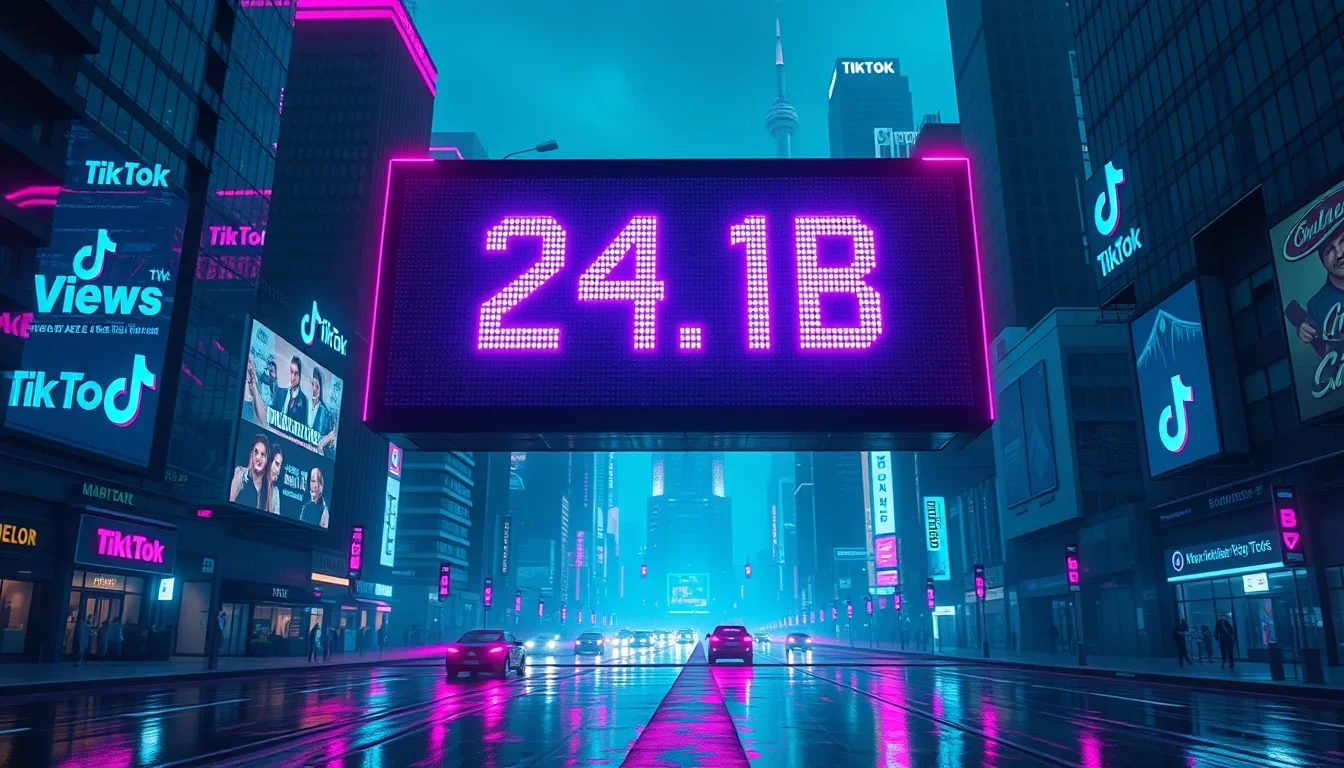
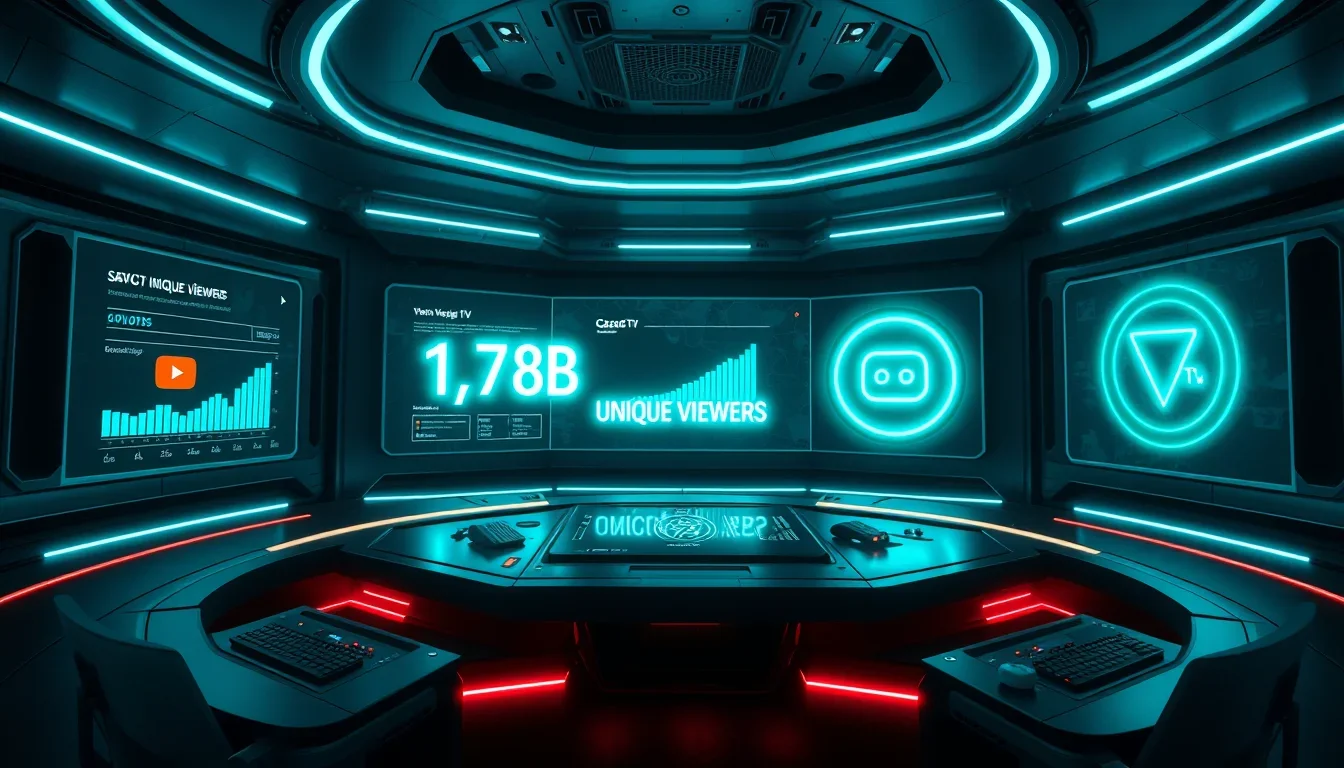
The 2026 FIFA World Cup has concluded, and now the digital results can be tallied. For the first time, FIFA designated YouTube and TikTok as “preferred platforms,” granting creators expanded access to the tournament. The strategy paid off: YouTube broadcasts alone attracted 1.7 billion unique viewers, while TikTok hashtags garnered 24.1 billion views. This is the biggest content moment in the history of both platforms.
YouTube: CazéTV Records and 200 Billion All-Time Views
Brazilian streamer CazéTV purchased the rights to broadcast the entire tournament and now occupies all 10 spots in the top most-viewed live streams in YouTube history. His channel became the main beneficiary, but success was broader: 550 million viewers watched World Cup content on TVs, and the total number of football content views on the platform exceeded 200 billion all-time.
The official 2026 World Cup hub on TikTok collected 24.1 billion views, and nearly 20 million videos were published under tournament hashtags. FIFA broadcaster streams garnered 465 million unique views.
“This is the biggest content moment in TikTok’s history,” said Rollo Goldstaub, global head of sports at the platform. “Fans are watching not just highlights, but also reactions, tactical breakdowns, behind-the-scenes content, and fan perspectives from around the world. Different entry points make sports more accessible, especially for new or casual fans.”
Preferred Platform Strategy: FIFA’s Biggest Win
The success of the collaboration with YouTube and TikTok is a key takeaway for FIFA. By demonstrating that social networks will dominate future tournaments, the organization has laid the groundwork for expanding broadcast rights in 2030 and beyond.
An example of the digital leap is Cape Verde goalkeeper Vozinha: before the World Cup, he had 50,000 Instagram followers; after, nearly 30 million. This is a perfect illustration of the digital transformation of players, fans, and organizers.
Frequently Asked Questions
How many viewers watched the 2026 World Cup on YouTube?
1.7 billion unique viewers, of which 550 million watched on TVs.
How many views did TikTok get during the World Cup?
24.1 billion views in the official hub, 20 million videos under hashtags, and 465 million unique views of broadcasts.
What CPM is considered profitable?
For hypothesis testing, a CPM cheaper than 50 rubles is an excellent benchmark. In this case, the CPM for YouTube and TikTok was about $0.01–$0.02 per view, significantly cheaper than traditional banners or influencers.
Conclusion
The numbers speak for themselves: 1.7 billion viewers on YouTube, 24.1 billion views on TikTok—this is cheaper than any banner or targeting. Want to test a hypothesis with a minimal budget? Launch seeding on these platforms. If you have questions about unit economics and ROI, write to us—we’ll calculate together.
Are you wondering what your agency can offer that ChatGPT cannot? Trying to figure out where AI in content marketing should really fit into your workflow? The numbers from late 2025 and early 2026 look daunting. The common explanation is that AI is replacing agency work, but that is not the whole truth. AI has not replaced agencies; it has replaced what agencies traditionally charge for.
In the past, agencies provided distribution: “We can get attention.” But now anyone can publish anything instantly. Even before AI became mainstream, the oversaturated internet was criticized. Today, audiences want less content, not more. There is no point in publishing what no one needs, yet many agencies have been doing exactly that.
Why Clients Are Questioning the Retainer
Client retention over the next 24 months will depend on who knows more and can prove it in every pitch, brief, and call. The retainer is not just a contract for services; it is a contract for relationships. Clients bring business strategy, institutional knowledge about the company, and industry context. Agencies bring expertise, capabilities, and the willingness to answer when the client calls.
But LLMs are always available. They have infinite productivity and can sound like experts. Unsurprisingly, clients paste a brief into ChatGPT, get a draft in a minute, and ask: “What does my agency give me that ChatGPT cannot?”
What Clients Truly Value
When we talk about “relationships,” it sounds vague. But relationships provide tangible benefits. Over time, an agency begins to understand the client’s business at the same level as the client themselves. Research, competitive analysis, and information synthesis become routine tasks done hastily. Every time a client has to bring the agency up to speed, trust erodes.
Clients hate a blank slate just as much as anyone else. Agencies should treat idea generation as a core service, not preparatory work. Bring strong, market-differentiating ideas. Agencies cannot rely on the client as a guide into their business world — they must independently study that world and connect internal facts with external events.
Most AI strategies treat AI as an execution layer, but it works much better as a source of ideas. However, general LLMs lack the latest knowledge, hallucinate, and operate on the same data as everyone else. This leads to a “gray mass” — AI sludge. Everyone uses the same tools and prompts without unique source material.
Demand for thought leadership is returning because it delivers results. Thought leadership content comes from a specific person with authority, providing trust signals for AI search engines. Publishing such content on a regular basis teaches AI systems that the author owns the topic. A generic AI-generated conclusion that could belong to anyone does not carry the same weight.
Step 1: Use Listening to Find Content Gaps
Content intelligence ensures the agency learns the news first. This means constantly tracking news, events, and leader opinions to generate a stream of ideas that others don’t have. Marketers look for places where real conversations happen. Traditional channels broadcast information through industry publications, competitors, and RSS feeds. But increasingly, you need to look for unfiltered spaces where real problems live.
The problem is that finding valuable ideas requires enormous effort. You need to scan the internet, monitor sources, and spend AI tokens on research. Find the most valuable channels. The client may provide direction, but not always. Make this part of onboarding.
Practical Tip
Use Chatter to monitor industry updates and what competitors are writing about. Set up a feed for each client, and Chatter will collect and tag stories from industry sources. Over time, it will learn to identify which stories are most relevant.
Step 2: Identify the Right Signal and Angle
The more options you have, the better. To recognize the right signal, you need to know the client. High-impact content stands out through contrast. Saying the same thing as everyone else is pointless. The agency earns not only from writing but also from framing. Focus on what makes the client’s perspective or product different from others. What can the client say that no one else can?
Practical Tip
By providing Chatter with your services, keywords, personas, preferred publishers, and competitors, you will find content and industry discussions that you or your clients might not have known about.
Step 3: Repurpose Content Across Different Formats
A compelling angle provides enough material to stretch across 3–5 formats: a LinkedIn post, a newsletter, a brief solution, and an outbound email—without losing impact. Good analytics generate strong ideas, and strong ideas generate good distribution. But five formats mean five blank pages. One person takes longer to write, and a team risks inconsistency. Many marketing teams spend weeks on repurposing, and by the time they publish, competitors have already taken the position.
Chatter supports your momentum. The Content Master allows you to select stories you want to mark as relevant and directly translate your point of view into the desired format. This reduces draft time and allows you to test content in different forms.
Step 4: Distribute across the content calendar
Now that the idea is broken down into several formats, you can stretch the publication over several weeks to attract more attention and create opportunities for engagement.
Step 5: Measure content effectiveness
Measuring effectiveness by format shows what worked and what didn’t. Preparing diverse formats provides a complete picture of engagement so you know where to start next time. For an agency, this closes the feedback loop and lays the foundation for the next conversation with the client.
Step 6: Repeat for each client
Manually repeating this process for each client can be tedious. Use Chatter to track all clients’ industries simultaneously. By adding them as a brand in Chatter, you can add them as users, discuss ideas, and collaborate.
Pitfalls to anticipate
In practice, everything can be chaotic. Content intelligence is a full-time job for an internal team, let alone an agency. Marketing analytics usually depends on who saw and remembered what. Notice how much work needs to be done before the content is written. Teams use AI at the draft stage and wonder why it’s still difficult. The problem is that the preparatory work is chaotic. The further upstream you optimize, the greater the effect.
AI platforms like Chatter provide a central hub for channels where ideas originate, with a feed that learns to identify the right content and the ability to segment by client.
Agencies that will survive in 2028
Agencies that lose retainers are not losing because of the wrong AI stack. They are losing because what they charged for has become cheap, and they haven’t replaced it with something the client can’t get elsewhere. Knowledge and its demonstration in every interaction is that something. Agencies that will win will treat industry analytics as infrastructure, not a chaotic Friday task. When content intelligence is continuous and organized, the agency can stay informed and join the client in the moment. This justifies the relationship and the cost.
Frequently Asked Questions
What if the client doubts the value of the retainer?
Never come empty-handed. Always bring ideas based on analytics that the client cannot get from ChatGPT. Demonstrate knowledge in every interaction.
How AI Can Help, Not Replace, an Agency?
Use AI as a source of ideas and analytics, not just for execution. Tools like Chatter help track trends and generate unique angles.
Why Has Thought Leadership Become More Important?
AI search engines prioritize content with high trust signals. Regularly publishing expert content strengthens authority and improves visibility.
Conclusion
Agencies that invest in content intelligence and build knowledge-based relationships will remain in demand. Start implementing these six steps today to prove your value. Try Chatter — a tool that helps you stay one step ahead.
YouTube as a Full-Funnel Platform: Insights from SharkNinja and Adam W for Creator Marketing
YouTube is becoming the most measurable platform in a brand’s creator mix. The combination of long-form, short-form, and content with cumulative value makes it a true full-funnel platform. At Cannes Lions 2026 in the Later Lounge, a session featuring Lyle Stevens (co-founder of Later), Mitun Shet (YouTube), Stacey Carpenter (SharkNinja), and creator Adam W discussed the future of creator-led marketing.
YouTube is a Full-Funnel Platform: Data and Facts
Mitun Shet noted that 76% of viewers on YouTube experience things they never thought they would experience thanks to the platform. Creator advertising is growing four times faster than the entire media market.
Best Creative Partnerships Are Built on Storytelling
Adam W builds content around human conflict: a recognizable problem, a dramatized story, the brand as a solution. He described a campaign with an auto brand where the concept was built on complaints about cars—viewers couldn’t believe it was an ad.
Stacey Carpenter talked about SharkNinja Originals: content is created with creators as talents, not speakers, with unified IP for different markets. 70% of YouTube creators work with both Shorts and long-form content, allowing them to serve different stages of the funnel.
30% of clicks and 40% of views on YouTube occur 30+ days after publication. Adam W gave an example: a video initially got 5 million views, and a year later—650 million. The new Dynamic Brand Segments feature allows brands to place ads in already successful videos post-factum, reducing risks.
According to Later, 90–95% of AI assistant responses reference creator content, not brand content. SharkNinja is building a creator ecosystem across three funnel levels: entertainment, education, and affiliate.
YouTube tools (Inspiration Tab, Dream Screen, Omni) lower the barrier to producing content that AI models are most likely to cite.
Conclusion: YouTube as Brand Infrastructure
Creator content on YouTube builds a layer of third-party validation that AI uses for years. Brands that have stopped thinking of YouTube as a media buy and started viewing it as infrastructure are investing in long-term relationships with creators and content that accumulates value.
The window for building such sustainable presence is closing. Ready to build a creator program with real sustainability? Explore Later’s influencer marketing services.
Lenovo and Portal A Launch Creator Odyssey: How the Brand Turned Creators into Creative Directors
Lenovo and production studio Portal A have launched the Creator Odyssey campaign, in which the brand not only attracted content creators as ambassadors, but entrusted them with the role of creative directors. This is a long-term project built around the creators’ own IP, which simultaneously serves as a marketing tool to promote Lenovo’s AI-oriented hardware and software.
How Creator Odyssey Works
At the heart of the campaign is a challenge for artists worldwide: to create projects using Lenovo technologies and document the process in videos and social media posts. The first edition in 2024 was led by long-time friends and collaborators Gawx and Vexx — professional artists and YouTubers. They shot the launch video, which served as a call to action for six other participating artists.
In subsequent videos, the Lenovo laptop traveled the world, demonstrating how the same product is used across different creative fields. Results for 2024: 9 videos on YouTube, 143 social media posts, 400,000 hours of watch time, 946,000 engagements, and 19.6 million views. The success prompted Lenovo and Portal A to continue the project.
Third Season — World Stage
In 2025, the second edition was released, and the third, titled World Stage, was timed to coincide with Lenovo’s partnership with the FIFA World Cup 2026. Gawx and Vexx again served as “visionaries” responsible for the creative direction. Participants were paired with athletes to explore parallels between artists and athletes.
The project featured: Norwegian director Maria Kallewik, Indian VFX specialist Shutter Authority, Australian graphic designer Elliotisacoolguy, Norwegian VFX artist Erik Does VFX, and American Isaac Carlton, creator of “little films.” Each worked from home on Lenovo equipment, then traveled to Mexico City for a group presentation.
World Stage delivered 8 videos on YouTube, over 90 social media posts, more than 400,000 hours of watch time, 367,000 engagements, and 25.6 million views.
Lenovo’s Strategy: From One-Off Campaigns to a Permanent Community
Alia Rosmini, Executive Director of Global Consumer Marketing at Lenovo, explained that the brand wanted to “make a serious statement about its presence and show how technology helps in the creative process.” According to her, it would have been “easy” to run “one-dimensional campaigns, but we wanted to go deeper.”
In addition to the three editions of Creator Odyssey, Lenovo launched the year-round platform Lenovo Creator Community, where artists, writers, musicians, and other creative professionals can interact on forums, access resources, and apply for “gigs” — exclusive opportunities to collaborate with Lenovo and its partners.
Rosmini emphasizes: “We provide resources and technology, but the vision and execution belong entirely to the creator. We don’t want to stifle creativity; we want to celebrate it, and the products are part of that process.”
Partnership with FIFA and the Synergy of Art and Sport
World Stage was part of Lenovo’s partnership with FIFA, under which the brand became the first official technology partner of the World Cup. “The World Cup is one of the biggest global events that brings people together,” says Rosmini. “We saw synergy in what passion is and how it drives creators. Sport inspires creativity beyond the field, and it’s a wonderful way to connect the two.”
Long-Term Benefits for Lenovo
While the short-term goal is product promotion, creating a permanent IP and year-round platform gives Lenovo long-term advantages. “Through close contact with the creator community, we get ideas for future product design,” explains Rosmini. “Our creators constantly provide feedback. It’s a great way to gain real insights that shape the future of our portfolio.”
Frequently Asked Questions
What is content repurposing in simple terms?
Repurposing is the process of reworking one source material (e.g., a webinar or video) into multiple formats: short clips for TikTok, Reels, articles, posts, infographics. This allows you to reach different audiences and platforms without creating content from scratch.
How to make 100 unique videos from one?
Use the “video matryoshka” technique: cut the source into meaningful blocks, change the background, voice timbre, add subtitles, overlays, speed up/slow down. Create a unique intro and outro for each clip. Apply different camera angles (if duplicates exist) or AI tools to regenerate the background.
What is more profitable: ordering repurposing or shooting new video?
Repurposing is usually 3–5 times cheaper, as it doesn’t require new shoots, equipment rental, or actor fees. However, if the source material is low quality or doesn’t match trends, it’s better to shoot new footage. The optimal strategy is to combine: repurpose the best from the archive and selectively shoot fresh material.
Conclusion
The Lenovo and Portal A case proves: content repurposing is not just a budget-saving tactic but a strategic tool for brand building. By giving creators the role of creative directors, the company gains authentic content, deep audience engagement, and valuable insights for product development. If you want to scale content marketing without losing quality, start by auditing existing materials and think about how to turn one webinar into 50 clips for different platforms.
The main secret to success is volume: the more clips you publish, the higher your earnings. In this guide, we’ll break down how to become a clipper from scratch, what payment paths exist, and how to automate the process with AI.
Who Is a Clipper and What Do You Need to Start
A clipper takes long content—a stream, game recording, podcast, or YouTube video—and cuts it into vertical clips lasting 15–60 seconds. You don’t need to be a streamer or have editing experience. The task consists of two parts: find a standout moment (clutch, multikill, funny reaction) and format it so the first three seconds hook the viewer.
Platforms promote vertical clips more actively than simply cropped horizontal videos. Therefore, it’s important not just to crop but to reformat to 9:16 and add subtitles. Subtitles are mandatory, as most people watch clips without sound.
How to Become a Clipper in 2026: Step-by-Step Process
Step 1: Choose One Niche
Don’t try to clip everything at once. Focus on one game (e.g., Call of Duty, Valorant, Fortnite) or one streamer. This helps the algorithm understand your audience and allows you to learn which moments perform best.
Step 2: Create Accounts for Publishing
Register on TikTok, YouTube Shorts, Reels, and X (Twitter). Use the same name everywhere so viewers can find you. In the description, specify your niche, e.g., “daily Warzone clips.”
Step 3: Get Source Material
If you stream, use your own VODs. If not, take public VODs from Twitch, Kick, or YouTube. Important: check the streamer’s rules—many require attribution or have official programs for clippers.
Step 4: Cut the Clip (Where Hours Used to Be Spent)
Manually searching for the best moments in a three-hour stream is the biggest mistake beginners make. In 2026, use AI services, such as Eklipse. Simply paste the stream link, and the neural network will automatically find kills, clutches, and standout reactions, then cut them. This takes minutes instead of hours.
Step 5: Reformat, Add Subtitles, and Publish
Convert the clip to a vertical 9:16 format and add automatic subtitles. Tools like Eklipse Studio do this in one pass. No need to edit each clip manually.
Step 6: Publish Daily and Analyze
Post at least one to two clips per day at the same time. Track which videos get more views and make more of those. Use a content scheduler to avoid missing days.
Two Earning Paths for a Clipper
Path A: Clipping Your Own Streams
If you already <a href="/blog/how-a-streamer-can-grow-on-tiktok-and-youtube-shorts/" title="How a streamer can grow on TikTok and YouTube Shorts”>stream, even to a small audience, you have unique content. clip your VODs and participate in creator reward programs, such as Eklipse Creator Rewards.
This program pays for views of your clips. In June 2026, 1,950 creators accumulated 7.85 million views, and 14 of them received cash prizes and games. It’s all free—just publish clips from Eklipse and fill out the participation form.
Path B: Creating a Channel with Clips of Other Streamers
The classic model: choose a popular streamer or game, create a channel with their best moments, and earn from ads or direct deals. TikTok and YouTube pay through reward programs. But competition is high, and many streamers have official clipping programs (e.g., on Kick). Participating in an official program is usually more profitable, as you get protection from strikes and direct income.
Why Volume Matters Most
One brilliant clip per week loses to ten average clips per week. Algorithms love frequency. Clippers who earn $1,000–2,000 per month publish at least one clip per day. Those who post sporadically almost never generate income. The only way to maintain volume is to automate clipping. AI tools turn one three-hour stream into 30 days of content.
Mistakes That Keep You at Zero
Irregular posting. The algorithm sees inconsistency as a sign of low quality. Better to post two clips per day for a month than 15 over a weekend and then silence.
Weak first frame. A clip starting with “well, it happened” is doomed. Start with the most striking moment.
Lack of subtitles. Without them, viewers will simply scroll past.
Clipping other people’s streams without checking the rules. Always look for the streamer’s official program — it’s safer and often more profitable.
Manual editing. This kills volume. Use AI.
Frequently Asked Questions
How to become a clipper with no experience?
Choose one game or streamer, create social media accounts, and use an AI service for editing. Publish daily. You can release your first clip on the same day.
How much do clippers earn?
With regular posting — $500–2000 per month after 90 days. Earnings depend on the number of clips released, not on talent.
How to become a clipper on Kick?
Join the official Kick clipping program and use a VOD editing tool like Eklipse. This is one of the most active paid programs.
Do I need to show my face?
No. Clipping is a faceless job. You use someone else’s or your own content.
Is it legal to clip other people’s streams?
Yes, but with conditions. Always check if the streamer has an official program and give credit. Otherwise, you risk bans.
What’s the fastest way to start earning?
If you already stream — edit your own VODs and participate in a rewards program, like Eklipse Creator Rewards. This requires no permissions, and views go directly toward payouts.
Conclusion
To become a clipper in 2026, you need three things: choose a niche, eliminate manual editing with AI, and choose a monetization path (your own streams through a rewards program or a channel with other people’s clips). Volume is the main factor for income, and only automation makes it achievable.
If you stream, start with clipping your own VODs and registering for Eklipse Creator Rewards. Try AI editing right now: paste the link to your latest stream and find out how many clips you could publish.
Patreon, a platform for creators to monetize content, is moving from persuasion to blocking AI scrapers. Instead of simply asking bots not to collect data via robots.txt, the company has begun actively blocking them using Cloudflare technologies. As reported on the Patreon blog, AI scrapers ignored old restrictions, making thousands of access attempts per week — now that number has dropped to zero.
Why Patreon Took Harsh Measures
AI scraping has become much more sophisticated since 2023, when Patreon first introduced protective mechanisms. Patreon’s payment gateway has long protected content from crawlers, but new features like the updated Home Feed and Quips posts have opened more data to AI.
Cloudflare now offers tools to limit AI bots, including the Pay Per Crawl marketplace, where sites can charge for scraping. Patreon uses AI Crawl Control technology to actively block training bots, leaving access only to those that index content to redirect users back to the platform.
What Changed Technically
Instead of passive robots.txt, Patreon has moved to active blocking at the infrastructure level. AI training bots can no longer access content, even if they ignore standard instructions. Patreon clarifies: “Consent should not depend on whether the scraper decides to behave well.”
During testing, weekly access attempts by individual AI bots fell from thousands to zero.
Patreon’s Position and Market Reaction
Drew Rowney, Patreon’s product director, stated: “Creators deserve a voice in how their work is used by AI companies. Our vision is audience growth without forced AI training.”
This is part of a global trend: more publishers and content creators are realizing that AI is consuming their content for model training. Cloudflare recently changed its policy, blocking “mixed” crawlers by default on pages with ads.
Frequently Asked Questions
Does Patreon block all bots?
No. Bots that index pages and redirect users back to Patreon are allowed. Only those that train AI models without permission are blocked.
This is a marketplace where site owners can charge AI bots for scraping. Patreon does not yet use this model but actively blocks unauthorized access.
Patreon demonstrates that even large platforms can effectively protect content without compromise. If you are a creator, consider: how is your work being used by AI? Patreon offers an alternative — control and respect for your labor.