Virtual influencers are already able to compete with human creators in terms of audience engagement, but most of these projects are unstable and quickly shut down. Some AI accounts show an ER above 20%, and the maximum figure reaches 54.1%, surpassing the results of classic bloggers. Analysts from the digital agency AINET reported this to ppc.world.
Study: How AI and Human Bloggers Were Compared
Analysts at AINET (based on the LiveDune platform) compared 10 popular AI influencers and 10 classic bloggers in the lifestyle and travel niches with audiences ranging from 1,500 to 200,000+ subscribers.
Comparison parameters included posting frequency, subscriber growth and churn, as well as average Engagement Rate (ER). The main conclusion: AI bloggers deliver high ER but quickly lose their audience.
Key Figures: Engagement and Posting Frequency
The maximum ER of AI authors reaches 54.1%, significantly higher than that of human influencers. However, in terms of posting regularity, virtual bloggers lag behind: on average, they publish about 17 posts per month, while classic bloggers publish around 32.
Of the ten virtual accounts studied, only three regularly publish content, while the rest update their pages sporadically or sell courses on neural networks. Most AI projects stagnate or lose subscribers: the largest AI account with 211,000 subscribers lost more than 2,500 followers during the study period, while human authors grew steadily.
Why AI Bloggers Are More Expensive and Unstable
Maintaining a virtual character often costs brands 2–3 times more than working with a regular creator. Ruslan Minyazhetdinov, CEO of AINET, explains: the services of a good specialist cost about 50,000 rubles per month, while comparable quality from neural networks requires a team of at least three people: an art director, a visual manager, and a copywriter. Additional budgets go toward revisions and paid generations.
As a result, content often turns out to be monotonous, and users notice the trace of artificial intelligence. The market grows mainly due to the emergence of new projects rather than the development of existing ones. The novelty effect quickly fades, and accounts fail to hold attention over the long term: four AI bloggers from the initial sample were deleted before the analysis was even completed.
Forecasts and Prospects
Nevertheless, according to Go Influence forecasts, by 2030, every third blogger in Russians’ feeds could be fully generated by a neural network. Recall that analysts recently found out what Russians want to see in an influencer: the main criteria for the audience were sincerity, honesty, literacy, intelligence, and expertise.
Frequently Asked Questions
Why do AI bloggers show high ER?
High engagement is explained by the novelty effect and the unusual nature of the content, which attracts users’ attention. However, this effect quickly fades, and few manage to retain the audience over the long term.
How much does it cost to maintain an AI blogger?
According to Ruslan Minyazhetdinov, high-quality maintenance requires a team of three specialists, which costs 2–3 times more than working with a human blogger. Additional expenses include paid generations and revisions.
Will AI bloggers replace human ones?
Despite forecasts about the growing number of AI bloggers, they are unlikely to fully replace human authors. The audience values sincerity and expertise, which are difficult for artificial intelligence to replicate.
Conclusion
AI bloggers demonstrate impressive engagement figures, but their instability and high maintenance costs make them a risky investment for brands. If you are considering using AI avatars for advertising, it is important to weigh all the pros and cons. Perhaps it is worth turning to professionals who can help create an effective strategy using neural networks while minimizing risks.
In the world of digital marketing, more and more evidence is emerging that artificial intelligence is not just a passing trend, but a real tool for improving efficiency. A recent A/B test conducted by kitchen appliance brand Cuisinart clearly demonstrated that AI video for advertising can outperform traditional production on key metrics. The brand, owned by Conair, compared a video created by Amazon’s neural network with classic studio creative, and the result was unexpected for many skeptics.
Cuisinart’s marketing team had long wanted to use generative AI, but the quality of images did not meet the brand’s strict standards. As Kelsey Smith-Eisen, Director of Amazon Marketing at Conair, explained, even static banners had errors: incorrect shade of green, distorted logos, inaccurate numbers and text on appliances.
“This even applied to simple banners,” she noted. However, with the rapid improvement in AI video quality, the company decided to test Amazon’s new tool — the “video creative agent.” Cuisinart became a beta tester for this solution, launched in 2024.
Flexibility vs. planning: the advantage of neural networks
Traditional marketing requires months of planning: booking studios, preparing locations. But the Amazon team works at a different pace — priorities change quickly, and it’s impossible to predict what will work in a week. Generative AI allows for quickly creating videos for current tasks, which is critical for dynamic platforms.
A/B test: AI video outperformed traditional
As part of the beta test, Cuisinart and its agency Global Overview launched two parallel campaigns with equal budgets: one used studio-shot video, the other used an AI-generated video. The AI version was refined with prompts, selecting from several options proposed by the agent. After a month, the results showed a clear advantage for generative creative.
Nikhil Naniwadekar, lead engineer for generative and agentic AI at Amazon Ads, explained: the agent doesn’t come up with radically new ideas but analyzes the brand’s past successful campaigns. It “relies on signals” and creates variations of what has already worked, but with novelty — this helps combat banner blindness among consumers.
Speed of progress: from static to nearly finished video in a year
Smith-Eisen emphasizes: the key is not just the test results, but the pace of technology development. A year ago, generating even a static image was unreliable and not worth the effort. Now AI almost fully creates video, requiring only minimal post-processing.
“In another year, if progress continues, we’ll be able to use videos immediately after generation, without refinements,” she predicts.
What’s next: personalization and new formats
Cuisinart plans to expand AI usage: creating not only product demos but also commercial videos. For example, if purchase data shows a person has moved to a new apartment, compact appliances can be shown; if a user starts cooking, relevant products can be suggested. The brand is also exploring the possibility of dialogues between AI characters, although for now it’s safer to use voiceover.
Importantly, generated videos only work within Amazon Ads — they can’t be transferred to YouTube or Instagram. But Smith-Eisen believes this isn’t necessary: each platform has its own audience, and differences in style are natural. Amazon Ads, in turn, is developing the tool: in June, a “one-click video generation” feature appeared.
Frequently Asked Questions
What is AI content production?
It’s the creation of advertising materials (videos, images, texts) using neural networks. Instead of studio shoots and a team of designers, AI generates videos based on text descriptions, saving time and budget.
How much does one AI creative cost?
The cost depends on the platform and complexity. On average, generating one video can cost from a few dollars to tens, which is significantly cheaper than traditional production, where a minute of video can cost thousands of dollars.
Can I order AI UGC for a crypto project?
Yes, many services offer the creation of AI avatars and videos in UGC (user-generated content) style for cryptocurrency projects. This allows for quickly scaling advertising without involving real bloggers.
What are Synthesia alternatives?
Besides Synthesia, there are HeyGen, Colossyan, Elai.io, and others. They allow creating videos with AI avatars and subtitles. Amazon Ads also offers its own tool, but it only works within the platform.
Conclusion
The Cuisinart test is another proof that AI video generation for advertising is becoming not just an experiment, but a working tool. Neural networks are already capable of creating videos that are not inferior to traditional ones in effectiveness, and surpass them in speed and scalability.
If you’re thinking about implementing AI in your marketing, start small: test generating one video and compare the results. Maybe it will change your approach to content. And if you need help implementing AI tools into your advertising strategy — contact us for a consultation.
YouTube automation is often perceived as an easy way to make money, but in reality, it is about creating repeatable systems and processes for scaling a channel. In this guide, we will break down what YouTube automation is, development stages, launch strategy, realistic income and expense expectations, the use of AI tools, best practices, and risks in 2026.
What is YouTube automation?
YouTube automation is the delegation of repetitive tasks required to run and grow a channel, using freelancers and AI tools. The goal is not to remove yourself from the creative process, but to free up time for strategy and growth.
Systematic delegation allows you to create a repeatable workflow that produces quality content. This enables scaling: managing multiple channels, exploring new niches, or simply saving time while building sustainable income.
Three stages of YouTube automation
Stage 1: Automating repetitive tasks
At this stage, you still create content yourself, but you remove friction in production. Automated tasks include: topic research, scriptwriting, creating thumbnails, and basic editing. The goal is consistency and repeatable templates.
Stage 2: Automating creative elements
You delegate some creative tasks while maintaining creative direction. Typically delegated: scriptwriting, thumbnail creation, editing, and voiceover. Your role shifts from executor to director.
Stage 3: Full automation of the production line
You manage an entire system: hiring managers, coordinating teams, and analyzing metrics. You become a media business owner. It is important not to rush into this stage until the format works.
How to start YouTube automation: a case study
Noah Morris, an automation expert, earned a seven-figure sum in a year while managing more than 20 channels, dedicating only one day a week to it. His advice:
Consider not only the niche but also content gaps, demand, and the potential for systematization. A good sign is channels with high views but low subscriber counts.
2. Find the “content gap” in your niche
Use tools like vidIQ Outliers to find topics that perform well but have few competitors. Look for videos with a high Outlier Score and views per hour.
3. Study your competitors
Analyze their successful videos: CTR, retention, and systematic elements. Use the vidIQ extension for quick analysis.
4. Build a team
A basic team includes a scriptwriter, editor, thumbnail designer, and voiceover specialist. Hire one person at a time to maintain quality control.
5. Continuously improve your videos
study the analytics, experiment with formats, and improve retention. Automation doesn’t mean no work—you remain the channel’s director.
How much can you earn from YouTube automation?
Income varies depending on the niche, audience geography, retention, and monetization. Noah earned $500,000 in 90 days, but that’s an exceptional case. A realistic approach is to focus on a repeatable format and gradual growth.
Beyond AdSense, you can use sponsorships, affiliate marketing, and selling digital products.
How much does YouTube automation cost?
The cost depends on delegation and quality. Noah spent about $100 per video and broke even after 12 videos. Beginners may need 35 videos and $3,000–3,500 to see initial results.
Budget by role:
Scriptwriter — $50–100 per video
Editor — $100–200 per video
Thumbnail designer — $20–50 per video
AI tools for YouTube automation
AI can speed up the process but shouldn’t create templated content. Useful applications include idea generation, script drafts, voiceovers, and thumbnail improvements.
Risks: mass-producing similar videos, copyright infringement, and losing originality.
Best practices and risks
Automation can harm your channel if content looks templated and unoriginal. YouTube may deny monetization for “inauthentic” content. In 2026, YouTube requires disclosing synthetic content.
Use AI for assistance, but add human creativity.
Example niches for automation
True Crime and mystery: strong storytelling, narrative format.
Celebrity news: fast cycles, but requires accuracy.
Sports highlights: analysis and commentary.
Personal finance: high RPM, but high trust expectations.
Luxury and expensive items: lists and comparisons.
History: evergreen topics, series.
Science and space: explanations and storytelling.
Psychology: “why we do things” and examples.
Technologies: reviews, affiliate marketing.
Motivation: narrative arcs.
Conclusion
YouTube automation is a path from a solo creator to a system owner. It requires time, iterations, and investments, but can become a legitimate scalable business.
Start small, focus on quality, and gradually delegate. Choose a niche, find a content gap, and build a team—and within a few months, you can see the first results.
Frequently Asked Questions
What is YouTube automation?
It is delegating routine channel management tasks: scripts, editing, thumbnails, voiceover—to improve efficiency and earnings.
How does YouTube automation work?
It combines human creativity and AI tools. Tasks are delegated to specialists or automated, while the owner focuses on strategy.
Can automation harm a channel?
Yes, if content looks templated. YouTube may deny monetization for unoriginal content. It is important to add value and originality.
How much can you earn?
Income varies: from $100 per month to $100,000+ per month for top channels. It depends on the niche, views, and monetization.
How much does it cost to start?
You can start with $0 using free tools. Average costs: $100-200 per video, and to break even, you need 12-35 videos.
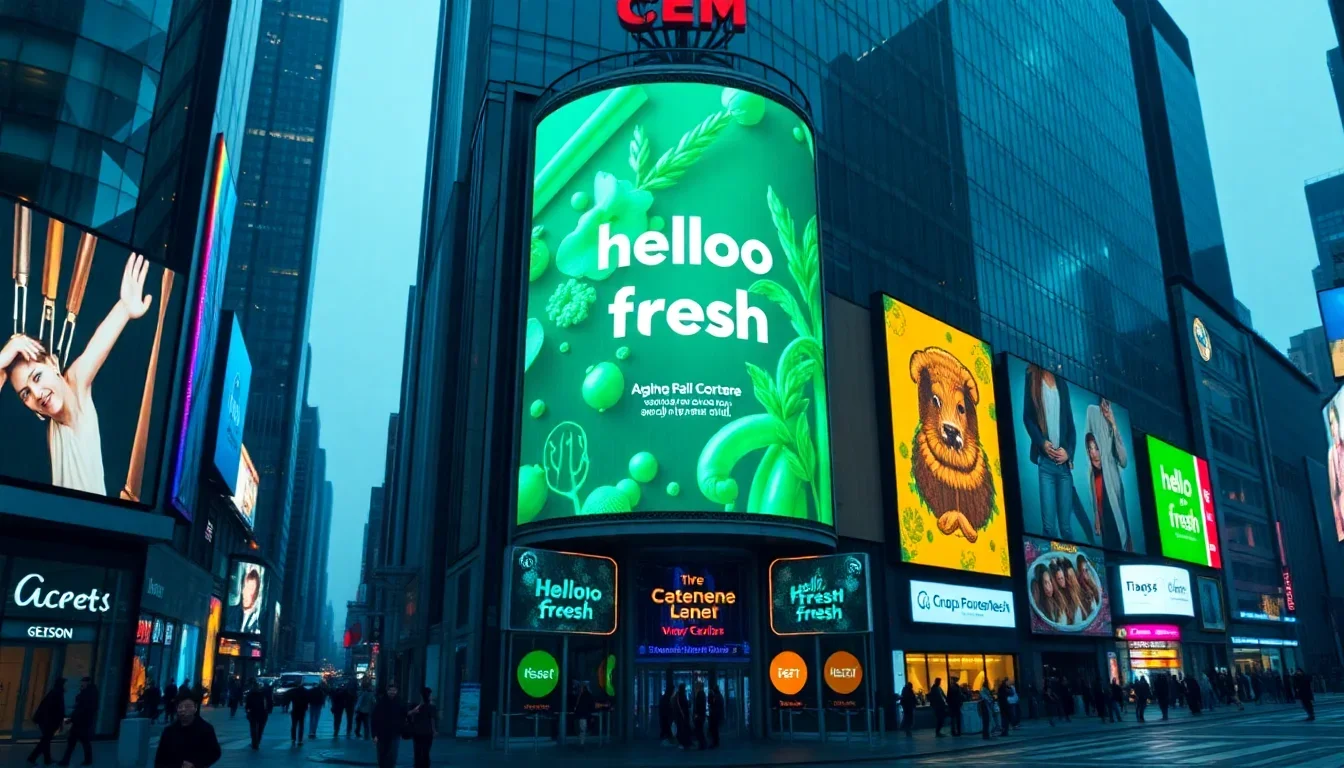
HelloFresh Brought AI Creative to Times Square: How Ad Studio Works
In June, the CDP platform Hightouch launched a one-day activation on Times Square to showcase ads created by clients using the new Ad Studio tool. Participants included Sweetgreen, Tripadvisor, and HelloFresh. This case demonstrates how AI creative helps brands scale content production and reach global platforms.
Why Brands Need AI Creative at Scale
According to Conor Feeney, Head of Marketing at HelloFresh US, brands are now “forced to produce significantly more creative than ever before.” Audience attention spans are shrinking, and fresh ads deliver better results. AI enables faster hypothesis testing and allows focusing on the most effective options.
How Ad Studio Works
Ad Studio is part of Hightouch’s marketing suite launched this year. The tool handles the entire process: from asset generation to platform placement. Hightouch does not handle budgeting or media buying.
Preserving Brand Voice
One of the main challenges of AI creative is losing a brand’s unique style and violating content rules. Hightouch addresses this by using the brand’s own content: product catalogs, legal and compliance guidelines, and previous ad campaigns. The platform integrates with Figma and ad channels, allowing assets to be uploaded manually or pulled automatically.
Fast Iteration Through Natural Language
Ad Studio doesn’t create the perfect ad on the first try, but marketers can give commands in natural language: make the text “juicier” or focus on product quality instead of discounts, explains Hightouch co-CEO Tejas Manohar. For HelloFresh, speed of edits is critical: the company aims for “continuous experimentation” and testing.
People and Robots: Symbiosis, Not Replacement
Feeney emphasizes that Ad Studio does not replace creative professionals but allows faster creation of more content based on existing ideas and human refinement. The tool requires no coding skills but needs a “talented, creative person” who can explain to AI what is good or bad for the brand.
HelloFresh Case on Times Square
For the activation, HelloFresh used past ad campaigns. The ad highlighted the contrast between an expensive restaurant order and the affordability of home-cooked meals. So far, this is the only video created through Ad Studio, but the company plans to continue using the tool.
Frequently Asked Questions
How much does a minute of AI video cost?
The cost depends on complexity and volume. For mass generation (up to 500 videos per day), the price can be significantly lower than traditional production, especially with a neuro-production subscription.
The HelloFresh example shows that AI creative is not just a trend but a working tool for scaling advertising. If your brand faces the need to produce hundreds of videos per week, consider platforms like Ad Studio. Try generating your first test video today—it could change your approach to content production.
Christopher Nolan Calls AI a ‘Trojan Horse’ with Transparent Walls
Director of ‘The Odyssey’ Christopher Nolan, in an interview with YouTube blogger HugoDécrypte, compared artificial intelligence to a Trojan horse. According to him, everyone knows that ‘the Greeks are inside,’ but the technology is so transparent that its suspiciousness is obvious. Nolan noted that he has never seen a technology develop so quickly while being so widely rejected by the public, especially young people. Young people immediately call AI videos ‘AI slop’ and send them to the ‘black box.’
Nolan considers such skepticism ‘very healthy’: technologies always offer great gifts, but they need to be viewed critically. ‘The motives of those who give them to us should also be evaluated skeptically. Only then will we get the best from new technology, not blind faith that everything will be wonderful,’ the director stated.
AI in Hollywood: Threat and Protection
Although Nolan did not specify the threats from AI, the technology remains a concern in Hollywood. It became one of the main topics of the 2023 writers’ and actors’ strikes. The Directors Guild of America, which Nolan leads, included protection against generative AI in the latest contract.
The director himself is known for techno-skepticism: he does not use smartphones, and ‘The Odyssey’ was the first film shot entirely on IMAX film. ‘I consider myself a techno-skeptic,’ Nolan told The New York Times. ‘Film represents the world better than any digital system. I constantly adopt new technologies, but they are often sold at the expense of old, still viable systems. In my industry, we almost threw the baby out with the bathwater—we nearly lost film!’
Frequently Asked Questions
Why does Nolan call AI a ‘Trojan horse’?
The director uses the metaphor to emphasize that AI, like the Trojan horse, may carry a hidden threat. However, he adds that it is a ‘transparent horse’—everyone sees the danger, especially the younger generation, which immediately rejects AI content.
How does Nolan feel about technology in cinema?
Nolan calls himself a techno-skeptic. He prefers film to digital, does not use smartphones, and believes that new technologies often displace old ones, even though the latter can be equally effective. At the same time, he admits that he constantly adopts innovations, but with caution.
Conclusion
Christopher Nolan has once again confirmed his status as Hollywood’s leading techno-skeptic. His metaphor of the ‘transparent Trojan horse’ accurately describes society’s attitude toward AI: we see the threat but cannot always resist it. Have you already seen ‘The Odyssey’? Share your opinion in the comments!
Google Vids: Create AI Videos with Your Own Avatar
Google has updated its Google Vids tool, allowing users to create digital avatars based on selfies and voice recordings. Now you can become the main character of AI videos using your own appearance and voice. The update also includes integration of the multimodal model Gemini Omni, which combines text prompts and reference images to generate videos.
New Features of Google Vids
Gemini Omni not only allows you to create videos from scratch, but also edit them: replace backgrounds, fix lighting, add effects. Step-by-step edits are supported — changes are made without needing to start over. This transforms Vids from a tool for work presentations into a full-fledged platform for creating AI content.
Personalized Avatars and Security
Avatars are linked to a Google account and marked with an invisible SynthID watermark. Access to the feature is limited to users over 18 in certain regions. Google emphasizes that avatars cannot be used to create deepfakes of company management.
Upload a selfie and voice recording to the tool. The neural network will create a digital copy that can be used in videos. The avatar is linked to your Google account.
Can Vids Be Used for Commercial Advertising?
Yes, Google positions Vids as a business tool. AI videos are suitable for ad spots, UGC campaigns, and content for crypto projects.
How Does Vids Differ from Synthesia?
Vids is integrated into Google Workspace and uses Gemini Omni for multimodal video creation. Synthesia focuses on avatars, but Vids offers deeper integration with text and images.
Try Google Vids today and create your first AI video with an avatar. It will change your approach to content production.
Marketing in fintech has a lot in common with B2B SaaS marketing, but differs in the level of regulation and the need to overcome greater distrust. In this guide, we will break down key channels, analytics, compliance, and effective use of video for fintech marketers in 2026.
Fundamentals of Fintech Marketing Strategy
Positioning
Leading brands define a protected position relative to a specific buyer pain point (e.g., treasury automation for mid-market CFOs), rather than a general category (“modern banking for business”). The latter loses.
Audience
B2B fintech buyers form decision-making groups: CFO and controller, VP of engineering and security head, treasurer, sometimes CEO. The group map is used for content and ad targeting.
Channel Mix
For B2B fintech startups in 2026, the basic set includes:
Metrics include: PLG (product-led growth) for self-serve and sales-assist, PLG+ABM for expansion via PQL; embedded distribution as a separate article; ABM for large deals; partner marketing, which is often underfunded. Organizations with advanced analytics achieve ROI 5-8 times higher (Red Branch Media 2025).
Compliance in Fintech
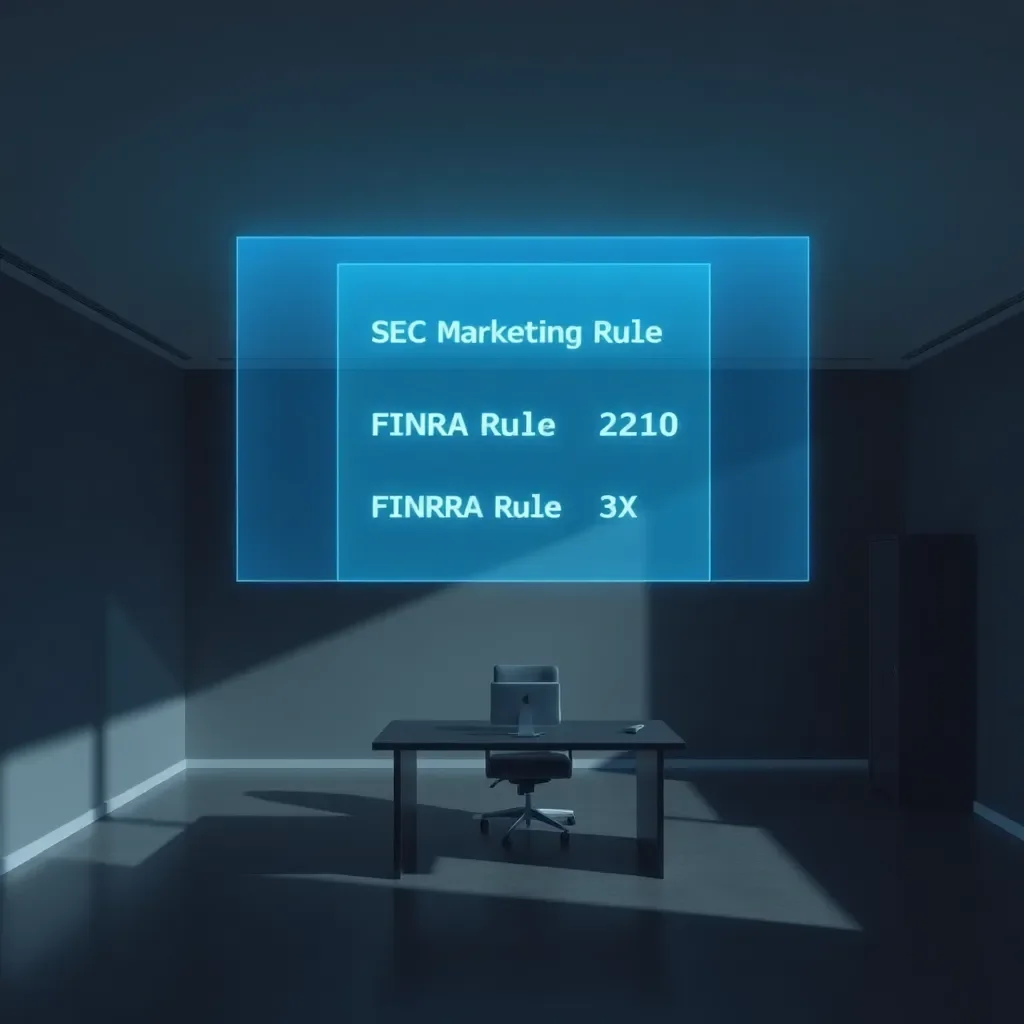
The compliance stance varies. SEC-registered fintechs fall under the SEC Marketing Rule, FINRA Rule 2210 for BD-affiliated, CFPB UDAAP for consumer lending, CAN-SPAM for email, TCPA for SMS, GLBA for data. The main problem is poor workflows: late submission of scripts to CCO, removal of mandatory disclosures, rejection of creatives after budget approval.
In 2026, AI technologies drive personalized content: behavioral signals (spending history, in-app actions) increase CTR by 15-40% (Right Left Agency). Social proof is built through influencers (Klarna: 33% of Gen Z try new brands), meme marketing (Cleo), referral programs (Monzo). Video from clients is the most conversion-friendly format: a 90-second CFO testimonial is more effective than five articles.
SEO for Fintech
PLG SEO: activation maps (templates, calculators) capture intent and product trial. Comparison pages (“X vs Y”) consistently rank #1 for bottom-of-funnel queries. Glossaries (KYC, AML, BIN sponsorship) dominate the long tail. GEO (generative engine optimization) yields +57% CTR (Mintposition 2026).
Video in Fintech
Video is effective in three formats:
Product explainer videos (90 seconds with UI and developer voiceover)
Video from clients (3-5 videos per year, 90-120 seconds each)
High-cost branded videos with drones yield low ROI. For Series A-B B2B fintech, the monthly video budget is $40K-$100K per year. Vidpros offers a flat monthly subscription with built-in compliance review.
Frequently Asked Questions
Which marketing channels are most effective for B2B fintech?
Paid search and social media for demand capture, SEO and content for generation, email and in-app for activation, ABM for enterprise, video from clients for trust.
How to measure fintech marketing ROI?
Use metrics like CAC, LTV, payback period, and attribution. Advanced analytics increases ROI by 5-8 times.
What compliance rules are important for fintech video?
Depends on the fintech type: SEC Marketing Rule for RIAs, FINRA 2210 for broker-dealers, CFPB UDAAP for consumer lending. Be sure to coordinate scripts with the CCO.
How much does a minute of AI video cost for fintech?
Cost varies: from $40K to $100K per year for regular production. Flat-rate editor or outsourced agency are affordable options.
Conclusion
Successful fintech marketing requires clear positioning, audience understanding, a balanced channel mix, and strict compliance. Video from clients and founders is the most effective tool for building trust. Start by auditing your current strategy and reach out to specialists for implementing AI video generation. Send a sample script to Vidpros — we will make the first video for free.
Imagine being able to create a hundred variations of an advertising video in a day, not a month. This is exactly what AI content production promises — the production of videos, images, banners, voiceovers, and advertising materials using generative artificial intelligence and human creative oversight.
A good process is built on three parts: a person sets the idea and boundaries, AI creates variations, a person edits, checks facts, style, rights, brand safety, and compliance with legal requirements before publication.
AI production does not mean that a brand presses one button and gets a ready-made advertising campaign. It is a production process where artificial intelligence accelerates the creation of variations, while a person is responsible for meaning, quality, brand alignment, legal restrictions, and the final suitability of the material.
This approach becomes especially important because AI is no longer an experimental toy for individual teams. McKinsey’s State of AI 2025 states that 88% of respondents report regular use of AI in at least one business function, but most companies are still in the stage of experiments or pilots, rather than full-scale deployment. It also notes that successful companies more often have processes for human review of AI results.
Three Pillars of AI Production
Good AI production rests on three parts.
Process Part
Who is Responsible
What Happens
Creative Direction
Human
Formulates the task, audience, style, boundaries, and meaning
Generation
AI Tools
Create videos, images, texts, voices, characters, and variations
Editing and Review
Human
Selects, edits, checks brand, rights, facts, and AI disclosure
If you remove the human from the first part, AI creates mediocre, faceless material. If you remove the human from the last part, the risk of errors increases: incorrect facts, strange facial expressions, wrong logo, someone else’s image, unsubstantiated claims, or lack of required disclosure.
NIST AI 600-1 describes generative AI as a separate risk profile and recommends that organizations manage these risks through processes suited to their goals and priorities. For advertising production, this means: the brand must have rules about who approves materials, what risks are checked, and which materials cannot be released without additional control.
What can be generated and what remains for humans
AI handles volume well. Humans handle responsibility.
AI should not decide on its own what claims can be made about a product. This is especially important for finance, medicine, education, games, betting, children’s products, and other sensitive categories. In such topics, the final material must undergo not only creative but also legal review.
What materials does AI production create
1. Short advertising videos
These are videos for TikTok, Reels, Shorts, apps, websites, and ad networks. AI can create a scene, character, background, motion, text, voice, and several editing options.
2. AI ads in user-generated format
These are short videos that look like simple footage from an ordinary person: talking head, everyday shot, conversational tone, product demonstration. In search, this format is often called AI UGC, but in Russian, it is more accurately described as AI ads in user-generated format.
3. Banners and overlays
AI helps quickly create banner variations: different headlines, images, backgrounds, color schemes, and calls to action. This is especially useful for placing overlays on short videos, where one banner can be adapted for a large number of clips.
4. Characters and mascots
AI can create a recurring hero: a host, assistant, seller, expert, game character, or brand mascot. If the character resembles a real person, separate rights and consent checks are required.
5. Voiceover
AI can create voice versions in different languages. This speeds up localization but requires caution: you cannot use a real person’s voice without permission. In the US, for example, the Tennessee ELVIS Act was passed to protect against unauthorized use of voice and likeness, including AI deepfakes and voice cloning.
AI production does not replace all formats. It occupies a separate working zone.
Approach
Best suited for
Where it is weaker
Classical filming
Main brand films, real people, expensive visuals
Expensive and slow for hundreds of variations
Creators and bloggers
Trust, personal delivery, live audience
Difficult to scale quickly
AI production
Many variations, localization, tests, banners, characters
Requires disclosure, verification, and trust control
If you need the main video of the year, classical filming is often better. If you need to quickly produce 50–100 variations, AI production wins in speed. If you need a creator with a live audience, a real integration is stronger. If you need to mass-test messages, AI production offers more flexibility.
How VibeVO Scales AI Production for Brands
AI production works especially well when a brand already understands what type of advertising materials it wants to produce. For example: short videos with an AI character, a series with a mascot, banners for short videos, videos in a user-generated format, product videos, localizations, or dozens of variations of a single message.
At VibeVO, such a request can be scaled immediately to a large volume. The brand brings a brief, branded materials, examples of the desired style, and constraints. After that, the task is broken down into clear assignments, and production is launched in parallel through a network of creators and AI tools. This allows not making one material after another, but covering large volumes at once: dozens, hundreds, or thousands of variations for different markets, formats, and audiences.
The main advantage for the brand is that it does not need to build its own production department, hire designers, editors, AI specialists, editors, and quality managers for each new stream. If the direction is already clear, VibeVO can quickly deploy production at the required scale and cover the volume needed for the campaign.
Brand task
What can be produced
Has a mascot
A series of videos where the character explains the product
Has a product
Dozens of videos and banners for different benefits
Has an advertising hypothesis
Many variations of first frames and messages
Has several markets
Localized versions in different languages
Has a banner format
A large set of banners for short videos
Has a user-generated style
Videos in the format of reviews and explanations
Disclosure Obligation under the EU AI Act
Transparency Requirements
For brands working with the EU, it is important to consider transparency rules in advance. The European Commission states that generative AI providers must ensure AI-generated content is recognizable, and certain types of AI content—such as deepfakes and texts on matters of public interest—must be clearly labeled. The transparency rules of the AI Act come into force in August 2026, and the AI Act itself becomes fully applicable on August 2, 2026, with certain exceptions.
Practical takeaway: if an advertisement contains a synthetic human, synthetic voice, AI character, or video that could be perceived as real, disclosure and metadata should be planned as early as the briefing stage.
Brand Quality Check Requirements
Before publication, each AI-generated material must undergo a review.
What to Check
Question
Brand
Are the logo, colors, tone, and style correct?
Facts
Are there any fabricated product characteristics?
Claims
Is it legally permissible to say what is written?
People’s Appearance
Does the character resemble a real person without permission?
Voice
Does it imitate a real person’s voice?
Environment
Are there any unwanted symbols, products, or faces?
AI Disclosure
Is there a label if required?
Metadata
Are the version, source, and review status preserved?
AI production should deliver speed, but it should not break quality control. If a brand cannot explain who approved the material, under which brief it was created, and how AI disclosure was verified, the process is not yet ready for scaling.
FAQ
Is AI production fully automatic? No. In a mature process, AI helps create variations, but a human sets the idea, manages the direction, checks the brand, claims, legal risks, and final quality. Full automation often results in generic or risky materials.
Is it necessary to disclose that an ad was created with AI? It depends on the market, format, and content. In the EU, the AI Act transparency rules begin to apply in August 2026, including requirements for the recognizability of AI content and labeling of certain types of synthetic content. For the US and other markets, rules must be checked separately by country, state, platform, and material type.
How does AI production differ from classic production? Classic production is stronger for expensive brand films, real people, and high production value. AI production is stronger where you need to quickly create many variations, localize materials, generate graphics, characters, and ad tests.
Conclusion
AI content production is not just a trendy fad, but a practical tool for brands that want to scale advertising production without losing quality. The key to success is a balance between AI speed and human control. If your brand is ready to experiment with video, characters, or localizations, start with a clear brief and legal compliance checks.
Ready to try AI production for your brand? Contact VibeVO to discuss your first project and learn how we can help you create hundreds of content variations quickly and safely.
AI UGC advertising is short advertising in a user-generated format: talking head, simple frame, conversational tone, everyday presentation, but created using generative AI rather than a real author. This format is cheaper and faster than real author video at scale, requires disclosure in some cases, and is better suited for apps, online stores, and quick tests.
AI UGC is a convenient term for searching, but in Russian it’s better to say: AI advertising in a user format. This is not a real customer review or a real author’s video. It is synthetic advertising material that uses the familiar style of user-generated videos.
It is important not to deceive the audience. If the material looks like a real person, real review, or real author, the brand must understand the requirements for disclosure, rights to image and voice, as well as ethical risks.
How AI UGC is Created
The process usually consists of five parts.
Stage
What Happens
Script
A short conversational text is written
Character
A synthetic face is created or selected
Voice
Voiceover is generated or a licensed voice is used
You cannot use a real person’s face or voice without consent. You cannot pass off a synthetic review as a real customer review.
What VibeVO Can Do in AI UGC Format
VibeVO can produce AI advertising in a user format at scale: talking heads, short explanations, product demonstrations, videos with synthetic characters, overlays, voiceovers, and versions in different languages.
Important: such material should not be passed off as a real review from an actual customer. The correct logic is to use the user style as a convenient advertising format, but not to deceive the viewer. If the video contains a synthetic person, voice, or image, it must be determined in advance whether disclosure is required and how it will be shown.
This format is especially useful when you need to quickly get many variations, rather than spending a long time coordinating each real author.
AI UGC vs Real User Video
Criteria
AI UGC
Real Author
Cost of options
Lower at scale
Higher with each new author
Speed
Faster
Depends on the author
Trust
Lower if artificiality is visible
Higher with a real author
Text control
High
Limited by author’s style
Localization
Fast
Requires authors or voiceover
Legal risks
Disclosure, likeness, voice
Author rights, contract, revocation
Best scenario
Quick tests
Trust and social proof
AI UGC should not replace real people where trust is the main asset. But it works well when speed, volume, and testing different messages are more important.
When VibeVO is better vs a real author
Task
Better with VibeVO
Better with real author
50 options in a short time
Yes
Difficult
Localization into multiple languages
Yes
More expensive
Trustworthy testimonial
No
Yes
Mascot or synthetic host
Yes
Not necessary
Personal customer experience
No
Yes
Quick ad test
Yes
Sometimes
High trust in personality
No
Yes
If a brand needs a real social signal, it’s better to use a real author. If speed, volume, localization, and testing different messages are needed, VibeVO is more suitable.
Disclosure Requirements
In the EU, the AI Act transparency rules require that generative AI content be identifiable, and some types of AI content, including deepfakes, must be clearly labeled. These rules come into effect in August 2026.
For AI UGC, this means: if a video contains a synthetic person, synthetic voice, or imitates a real user format, it is necessary to decide in advance how the artificial nature of the material will be disclosed.
In the US, the rules are fragmented. New York has passed a law on the disclosure of synthetic performers in advertising, which is set to take effect on June 9, 2026. The Tennessee ELVIS Act protects against AI deepfakes and voice cloning. California’s AB 2655 concerns deepfakes in electoral contexts and the obligations of large platforms, not regular commercial advertising.
When AI UGC Works
App Install Campaigns
For apps, speed of testing is important. AI UGC allows quickly creating options for:
“how it works”;
“why I switched”;
“what changed in a minute”;
“before / after”;
“three reasons to try it”.
Online Stores
For products, you can quickly create:
videos by category;
short explanations;
demonstrations;
variants with different benefits;
seasonal versions.
Quick Tests
AI UGC works well when you need to understand which idea resonates: price, convenience, speed, emotion, social proof, or a problem.
Localization
A synthetic video can be adapted to different languages faster, but the translation should be checked by a human.
When AI UGC Doesn’t Work
Situation
Why It’s Bad
Medical testimonial
High credibility required
Financial guarantee
Legal risk
“Real customer” testimonial
Cannot pass off synthetic as real
Luxury brand
Artificiality can reduce value
Complex emotion
AI often loses to a real person
Well-known expert
Need a real expert and consent
Political content
High risk of manipulation and disclosure rules
Common AI UGC Mistakes
Strange facial expressions. Lips don’t match the voice, eyes look empty, face is too smooth.
Too promotional text. The material is supposedly user-generated but sounds like a corporate slogan.
No disclosure. The user thinks they are seeing a real person, but it’s AI.
Resemblance to a real face. The synthetic character accidentally resembles a known person or employee without consent.
Fake experience. The phrase “I used this for a month” is unacceptable if it’s not a real person with real experience.
Incorrect voice. A synthetic voice may violate rights if it imitates a real performer.
Ethical Distinction: AI UGC vs. Deepfake
AI UGC can be ethical if:
it is clear that this is a synthetic advertising format;
there is no imitation of a specific person without consent;
there is no fake personal experience;
AI is not hidden where disclosure is required;
other people’s voices and faces are not used.
Deepfake in a bad sense is when AI content creates the impression that a real person said or did something they did not. That is why for synthetic people, voices, and user-generated formats, it is important to plan disclosure, rights, and verification in advance.
FAQ
Will viewers understand that AI UGC is “not real”? Sometimes yes. If facial expressions, voice, or text are unnatural, the audience quickly notices. But the main question is not “will they notice,” but whether the brand honestly discloses the synthetic nature of the material where required, and does not pass off AI as a real customer.
Do you need to disclose AI UGC? In the EU — often yes, if it involves a synthetic person, synthetic video, voice, or deepfake-like material. In the US, the rules depend on the state, platform, type of advertising, and use of a person’s likeness. For international campaigns, it is better to plan disclosure in advance.
Can you use the face or voice of a real person? Only with permission. You cannot use a person’s likeness, voice, facial expressions, or recognizable resemblance without consent. In the US, rights to image and voice are especially important, including laws like the Tennessee ELVIS Act.
Conclusion
AI UGC advertising is a powerful tool for quick tests, localization, and scaling advertising campaigns. However, its effectiveness directly depends on honesty with the audience and compliance with legal norms. Use this format consciously, without replacing real reviews where trust is critical.
Ready to test AI UGC for your brand? Start small: create several video variations for one product and compare the results. Transparency and speed are your main allies.
In modern marketing, AI video advertising is becoming an increasingly popular tool. These are short promotional videos created primarily using generative AI: script, voice, character, image, and scenes. Traditional production uses real actors, a film crew, locations, and editing. AI is usually faster and cheaper for variations but requires disclosure and strict review. Classic filming remains stronger for main brand films.
Comparing AI and traditional production should not be based on the principle of “new versus old.” They are different tools. AI wins where many variations and quick tests are needed. Filming wins where live emotions, premium visuals, real people, and high trust are important.
McKinsey shows that AI is already widely used in companies, but scaling remains challenging: most organizations are still experimenting or piloting, while about a third have begun scaling AI programs. Successful companies more often redesign workflows and introduce human review of results.
Cost per Variation
In traditional production, the main cost is not just filming. Each new version is expensive: a different actor, different text, different language, different location, new editing.
Parameter
AI Video Advertising
Traditional Filming
First variation
Requires brief, generation, editing
Requires script, team, filming, editing
Additional variation
Usually cheaper: changes text, scene, voice, character
Often requires reshoots or complex rework
10 variations
Feasible in one production cycle
Usually significantly more expensive and slower
100 variations
Possible with strict matrix and review
Usually economically challenging
AI reduces the cost not necessarily of the main video, but of each subsequent version. If one expensive video is needed for a big launch, classic filming may be better. If 30 audience approaches need testing, AI is almost always more convenient.
Where VibeVO Fits in This Model
VibeVO does not force a brand to choose between “only AI” and “only classic filming.” The practical approach is different: classic filming can be retained for main brand materials, while VibeVO is used for mass production of variations.
For example, a brand can shoot one main video or create a mascot image, and then through VibeVO quickly produce dozens and hundreds of short promotional materials based on it. These can be different first frames, different texts, different languages, different overlays, different versions for audiences, and different character behavior scenarios.
This approach is especially useful when you need to:
cover a large volume of materials in one production cycle.
In other words, traditional production creates an expensive foundation, while VibeVO helps scale it into a stream of advertising materials.
Time from Brief to Variant
Stage
AI Video Advertising
Traditional Production
Idea
Fast
Fast, but requires approvals
First variants
1–3 days with a ready process
Weeks with filming
Edits
Fast
Depend on footage shot
Localization
Fast with ready rules
Often requires dubbing and adaptation
New character
Can be created in the system
Needs an actor, model, or design
AI is especially strong when the team doesn’t know in advance which variant will work. Instead of one hypothesis, you can prepare several messages, formats, and first frames.
How Many Variants Can Be Made Per Week
Team
Realistic Volume
Small team without a process
5–10 variants per week
Team with templates and review
20–40 variants per week
Mature process with a variant matrix
50–100 variants per week
Traditional filming without reshoots
Usually fewer variants, but higher production value
More variants doesn’t mean better. If all variants differ only in button color, that’s not creative diversity. You need different first frames, angles, characters, formats, and promises.
Requirements for Live Actors
Traditional production requires people: actors, presenters, models, camera operator, sound, makeup, staging. This provides liveliness and trust but increases cost and complexity.
AI video advertising can use:
a synthetic character;
AI voiceover;
created scenes;
a virtual presenter;
product images;
additional footage without filming.
But if the image or voice of a real person is used, rights are needed. The Tennessee ELVIS Act was created as protection against AI deepfakes and voice cloning, showing how important voice and likeness rights are in synthetic production.
Localization Cost
AI is especially useful for localization.
Task
AI Video Ad
Traditional Video
Translate text
Fast
Fast
Re-voice
Fast, if voice is synthetic
Need a voice actor or studio
Change the character
Possible
Need new filming
Change the background
Possible
Need graphics or filming
Produce in 10 languages
Realistic
Expensive and time-consuming
But localization is not just translation. It requires checking cultural context, legal wording, prohibited words, local requirements, and AI disclosure.
Disclosure Obligations: EU and USA
In the EU, the key document is the AI Act. The European Commission states that generative AI content must be identifiable, and certain types of AI content, including deepfakes, must be clearly labeled; transparency rules come into effect in August 2026.
In the USA, there is no single general rule for all commercial AI advertising. There are state laws and platform rules. For example, New York passed a law on the disclosure of synthetic performers in advertising, which is set to take effect on June 9, 2026. California’s AB 2655 concerns deepfakes in electoral contexts and imposes obligations on large online platforms, so it cannot be automatically applied to regular commercial advertising.
Brand Review Burden
AI reduces production costs but increases the review burden.
Risk
Why It Occurs
Factual error
AI may “invent” a product characteristic
Resemblance to a real person
A character may accidentally resemble a known face
Incorrect voiceover
Synthetic voice may sound like a real person
Strange facial expressions
Reduces trust
Style violation
Material does not look like the brand
No disclosure
Risk of rule violation
Too “AI-like” appearance
Audience notices artificiality
For classic filming, the risks are different: cost, deadlines, reshoots, actor availability, location rights, and localization complexity.
Production Quality Ceiling
Traditional production currently has a higher ceiling in terms of staging value. If you need an expensive car commercial, a cinematic scene, a famous actor, complex lighting, or real emotion, filming is stronger.
AI is stronger in other areas:
mass variations;
short advertising videos;
quick tests;
localization;
game characters;
product demonstrations;
banners and badges;
recurring series with an AI hero.
When Each Approach Wins
Situation
AI Better
Filming Better
Need 50 variants
Yes
No
Need a main brand film
Sometimes
Yes
Need localization in 10 languages
Yes
More difficult
Need a real founder
No
Yes
Need a virtual character
Yes
Not necessarily
Need high trustworthiness
With caution
Yes
Need a quick test
Yes
No
Need a premium image
Sometimes
More often yes
Hybrid Strategy
The strongest approach is hybrid.
Shoot one high-quality main material.
Use it as the foundation of the brand style.
Create dozens of short variants with AI.
Test different first frames and messages.
Localize the best versions.
Keep filming for major moments, and AI for regular production.
Practical Hybrid: Filming for Main Material, VibeVO for Scale
For many brands, the best scheme looks like this:
Stage
Who is better suited
Main brand film
Classic filming
Mascot or visual foundation
Filming, design, or AI
50–100 short ad variants
VibeVO
Localization
VibeVO
Badges and short banners
VibeVO
Quick edits
VibeVO
New waves of tests
VibeVO
This way, the brand maintains quality where it truly matters and reduces costs where volume is important. There is no need to reshoot every variant. It is enough to have a strong foundation, a clear brief, and quality rules.
FAQ
Can AI replace all traditional production? No. AI can replace part of the tasks: variants, localization, short videos, badges, characters, draft scripts. But for large brand films, complex staging, real people, and high trustworthiness, classic filming remains strong.
Will viewers understand that the ad was created by AI? Sometimes yes. Especially if there is strange facial expression, unnatural voice, errors in hands, eyes, or movement. But the main question is not whether they will notice, but whether the brand honestly discloses synthetic material where required.
What works better on TikTok? There is no universal answer. TikTok emphasizes the importance of the first seconds, early value proposition, and creative brand signals. AI can work well if the video looks natural for the platform, quickly grabs attention, and passes brand review.
Conclusion
The choice between AI video advertising and traditional production is not a battle of technologies, but a matter of strategy. AI offers speed, scale, and flexibility for testing and localization. Classic filming provides trust, emotion, and premium quality.