Category: AI Video Generation

  • AI Voice: How to Create the Perfect Text-to-Speech in 2026

    AI Voice: How to Create the Perfect Text-to-Speech in 2026

    In 2026, speech synthesis technologies reached an incredible level, transforming the complex process of audio content creation into a matter of minutes. Now, it’s enough to insert text, choose a model and voice, and your file is ready. However, practice shows that the first result is often far from ideal. The problem is not in the quality of the neural network, but in the nuances of text preparation that most users ignore. Let’s figure out how to avoid mistakes, choose the right model, and scale AI production to create the perfect text voiceover.

    Text Preparation: The Secret to a Perfect AI Voice

    A neural network reads symbols, not meanings that a human constructs from context. To avoid errors, the text must be adapted.

    Dealing with Homographs and Stresses

    The Russian language is rich in words that are spelled the same but have different meanings depending on the stress (e.g., “за́мок” (castle) and “замо́к” (lock)). The model chooses a variant based on statistics, which often leads to errors. There are two solutions:

    • Rephrasing: Change the sentence to eliminate ambiguity. For example, “Замок заело” (The lock got stuck) can be rephrased as “Дверной замок заело” (The door lock got stuck).
    • Placing stresses: Use special characters. In Yandex, this is a “+” before the stressed vowel (зам+ок), in most other services – Unicode U+0301 immediately after the stressed vowel (замо́к). This method is more reliable but makes the text less readable.

    Numbers, Abbreviations, and Latin Script

    • Numbers: For correct pronunciation of numbers, especially with cases and units of measurement, it is better to write them out in words. For example, “к 15 марта” (by March 15) will become “к пятнадцатому марта” (by the fifteenth of March), and “1 250 000 ₽” will become “один миллион двести пятьдесят тысяч рублей” (one million two hundred fifty thousand rubles).
    • Abbreviations: Models handle abbreviations read letter by letter (НДС, МФЦ) or as words (ГОСТ, вуз) well. However, mixed constructions, like “ГОСТ Р 34.10-2012”, are often pronounced character by character. In such cases, it is better to write them out in words or move them off-screen.
    • Latin script: English words and abbreviations (API, OK) within Russian text may be read incorrectly. The solution is transliteration: “эй-пи-ай вернул двести о-кей” (API returned two hundred OK).
    • Letter “ё”: The absence of “ё” can change the meaning of a word (“все” (all) and “всё” (everything)). In literary texts and proper names, place “ё” manually.

    Choosing a Neural Network for Voiceover: The Effectiveness of AI vs. Real UGC

    The choice of model depends on the task. Modern neural networks offer a wide range of functionalities, from basic narrator voice to emotional rendering.

    OpenAI TTS: A Reliable Workhorse

    The tts-1 and tts-1-hd models offer a smooth, narrator-like reading. They are ideal for educational videos, audio versions of articles, and interface prompts. The request limit is 4,096 characters. These models are available in BotHub: 1,767.86 ₽ and 4,278.21 ₽ per million tokens, respectively.

    ElevenLabs: Leader in Expressiveness

    ElevenLabs v3 offers maximum expressiveness in Russian, with support for audio tags, pauses, and tempo changes. Multilingual v2 is more predictable for long texts. Flash v2.5 and Turbo v2.5 are fast, inexpensive, and process up to 40,000 characters at a time. However, the more expressive the model, the smaller the context (v3 has only 5,000 characters), which requires dividing the text into smaller fragments. All these models are also available in BotHub.

    Google Text-to-Speech: For Large-Scale Projects

    Google offers classic voices (Standard, WaveNet, Neural2, Chirp 3 HD) with per-character billing and Gemini TTS with per-token billing and a “Style instructions” feature for delivery control. Over 380 voices in 75+ languages are available. This service is suitable for those who already have projects in Google Cloud and need a large volume. The entry barrier is high: an account and a foreign card are required.

    Yandex SpeechKit: For the Russian Market

    Integrated into Yandex AI Studio since 2026. The cost starts from 1,342 ₽ per million characters. All calculations are made in rubles and include VAT, which is convenient for Russian legal entities. Ideal for voice robots, answering machines, and IVR in the Russian-speaking segment. The Brand Voice service is available for creating a unique company voice.

    Local Solutions: Confidentiality and Scalability

    For projects with high confidentiality requirements or a zero budget for volume, synthesis can be run locally. Examples include Kokoro 82M (without Russian language) and Fish Audio S2 Pro (80 languages, commercial use is paid). This approach is suitable for closed circuits, working with personal data, and large volumes if you are willing to manage the infrastructure.

    Testing and Optimization: Deepfake-Ethical and Efficient

    Voice selection is not just about timbre. Run your own paragraph through several voices to understand how they handle your content.
    AI-голос: как создать идеальную озвучку текста в 2026 году — illustration 2

    Voice Cloning: Ethical Aspects

    The Voice Clone feature in ElevenLabs allows you to create a copy of a voice from a short recording. Technically, it’s simple, but legally complex: cloning someone else’s voice without written consent is prohibited. It is important to adhere to deepfake ethics.

    Iteration Process: From First Pass to Final Render

    1. First Pass: Record a short text fragment (paragraph). Listen carefully to how numbers, names, abbreviations, and sentence boundaries are pronounced. Correct errors in the text, not in the settings.
    2. Second Pass: Record the full text. Evaluate the transitions between fragments and the overall pace. Models with a larger context reduce the number of transitions but may be less expressive.
    3. Final Render: Choose the desired format. WAV or FLAC for further editing without loss of quality, MP3 or AAC for podcasts.

    “Scaling was impossible — now it’s possible. Subscription-based neuro-production opens new horizons for content creators.”

    Comparative Analysis: Cost of 1 Minute of AI Video and Tariffication Nuances

    To evaluate the effectiveness of AI versus real UGC and understand how much one AI creative costs, it’s important to understand the tariffs.

    Test Run: 289 Characters

    Stress-test text: “On September 8, 2026, OOO “Yolochka” signed a contract for 1,250,000 ₽ with VAT. The lock in the warehouse jammed, and a 16th-century lock has nothing to do with it. Deadlines have already been missed, and this is an expensive lesson. According to GOST R 34.10-2012, the signature is correct, the API returned 200 OK, and the ElevenLabs v3 model read it without a hitch. Or not?”

    • OpenAI tts-1: 23 seconds of audio, 0.76851 ₽ charged (45,200 characters per hour, 120 ₽/hour).
    • OpenAI tts-1-hd: 23 seconds of audio, 1.85998 ₽ charged (45,200 characters per hour, 291 ₽/hour).
    • ElevenLabs v3: 34 seconds of audio, 7.68625 ₽ charged (30,600 characters per hour, 814 ₽/hour).

    Conclusions on Pricing

    • Duration: ElevenLabs v3 reads slower, which increases the audio duration and, consequently, the cost when billed by time.
    • Tokens vs. Characters: Token-based billing in Russian differs significantly from character-based billing. 289 characters can turn into 435 tokens, increasing the actual cost. Always check the actual charges in the interface.

    Frequently Asked Questions

    How to choose the best neural network for video generation?

    The choice depends on the specific task: for a narrator’s voice, OpenAI TTS is suitable; for emotional voiceovers, ElevenLabs; for large volumes within the Russian context, Yandex SpeechKit. Consider character limits, cost, and the ability to control intonations.

    Can AI voice be used in commercial projects?

    Yes, most services offer commercial licenses. However, when cloning a voice, always obtain written consent from the copyright holder to avoid legal issues.

    How much does mass video generation by a neural network cost?

    The cost depends on the chosen model, the volume of text, and the duration of the final audio. For example, for a 10-hour audiobook, the price can range from 1,200 ₽ (tts-1) to 8,100 ₽ (ElevenLabs v3). For AI UGC for a crypto project or an AI video factory for e-commerce, it is important to consider the scale and optimize the process.

    Where to order AI content production?

    Services like BotHub offer access to various speech synthesis models, including OpenAI and ElevenLabs, with payment in rubles and trial access. This is a convenient solution for getting started with AI avatars with subtitles, AI voiceovers, and AI clips with face swapping.

    Conclusion: The Future of AI Content is Here

    AI video generation and audio are not just a trend, but a new reality. With the development of technology, we gain access to tools that allow us to create mass video generation by neural networks and an AI conveyor of 500 videos per day. The key to success is understanding the nuances of text preparation and choosing the right tools. Start experimenting with BotHub today to evaluate the capabilities of neuro-production and scale your content!

    Prices as of September 8, 2026:

    Model or Service Characters per request Free Payment in Rubles (approximate)
    tts-1 in BotHub 4 096 trial access 1 767.86 ₽ per 1 million tokens (2.66 ₽ per 1000 characters)
    tts-1-hd in BotHub 4 096 trial access 4 278.21 ₽ per 1 million tokens (6.43 ₽ per 1000 characters)
    Eleven v3 in BotHub 5 000 trial access 26.60 ₽ per 1 000 characters (by measurement)
    Eleven Multilingual v2 in BotHub 10 000 trial access 17.53 ₽ per 1 million tokens
    Eleven Flash v2.5, Turbo v2.5 in BotHub 40 000 trial access 8.76 ₽ per 1 million tokens
    OpenAI directly 4 096 no $15 per 1 million characters, HD $30
    ElevenLabs directly depends on model 10,000 credits/month (without commercial license) from $6 per month
    Google Standard, WaveNet depends on model up to 4 million characters per month $4 per 1 million characters
    Google Chirp 3 HD depends on model up to 1 million characters per month $30 per 1 million characters
    Google Gemini 3.1 Flash TTS depends on model 32,000 tokens $1 per 1 million text tokens + $20 per 1 million audio tokens
    Yandex SpeechKit, API v1 not specified according to AI Studio terms 1 342 ₽ per 1 million characters including VAT
    Yandex SpeechKit, API v3 not specified according to AI Studio terms 0.1626 ₽ per request (long requests are counted proportionally)
  • AI videos for advertising: Grom TV – Russia’s first generative online TV

    AI videos for advertising: Grom TV – Russia’s first generative online TV

    Mass video generation by neural network is now available in the format of endless online television. GPTunneL launches Grom TV – an innovative platform where anyone can launch their own AI-generated video in just 20-25 seconds. This revolutionizes the concept of creating AI video for advertising and opens new horizons for AI content production.

    Imagine you are the director of your own channel, where your prompt turns into a video in real time. The effectiveness of AI versus real UGC in this format reaches new heights, demonstrating how quickly and extensively content can be generated.

    What is Grom TV and how does it work?

    Grom TV is generative online television where users enter text queries (prompts), and a neural network generates videos based on these queries. Your creations are broadcast live along with clips from other users. This is not just video generation from text; it’s a whole interactive experience.

    Your neuro-production by subscription in real time

    • Visit the website: gptunnel.ru/lab?section=tv
    • Register: The process is as simple as possible.
    • Write a prompt: Enter your query in the chat to the right of the screen.
    • Wait 20-25 seconds: This is the time from entering the prompt until the video appears on air. The generation itself takes about 7.8 seconds.
    • Watch: Your creation is broadcast live.

    For example, you can create a Gandalf and Scooby-Doo crossover, a film noir scene, or a KISS concert with “The Big Bang Theory” characters. The neural network confidently works with different styles, whether it’s Disney plasticity or black-and-white noir, and knows what Homer Simpson looks like without additional explanations.

    Behind the Scenes Technology: How does the neuro-pipeline work?

    Normal video generation is an asynchronous process. Grom TV, however, works live, which requires a completely different architecture. Every millisecond is crucial here so that the broadcast doesn’t “stutter.”

    Secrets of high speed and stability

    One Grom TV video lasts eight seconds with sound, including lip-sync if there is speech. Its generation takes about 7.8 seconds. This means a real-time coefficient of 0.97 — generation is ahead of the broadcast, albeit with a small margin. The entire process runs on one Nvidia B200 chip; sometimes a second one is connected to optimize speed.

    «Scaling was impossible — now it is. A single Nvidia B200 chip allows us to generate about 10,000 unique clips per day without a single repeat. This is the very AI video factory for e-commerce and beyond,» notes the founder of GPTunneL.

    Next, ffmpeg comes into play, which in 0.3 seconds manages to:

    • Adjust playback tempo to generation speed.
    • Apply a «film» style: grain, vignette, soft color.
    • Cut the video into two-second segments for smooth transitions.

    The use of the HLS protocol ensures compatibility with all devices: browsers, VLC, smart TVs. This guarantees that AI avatar with subtitles or AI clips with face replacement will be accessible to the widest possible audience.

    Infinite Content: When the Queue is Empty?

    Grom TV does not stand idle. If the queue of user prompts becomes empty, Grom GPT – GPTunneL’s own LLM model – steps in. It generates plots and feeds them into the broadcast, ensuring continuous transmission. This is like a neural network writing scripts and editing automatically.

    The ability to generate 10,000 unique clips per day without repeats demonstrates unprecedented efficiency. This is much more than a team of 500 people could create, making the AI conveyor of 500 videos per day a reality, not a dream.

    Safety and Moderation: Ethical Deepfake

    Live broadcast does not allow to «rewind», so the moderation system is built to filter unacceptable content before video generation. This ensures an ethical deepfake approach.

    Two Lines of Defense

    1. GromMod: The first filter from GPTunneL. Analyzes the entire prompt and rejects unacceptable content (e.g., violence) even before it is sent to the GPU. Rejection is instantaneous.
    2. Grom at the script stage: The second line of defense. Transforms the user’s request into a safe script for the video model, cleaning out sensitive details and softening formulations, but preserving the creative intent.

    This two-level system ensures that only safe content reaches the model. This is critically important for creating AI UGC for a crypto project or any other niche where reputation plays a key role.

    AI video for advertising: Grom TV – Russia's first generative online TV — illustration 2

    GPTunneL: A Platform for the Future

    Grom TV is a laboratory experiment of the Russian AI platform GPTunneL, which combines over a hundred AI tools for generating text, images, video, music, and voice. The project, which started in 2023, grew into a platform with over one and a half million users by 2026.

    This is a vivid example of what happens when a platform has its own models (video, LLM-moderator, LLM-scriptwriter) and its own hardware. AI video for advertising, mass video generation by neural network, creation of AI commercials – all this becomes accessible and scalable.

    Technically, it is possible to raise the generation quality to full-fledged streams with digital avatars, stable picture, and HD resolution. If a business is interested in a live generative video channel, such a solution can be implemented on a B200 server chip in real time.

    Conclusion: The Future of AI Production is Already Here

    Grom TV is not just an experiment; it’s a demonstration of the principle: generative video can be broadcast live on a single graphics card, and it will be a full-fledged, working channel. From AI UGC for a crypto project to a neural network for UGC advertising – the possibilities are endless. Where to order for crypto? Perhaps this is where the answer begins.

    We continue to refine the pipeline, improve speech quality, splice stability, and moderation. To see this for yourself, visit Grom TV, write your prompt, and become part of this technological revolution. It’s like an analog of Synthesia, but live and with the ability to generate 100 videos per day!

    Frequently Asked Questions

    How much does one AI creative cost in Grom TV?

    As part of the Grom TV experiment, video generation is available for free. The cost of 1 minute of AI video in commercial solutions will depend on the complexity of the request and the volume.

    Can Grom TV be used to create AI videos for advertising?

    Yes, Grom TV demonstrates the potential for mass video generation by neural networks, which is ideal for creating AI commercials. In the future, specialized B2B solutions may be developed.

    What is a real-time coefficient of 0.97?

    This means that the video generation time (7.8 seconds) is slightly faster than the clip’s duration (8 seconds), ensuring stable live streaming without delays.

    How does GPTunneL ensure content moderation?

    GPTunneL uses a two-level moderation system: GromMod filters out inappropriate prompts before generation, and Grom softens formulations at the script stage while preserving the creative intent.

    Where can I order mass video generation for crypto?

    Grom TV is currently a demonstration platform. For commercial inquiries regarding AI UGC for a crypto project and mass video generation, it is recommended to contact GPTunneL directly to discuss B2B solutions.

  • TikTok’s AI Revolution: How Neural Networks Are Changing Advertising and UGC Content

    TikTok’s AI Revolution: How Neural Networks Are Changing Advertising and UGC Content

    The era of mass video generation by neural networks is already here. If you’ve ever considered running ads on TikTok, but the Ads Manager interface seemed too complex and the entry barrier too high, then this article is for you. We will tell you how new AI videos for advertising and AI-powered tools like Agentic Hub, Symphony Creative Studio, and Content Suite simplify campaign creation, management, and optimization, allowing you to generate AI UGC for a crypto project or any other business without deep expert knowledge of the platform.

    TikTok AI: New Horizons for Advertisers

    TikTok is actively implementing AI tools to democratize the process of creating and managing ad campaigns. According to Melissa Lorie, a short-form video expert, if TikTok Ads Manager is a restaurant, then MCP (Marketing Campaign Platform) is the waiter, and AI tools (like Claude or ChatGPT) are the menu.

    Thanks to this integration, marketers can interact with platforms in a normal way, asking questions about campaign performance, requesting reports, and generating ideas.

    MCP: Two-Way Data Exchange with AI

    Before MCP, connecting AI tools to ad platforms required complex API integrations implemented by developers. MCP provides two-way communication between AI and the platform, allowing not only data extraction but also actions to be taken.

    Some connections are read-only (for reports), while others are read-write (for creating campaigns or adjusting settings directly from an AI tool).

    Pro Tip: AI recommendations should not be taken as gospel. If a new creative has only been running for a few days, TikTok’s AI might suggest pausing it because it’s performing worse than older creatives. However, this ignores the fact that the platform prioritizes ads that have been running longer.

    Marketers need to rely on their own judgment and challenge AI suggestions by asking questions like: “Is there another way to do this?” or “Can I do this better?” Often, AI revises its recommendations when challenged.

    AI Skills: Shortening the Path to Success

    Available skills include Viral Video Creator, Ad Group Optimizer, Account Diagnosis Co-pilots, and ByteDance’s C-Dance video creation tool. These skills can be found by searching for “TikTok AI skills” online.

    • Viral Video Creator: This skill, a favorite of Melissa Laurie, analyzes millions of videos processed daily by TikTok to identify the most effective ads. Marketers can use this data to model their own videos, from the catchy beginning to the call to action. Melissa estimates that the skill brings creative work to 70% completion; the remaining 30% requires human refinement, such as emphasizing specific product benefits. This allows the AI for UGC advertising to operate at peak efficiency.
    • Skill Flexibility: Since skills are files, they can be modified, copied, and improved. Marketers familiar with AI can add additional instructions on top of official TikTok skills, customize recurring tasks, and create their own automations.
    • Cross-Platform Compatibility: An unexpected benefit is that skills are not tied to the platform on which they were created. A marketer can use a TikTok copywriting skill to create ads for Meta or find that Meta’s Instagram copywriting skill works better for their TikTok campaigns. This interoperability represents a complete paradigm shift.

    Campaign Management Automation

    For campaign management automation, Melissa recommends starting with the following basic tasks:

    • Automating daily performance reports.
    • Querying AI about which creative has the strongest “hooks.”
    • Monitoring creative fatigue.

    When setting up a campaign, marketers can tell the AI their budget and goals (e.g., “I have $5,000, and I want to achieve X”) and request specific recommendations for campaign setup. This allows mass video generation by AI to become truly manageable.

    Symphony Creative Studio: AI-powered Production by Subscription

    Symphony Creative Studio is TikTok’s hub for creating AI-powered commercials. The updated Symphony Agent uses TikTok trends, signals from top-performing ads, business goals, and brand guidelines to create creatives at scale.

    The tool can take a campaign from brief to finished video, generating product briefs, insights, storyboards, scripts, avatars, and videos. Marketers then intervene to revise scenes, add voiceovers, and refine calls to action. This is true AI content production.

    Instant Video Generation from Text

    The interface is simple and resembles the query window of any other AI tool. Marketers add their prompts, brand guidelines, and other details, and Symphony generates videos almost instantly. This allows for generating video from text with unprecedented speed.

    Product Videos: Where AI Shines Brightest

    Product videos are an area where Symphony is currently delivering the strongest results. Melissa gives the example of a furniture company that uses this tool to create 100 videos a week, each showcasing a separate piece of furniture.

    Since these videos don’t require people on camera, the company can produce content at a scale that would be impossible with traditional video production. This is an AI pipeline of 500 videos per day for e-commerce.

    AI Avatars: Challenges and Prospects

    Animated AI characters in videos are not yet ready for most brands. The consensus among many leading companies is that the technology is not yet mature enough to create convincing human presenters. The trust issue is real: an AI avatar saying “all my friends are talking about this” raises obvious concerns. However, AI avatars with subtitles and AI voiceovers are already actively used for other purposes.

    Hybrid Approach: AI-Enhanced Real Videos

    Melissa sees potential in using AI to enhance real videos, rather than completely replacing them. Her agency, Oysterly Media, works with 3M on content for a mop. Creators film themselves demonstrating the mop, and then AI adds visual elements, such as animated “angry germs,” to dramatize the before-and-after effect.

    AI-революция TikTok: Как нейросети меняют рекламу и UGC-контент — illustration 2

    This hybrid approach—real creator plus AI enhancement—is one of two main ways that prominent brands are using AI video now. The other is product demonstration videos without people, especially in the beauty industry, where AI can render product materials, textures, and effects, such as how lip gloss looks when applied.

    Content Suite: Market Research with AI

    Content Suite is a library of UGC-style videos and ads running on the platform. The new AI search update significantly simplifies finding relevant content for research and ideas, solving one of the biggest challenges marketers face: coming up with new content ideas. This is a powerful tool for AI UGC for crypto projects and other niches.

    Smart Search and Competitive Analysis

    Marketers can search Content Suite by keywords, industry categories (e.g., airlines or beauty), time filters (e.g., last 30 days), campaign goal (sales, lead generation, or brand awareness), and geography. The tool functions similarly to Facebook Ads Library, but is easier to navigate, especially with AI search.

    Melissa recommends starting by searching for the company’s own brand, then expanding to competitor products and the broader industry category. The real value lies in seeing what creatives other brands in the same niche are launching and using that insight to create original content.

    Content Suite can also be used for direct competitive research, identifying what types of ads competitors are investing in and what creative approaches they are testing. For those who have not yet used TikTok advertising, Content Suite is the best starting point. Before spending money, browse the library to see what videos are being created in the relevant industry. This research expands creative thinking and provides concrete models to work with.

    Anatomy of a High-Performing TikTok Video

    As AI tools make ad creation more accessible, the quality bar on the platform is rising. Melissa argues that the way to stay above this rising bar is to understand what makes a video high-performing. The first frame matters most, not the first three seconds.

    Key elements of a captivating video:

    1. First Frame: The initial image of the video that a viewer sees before deciding to scroll past. This single frame determines whether someone stops.
    2. Billboard Text: A large text overlay on the screen. Melissa calls it “billboard text” because it works like a roadside billboard: the viewer has one moment to glance at it while scrolling, so it must instantly grab attention and convey the video’s value.
    3. Opening Words: If there’s a voiceover or someone speaking, the first few spoken words must immediately hook the viewer after the visuals have stopped the scroll.
    4. Connecting Tissue: Melissa’s term for the element that connects the beginning of the video to its middle section. Without this connecting tissue, viewers drop off between the “hook” and the main body.
    5. Middle Content: When sharing tips, Melissa recommends grouping them in sets of 3 or 5. Three is the ideal number to keep content concise.
    6. Abrupt End: The video should end with a sharp cut so that viewers don’t realize it’s about to end. A common mistake is slowing down and speaking more slowly towards the end, which signals the video’s conclusion and gives viewers a reason to scroll past. A clean cut tells the algorithm that viewers watched until the end, which helps with distribution.

    Authenticity vs. Polish

    Melissa’s agency preaches creating videos that feel like content from a family member or friend. Polished, staged videos make viewers scroll past because they are immediately perceived as ads. Naturalness is what drives performance.

    Tips for creating natural content:

    • Don’t stand still and talk directly into the camera. Instead, creators should be doing something while talking: picking up a water bottle, applying makeup, or walking through a door.
  • Even raw videos benefit from light editing. Melissa recommends setting a clear start and end point, adding subtitles (as many viewers scroll without sound), and using occasional jump cuts. These jump cuts signal to the brain that something interesting is happening, helping to retain viewers.

Pro Tip: Don’t give away the ending at the beginning of the video. Build anticipation by first hinting at the implications, then deliver the reveal in the middle or at the end. For example, instead of starting with “Instagram just launched feature X,” start with “Instagram just made a very big update. This will change how you do X, Y, and Z.” Then explain the implications before finally revealing the specific update. When the answer is given first, viewers have no reason to keep watching.

Conclusion: The Future of AI Production

Melissa Laurie, founder of Oysterly Media, believes that marketing agencies still have an important place in this new landscape. She compares it to flying: economy, business class, and first class all get passengers to the same destination, but some companies prefer the full range of agency services.

What has changed is that the economy option – doing it yourself with AI – is now a viable path for businesses willing to invest time in learning. Want to learn more about how AI writes scripts and edits, and how to use mass generation APIs? Explore new TikTok tools, browse Content Suite, and start experimenting. The future of AI clips with face swapping and AI video factories for e-commerce is already here, and it’s accessible to anyone willing to master these technologies. Start scaling your content production today!

Frequently Asked Questions

What is Agentic Hub and how does it help with TikTok advertising?

Agentic Hub is a TikTok platform that allows the integration of AI tools for creating, managing, and optimizing advertising campaigns. It simplifies marketers’ interaction with Ads Manager, enabling them to ask questions and receive reports in natural language, and automate routine tasks.

Can TikTok AI tools be used for other platforms?

Yes, one of the key advantages of TikTok’s AI skills is their cross-platform compatibility. For example, TikTok’s copywriting skill can be used to create ads for Meta, opening up new opportunities for marketers and changing the paradigm of working with different ecosystems.

How effective is Symphony Creative Studio for video creation?

Symphony Creative Studio allows you to generate videos from text, using TikTok trends, effective ad signals, and brand books. The best results are achieved when creating product videos without people in the frame. Some companies generate up to 100 videos per week, which would be impossible with traditional production. This is an excellent Synthesia alternative for mass production.

Should you use AI avatars in advertising videos?

Currently, AI avatars are not ready for most brands due to issues with persuasiveness and trust. Experts recommend using AI to enhance real videos, for example, by adding visual effects or animated elements, rather than completely replacing human presenters. However, AI avatars with subtitles and AI voiceovers can be useful in other contexts.

How to get started with AI advertising on TikTok?

Melissa Laurie recommends starting by exploring new TikTok tools and reviewing the Content Suite to understand what content other brands in your niche are creating. This will help form the basis for developing original creatives without initial advertising costs.

  • New Anthropic AI Models: Fable and Mythos 5.1 — Cheaper, Smarter, Safer

    New Anthropic AI Models: Fable and Mythos 5.1 — Cheaper, Smarter, Safer

    New Anthropic AI Models: Fable and Mythos 5.1 – Cheaper, Smarter, Safer

    Anthropic has introduced new versions of its advanced AI models to the world – Fable and Mythos 5.1. This is not just an update, but a real breakthrough in the field of neuro-production by subscription and mass video generation by neural network. Key changes include a significant reduction in token costs and fewer false positives from safety mechanisms, making these neural networks an ideal tool for AI video for advertising and creating AI commercials.

    Are you ready to learn how these innovations can transform your business, making content production more accessible, efficient, and secure? Let’s dive into the details and see how Fable and Mythos 5.1 are changing the game in the world of artificial intelligence.

    Revolution in AI Cost and Access

    The most important change in Fable is cost optimization. Now, the cost of 1 minute of AI video becomes even more competitive. Fable 5.1, the open version of the model, is already available on cloud platforms and via the Anthropic API.

    This opens new horizons for companies looking to scale the impossible – for example, generating 100 videos or even an AI conveyor of 500 videos per day for e-commerce.

    Zero Data Retention and Enhanced Privacy

    • Anthropic has implemented the concept of Zero Data Retention, allowing clients to run models on their own infrastructure without data leakage. This is critically important for projects where privacy is paramount, such as AI UGC for a crypto project.
    • In June, the high-privacy service Enterprise Frontier Safeguards will be launched. It will allow clients to control AI usage monitoring while maintaining security.

    “Anthropic has never trained on enterprise data without explicit permission and never will,” company representatives stated, emphasizing their commitment to data protection.

    Performance and Capabilities of Mythos 5.1

    The Mythos 5.1 model, designed for registered cybersecurity and life sciences partners, demonstrates record-breaking benchmark results. For example, in Terminal-Bench 4.0 (CLI-based encoding) and Humanity’s Last Exam (general reasoning), it exceeded expectations.

    Scientific Discoveries and Ethical Aspects

    • Anthropic also unveiled three new scientific discoveries made by the models before their release, including GPU optimization and a highly detailed map of Venus.
    • The Mythos system card rates the model as “low-risk” in the context of automated AI development, which is important for human control over technology.

    While Mythos 5.1 is slightly more prone to “off-target behavior” compared to Opus 5, it is significantly better than Mythos 5 and Claude Sonnet 5 in terms of ignoring limitations and hallucinations.

    “It is more willing to cooperate with human misuse and accept unverified claims of authority than Opus 5, but less often ignores explicit limitations, hallucinates inputs, or falsely claims to complete tasks than previous models,” the system card states.

    Business Applications: From Crypto to E-commerce

    These new models open up unprecedented opportunities for businesses. Text-to-video generation, AI avatar with subtitles, AI voiceovers, AI clips with face swapping — all of this is now more accessible.

    Companies can use Fable 5.1 to create AI UGC for a crypto project or to launch an AI video factory for e-commerce. The effectiveness of AI versus real UGC significantly increases, reducing costs and time for content production.

    Новые ИИ-модели Anthropic: Fable и Mythos 5.1 — дешевле, умнее, безопаснее — illustration 2

    Our service offers neuro-production by subscription, using such advanced models. Find out how much one AI creative costs and how AI content production can transform your marketing. Where to order mass content generation for crypto or e-commerce? We are ready to help you scale the impossible.

    Frequently Asked Questions

    What is Zero Data Retention in Anthropic models?

    Zero Data Retention is a feature that allows customers to run Anthropic AI models on their own infrastructure, ensuring that no data leaves their protected environment. This is critical for companies with high confidentiality requirements, such as financial or medical institutions, as well as for AI UGC for a crypto project.

    How does Fable 5.1 reduce video generation costs?

    The reduction in token costs in Fable 5.1 directly decreases the operational expenses of using the model. This makes mass video generation by neural network, including creating AI commercials and an AI pipeline of 500 videos per day, significantly more economical and accessible for a wide range of companies striving for high efficiency in AI versus real UGC.

    What advantages does Mythos 5.1 offer Anthropic partners?

    Mythos 5.1 offers partners in cybersecurity and life sciences enhanced performance and accuracy in complex tasks. The model demonstrates record-breaking results in benchmarks such as Terminal-Bench 4.0 and Humanity’s Last Exam, enabling more complex research and analytical tasks. Its capabilities for text-to-video generation and AI avatar with subtitles also expand possibilities in specialized applications.

    Can Fable 5.1 be used to create UGC content for advertising?

    Yes, Fable 5.1 is ideal for neural networks for UGC advertising. Thanks to reduced costs and improved performance, companies can effectively create AI videos for advertising, including animated AI characters and AI clips with face swapping, which can surpass traditional UGC in quality and effectiveness, while significantly reducing production costs. This allows for scaling the impossible in advertising campaigns.

    Conclusion

    The release of Fable and Mythos 5.1 by Anthropic is a significant step forward in the development of artificial intelligence. These models are not only cheaper and more productive but also offer an unprecedented level of privacy and control.

    If you want to know how much one AI creative costs or where to order advanced AI content production for crypto, contact us. We will help you use these innovations for mass video generation by neural network and achieve your business goals. It’s time to scale the impossible!

  • AI Transformation: Meta Reduces Staff, The Trade Desk Implements “Agents”

    AI Transformation: Meta Reduces Staff, The Trade Desk Implements “Agents”

    In a world where neural networks and AI avatars are becoming the norm, tech giants are actively restructuring their strategies. Recent events show how AI transformation and mass video generation by neural networks are changing the market landscape, forcing companies to optimize processes and cut costs. A Reuters report sheds light on Meta’s large-scale “Organizational Transformation” (Project OT), aimed at significantly reducing staff by transferring functions to agency technologies.

    Welcome to a new era where artificial intelligence is not just a tool, but a driving force behind global corporate changes. From Meta, re-evaluating its priorities after ambitious projects, to The Trade Desk, implementing intelligent assistants for advertising campaigns, and USA Today, adapting content for AI bots — each company is finding its way in this rapidly evolving reality. Get ready to learn how AI is changing the rules of the game, optimizing processes, cutting costs, and opening new horizons for business.

    Meta: From Metaverse to AI Optimization

    After an ambitious but not very successful dive into the metaverse, Meta has focused on staff optimization and automation. Project OT is an internal project to reduce the number of employees and transfer services to agency technologies.

    These are not just cutbacks, but a strategic redistribution of resources, where AI efficiency versus real UGC becomes a key factor.

    The Trade Desk: “Ask Koa” — A New Level of AI Interaction

    Intelligent Assistant for Advertising Campaigns

    The Trade Desk (TTD) introduces “Ask Koa” — a centralized AI interface that serves as a “single point of entry for various AI agents.” These chatbots will manage various aspects of the programmatic workflow, including audience creation, campaign optimization, and insight generation.

    This significantly increases AI production efficiency, allowing for scaling the impossible.

    Expanding Functionality and Combating “Ad Fatigue”

    • Transition to closed beta: “Ask Koa” is transitioning from alpha to closed beta this week, with plans for further expansion.
  • Frequency Capping Tool: A new tool automatically adjusts ad frequency based on brand performance data and campaign pace. This reduces “ad fatigue” and increases AI creative conversion.
  • “Much of the input for our product development process comes from customer feedback,” notes Eric Bosco, VP of Product Management at TTD. This confirms a customer-centric approach to AI solution development.

    USA Today: Content for Bots, Not Just Humans

    Restructuring Content for AI Systems

    USA Today Co. joins publishers like Time and The Economist in restructuring its content for AI bots. The new format will make it easier for AI systems to process and cite USA Today content.

    This is part of the publisher’s broader GEO strategy aimed at optimizing for search engines using AI.

    AI Transformation: Meta Cuts Staff, The Trade Desk Implements “Agents” — illustration 2

    Invisible Changes for Users

    Kara Chiles, Senior Vice President of Product Management, emphasizes that these changes will not affect how people perceive content. “Most of the modifications will not be visible to people. This concerns infrastructure, metadata, how we structure our formats and templates to be as discoverable as possible for AEO and GEO,” she says.

    The goal is to conclude more licensing agreements with AI companies and increase the value of current deals, which opens up new opportunities for AI UGC for crypto projects and other niche markets.

    Other AI Industry News

    Frequently Asked Questions

    What are “agent technologies” in the context of Meta?

    “Agent technologies” at Meta are AI systems capable of performing tasks and providing services that previously required human involvement. This allows for significant staff reductions and scaling operations, for example, in subscription neuro-production.

    How will The Trade Desk’s “Ask Koa” improve advertising campaigns?

    “Ask Koa” integrates various AI agents to optimize advertising campaigns. It assists in audience creation, improving efficiency, and generating insights, leading to more effective AI advertising and a reduction in the cost per AI creative.

    Why are publishers restructuring content for AI bots?

    Publishers, such as USA Today, are restructuring content for AI bots to improve its discoverability in AI systems, facilitate citation, and secure more licensing agreements with AI companies. This also aids in SEO optimization and text-to-video generation.

    Conclusion

    The era of AI video generation and automation has arrived. Companies like Meta and The Trade Desk are actively investing in neural networks and agent technologies to remain competitive. This opens up unprecedented opportunities for mass video generation by neural networks, creating AI commercials, and even AI video factories for e-commerce.

    If you want to know how much one AI creative costs or how a neural network writes scripts and edits, follow our updates. The future of content production is in AI. Don’t miss your chance to be at the forefront of this revolution! Learn more about AI content production.

  • Google vs. AI Content: What Did the August Spam Update Bring?

    Google vs. AI Content: What Did the August Spam Update Bring?

    Google’s recent August spam update appears to have targeted mass-generated AI content for SEO. Reports from online sources indicate that part of this update involved the removal of materials created by neural networks solely to manipulate search rankings. This aligns with Google’s recent research on identifying such spam, which is an important clue for anyone involved in AI video for advertising or mass video generation by neural network.

    It’s important to understand: using AI itself doesn’t make content spam. However, any material created for the purpose of ranking for keywords often balances on the line between regular content and spam. It seems Google has implemented new mechanisms to detect AI-generated content that crosses this line, which may explain the decline in rankings for many sites actively using neural networks for UGC advertising.

    Impact on AI-Generated Content

    Experts are actively discussing the consequences of the update. For example,

    Oka Takuma (@OkaTakuma1) wrote: “Regarding this Google spam update, it seems that sites automatically publishing content using Claude Code, Codec, etc., are being universally filtered and losing rankings. Google may automatically identify such content by attaching some kind of ‘AI credit,’ similar to generated images or videos.”

    He also noted that sites that started with manual publishing and then switched to LLM automation have survived in some cases. This is explained by accumulated domain trust. Sites entirely created with automation from scratch do not have “trust signals” from Google.

    Manual Review as a Buffer

    Oka Takuma provided an interesting example, mentioning a Japanese magazine that publishes AI-generated content and was not affected by the update. The reason is simple:

    “…but so far it has not received any penalties (naturally, we conduct a manual visual review by humans before publishing articles).”

    This highlights the importance of human control, even when using technologies such as AI avatar with subtitles or AI voiceovers. Manual review can be a lifeline for AI production by subscription.

    Not AI, but the Purpose of Use

    Seiichi Satoweb (@seiichi_satoweb) believes that the problem is not with AI content itself, but with its mass production to manipulate search results. He noted:

    “Companies managing media should check their rankings from August 18th to 21st. …If it dropped, I think the first thing to suspect is not the quality of the articles, but the ‘mass production method’.”

    Google defines malicious use of mass-generated content as creating a large number of pages primarily to manipulate search rankings, rather than to support users. This is critically important for those looking for AI content production or where to order for crypto similar services.

    • Mass video generation by neural network for SEO purposes can be risky.
    • AI clips with face swap or AI avatar with subtitles should serve a real purpose.
    • Focusing on quality, not quantity, is key to survival in Google’s new reality.

    “AI Junk” and its Consequences

    On forums like Blackhat World, users complain about the prevalence of “AI junk” in search results. One participant wrote:

    “They finally realized that AI junk is taking over the SERPs. I recently searched for a quick tutorial on how to change settings in an app and saw 4 sites in a row, clearly AI-generated to create articles answering that question — all looked absolutely identical, with the same AI formatting of subheadings and bullet points, poor spacing between sections, 3 sentences inflated to 500 words. AI junk pages are the new doorways, and Google is struggling to deal with it.”

    This confirms that the effectiveness of AI versus real UGC is still questionable when it comes to low-quality content. Generating 100 videos or an AI conveyor of 500 videos per day must be supported by a quality strategy, not just volume.

    Google vs. AI Content: What did the August spam update bring? — illustration 2

    Google’s New System: S-CTS

    Google recently published research on a new system called S-CTS (Scalable Cluster Termination System). This system is designed to identify and terminate networks of AI-generated spam. This means that an AI video factory for e-commerce or video generation from text via mass generation API are now under close scrutiny.

    How much does one AI creative cost or the cost of 1 minute of AI video — these metrics now need to be evaluated not only from a production perspective but also from the perspective of potential SEO risks.

    Conclusion: The Future of AI Content

    Google’s August spam update clearly showed that the era of mindless mass generation of AI content for SEO is coming to an end. Now that AI UGC for crypto projects or creating AI commercials are becoming increasingly accessible, it is critically important to focus on quality, uniqueness, and real value for the user. It’s not just about a neural network writing scripts and editing, but about creating something meaningful and useful.

    For those who want to scale their content production, solutions like Synthesia alternatives should be used wisely and supported by a strategy that does not contradict Google’s principles. Only then can sustainable success be achieved in a world where scaling was impossible — now it’s possible, but with an eye on quality.

    Frequently Asked Questions

    What is “AI junk” in the context of Google?

    “AI junk” is low-quality, mass-generated artificial intelligence content created primarily to manipulate search rankings, rather than to provide valuable information to users. It is often characterized by repetitive phrases, poor formatting, and a lack of originality, as in the case of AI video for advertising created without proper oversight.

    How does Google distinguish quality AI content from spam?

    Google does not penalize the use of AI per se. The main focus is on the purpose of content creation and its value to the user. If an AI avatar with subtitles or AI voiceovers are used to create useful, unique material that has undergone human review, it is not considered spam. The problem arises with mass video generation by neural networks solely for SEO without regard for quality.

    What is Google’s S-CTS system?

    S-CTS (Scalable Cluster Termination System) is a new Google system designed to identify and terminate networks engaged in AI-generated spam. It is a tool to combat large-scale operations producing low-quality content that use mass generation APIs to create thousands of pages or videos.

    Can AI be used to create UGC content?

    Yes, neural networks can be used for UGC advertising, but with caution. The key to success is creating valuable and unique content that is perceived as authentic. The effectiveness of AI versus real UGC will depend on how well AI integrates with the creative process and how thoroughly the content is human-reviewed to avoid “AI junk.”

  • Harvard and AI Avatars: How Neural Networks Scale Entrepreneurial Education

    Harvard and AI Avatars: How Neural Networks Scale Entrepreneurial Education

    Harvard Business School (HBS) is launching an innovative Foundry bootcamp where AI avatars of instructors will provide personalized feedback. This is a new step in scaling educational programs, significantly increasing learning efficiency. The cost of the eight-week course for entrepreneurs is only $699.

    The Foundry bootcamp, developed by HBS, offers weekly live sessions with instructors. However, a key feature is the use of animated AI characters for interactive engagement. These neural networks, created by the startup HeyGen, provide personalized feedback during practical presentations and simulated board meetings.

    This approach significantly increases the volume of individual support that would be impossible to provide through traditional methods.

    AI Avatars in Action: Personalized Feedback

    New York Times reporter Sarah Kessler personally tested the system, presenting her “Uber for bananas” project to the AI avatar of Flybridge Capital co-founder Jeff Bussgang. Although neither the real Bussgang nor his digital copy were impressed with the idea, Kessler noted that the virtual version displayed a “noticeably frozen smile” during her pitch.

    This highlights the potential of AI avatars with subtitles and facial expressions to create more realistic interaction.

    From Chatbot to Mentor: The Evolution of AI in Learning

    Project director Katharina Rings initially envisioned the AI component as a regular chatbot. However, after a pilot launch, students expressed a desire for a more structured and guided experience.

    This feedback led to the development of more sophisticated AI avatars, capable of not only answering questions but also actively participating in the learning process. This demonstrates the adaptability of neural production by subscription to user needs.

    “My students are thrilled with the digital copy,” said Jeff Bussgang, admitting that his AI avatar is a bit “creepy” but extremely useful in the learning process.

    The Effectiveness of AI vs. Real UGC: New Horizons

    Foundry bootcamp participants, unlike some students who express negative attitudes towards AI, positively evaluated the use of animated AI characters. This confirms that, with proper application, mass video generation by neural network and creation of AI commercials can be not only effective but also in demand.

    Гарвард и AI-аватары: как нейронки масштабируют обучение предпринимателей — illustration 2

    How much does one AI creative cost compared to traditional methods? Obviously, significantly less, which opens up new opportunities for AI UGC for a crypto project and other niches.

    Advantages of AI in Education and Marketing

    • Scalability: Allows providing individualized feedback to thousands of students simultaneously, making what was impossible to scale — now possible.
    • Cost-effectiveness: Reduces the cost of training and content creation. The cost of 1 minute of AI video is significantly lower than traditional production methods.
    • Personalization: AI avatar with subtitles and an individual approach improves the quality of learning.
    • Innovation: The use of neural networks for UGC advertising and an AI conveyor of 500 videos per day open up new opportunities for marketing and education.

    Frequently Asked Questions

    What is an AI avatar in the context of education?

    An AI avatar is a digital copy of a person, created using artificial intelligence, capable of mimicking their appearance, voice, and mannerisms for interactive engagement, such as providing feedback or conducting lectures. This allows for generating 100 videos or more with the same “instructor.”

    How do AI avatars help scale educational programs?

    By using AI avatars, educational institutions can provide personalized learning and feedback to a significantly larger number of students than is possible with live instructors. This reduces operational costs and increases access to quality education. It’s like an AI video factory for e-commerce, but for education.

    Which companies develop technologies for AI avatars?

    One of the key players in this field is the startup HeyGen, which created AI avatars for Harvard Business School. There are other companies offering similar solutions, for example, a Synthesia alternative, specializing in video generation from text and mass generation API.

    Can AI avatars be used to create advertising content?

    Absolutely. AI avatars and AI video for advertising are actively used to create AI face-swap clips, AI voiceovers, and AI writes scripts and edits videos. This significantly reduces the cost and speeds up the production of advertising content, making the effectiveness of AI versus real UGC very attractive.

    Conclusion

    The integration of AI avatars into Harvard Business School’s educational programs demonstrates a significant breakthrough in EdTech and AI content production. This not only increases the accessibility and quality of education but also opens new horizons for the application of artificial intelligence in various fields, from education to marketing.

    If you are looking for where to order mass video generation for crypto or other projects — the technology is already here. The future of education and content production lies with neural networks, and Harvard is already setting the pace. Learn more about creating AI commercials on our website.

  • TikTok and Hollywood: Agreement to Protect AI Content

    TikTok and Hollywood: Agreement to Protect AI Content

    The company ByteDance, which owns TikTok, has signed a memorandum of understanding with the Motion Picture Association (MPA). This agreement aims to protect the intellectual property of Hollywood stars and franchises from deepfakes that are massively appearing on the platform. In an era of rapid development of generative AI, the issue of copyright protection is becoming critically important for the entire entertainment industry.

    What happened?

    In February, the MPA, representing the largest Hollywood studios, sent TikTok a letter demanding that it stop using intellectual property to train AI models. The trigger was viral videos where deepfakes of Tom Cruise and Brad Pitt fought each other.

    Now ByteDance has committed to implementing “robust protective mechanisms” to comply with copyright laws. This is an important step that demonstrates the platform’s readiness for dialogue with rights holders.

    Details of the agreement

    The memorandum is based on updates to the generative models Seedream 5.0 Pro and Seedance 2.5. ByteDance will collaborate with the MPA when integrating these models into TikTok, CapCut, and the joint venture TikTok USDS.

    MPA CEO Charles Rivkin emphasized: “The agreement confirms that copyright is the cornerstone of the film industry and strengthens our commitment to protecting creative content.”

    AI content will remain

    Despite the pressure, TikTok will continue to invest in generative AI. Seedance is already used for brands and even for film festivals. The agreement with the MPA only ensures that crossovers with popular characters will be created legally.

    Recently, TikTok also struck a major deal with Disney, opening new opportunities for content integration. This confirms the platform’s strategic direction toward developing creative tools.

    TikTok и Голливуд: соглашение о защите ИИ-контента — illustration 2

    Frequently asked questions

    Why did the MPA send a letter to TikTok?

    Due to the widespread distribution of deepfakes featuring Hollywood actors and characters created using ByteDance’s AI models.

    Which AI models are affected?

    Seedance and Seedream are generative models by ByteDance used to create videos and images.

    Will AI content disappear from TikTok?

    No, TikTok will continue to develop generative AI for brands and creative projects, but with respect for copyright.

    What does this mean for users?

    Users will see fewer deepfakes with famous characters, but will get more legal AI content from brands and studios.

    Stay tuned for updates to learn how TikTok’s AI policy will change. Subscribe to our news to not miss important events!

  • Google to Allow Removal of Visible Watermark from AI Content

    Google to Allow Removal of Visible Watermark from AI Content

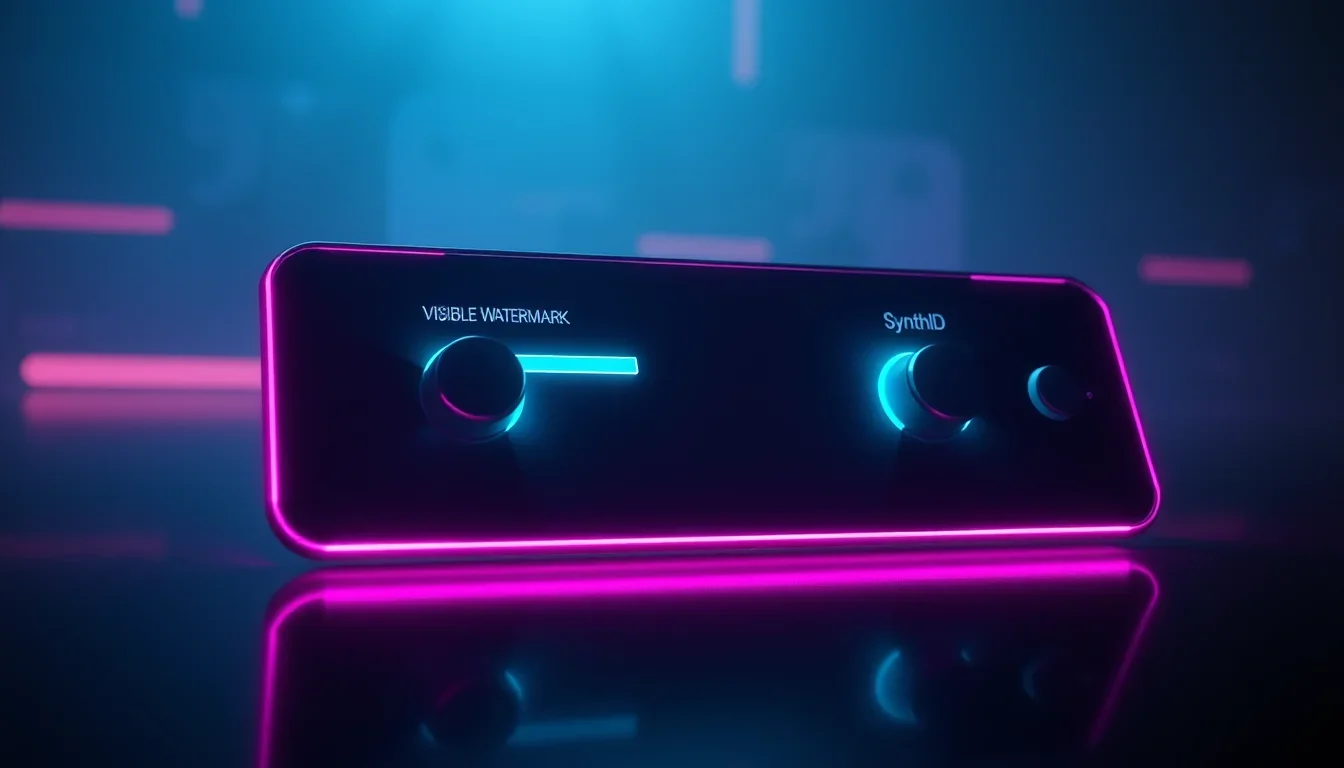
    Google has taken an important step towards content creators: users will now be able to remove the visible watermark from materials generated by its AI models. This applies to images, videos, and music created in Gemini, the Flow video editor, and other tools. Meanwhile, the invisible SynthID watermark and C2PA standard metadata will remain mandatory to preserve transparency of content origin. The decision is already being called revolutionary for AI content production and subscription-based neuro-production.

    New Option in Gemini and Flow

    Google’s Vice President of Gemini products, Josh Woodward, announced on social network X that the toggle will be available for the Nano Banana, Omni, and Lyria models. Users will be able to disable the visible watermark in Gemini and the Flow video editor, with support in Google Search coming later.

    This change reflects the evolution of the approach to AI media labeling: visible watermarks often hinder professional and creative use of content, but the need to identify AI-generated content remains. Woodward explained: “We are balancing creative control and safety: visible watermarks are now optional, but invisible SynthID and C2PA metadata still ensure transparency. You can use Gemini or Search to check whether an image was created by AI.”

    How It Will Work

    The feature will be rolled out in the coming days. Once available, users will be able to go to “Settings” → “Media watermark” and enable or disable visible labeling. This makes mass generation of AI videos for advertising more flexible, as visible marks often reduce the conversion of AI creatives compared to real UGC videos.

    Credentio: Local Validation for Developers

    Google is also open-sourcing a new library called Credentio, which will allow developers to embed a local content authenticity verification mechanism into their applications. This is a step towards a decentralized trust system for AI media.

    “We are balancing creative control and safety: visible watermarks are now optional, but invisible SynthID and C2PA metadata still ensure transparency” — Josh Woodward, Vice President at Google.

    Context: Regulatory Pressure

    Google’s decision follows a controversial move by Anthropic, which added a watermark to text and files created by Claude to comply with EU regulations. This highlights the growing importance of ethical labeling of AI content, especially when creating AI avatars with subtitles, AI voiceovers, and text-to-video generation for e-commerce and crypto projects.

    What This Means for Business

    For companies using an AI pipeline for mass generation of videos, for example, 500 videos per day, disabling the visible watermark simplifies the use of AI content in advertising without compromising trust. At the same time, the cost of one minute of AI video remains competitive compared to traditional production, and the mass generation API allows scaling production, which was previously impossible.

    Google разрешит убирать видимый водяной знак с ИИ-контента — illustration 2

    Frequently Asked Questions

    Will it still be possible to check if content was created by AI?

    Yes, the invisible SynthID watermark and C2PA metadata are preserved, so you can use Gemini or Search to verify the origin.

    When will the feature become available?

    The rollout will begin in the coming days, first in Gemini and Flow, then in Search.

    Why is Google doing this?

    To improve the usability of AI content for professional and creative tasks while maintaining transparency.

    This decision opens new opportunities for subscription-based neuro-production and AI content production, making the generation of AI videos for advertising even more attractive. If you are looking for where to order AI video for crypto or e-commerce, the process has now become even more flexible.

    Want to be the first to test new AI generation capabilities without visible watermarks? Subscribe to our updates to not miss the feature launch and get practical guides on using SynthID and C2PA in your projects.

  • Spotify introduces ‘AI Persona’ labels and excludes their music from recommendations

    Spotify introduces ‘AI Persona’ labels and excludes their music from recommendations

    Spotify has announced the introduction of “AI Persona” labels for profiles created by artificial intelligence and the exclusion of their music from editorial and algorithmic recommendations. The innovation, announced on Tuesday, aims to combat the proliferation of low-quality AI content and protect user experience. This is an important step for the platform, which seeks to maintain a balance between innovation and content quality.

    How it works

    From mid-September, Spotify users will see “AI Persona” badges in the profiles of artists whose public identity is entirely generated by neural networks. The company will not rely solely on self-identification: moderators will review profiles, identifying those where the name and images look like photorealistic AI avatars. The review will start with artists who have exceeded set listening thresholds to cover the most popular ones.

    After labeling, badges will appear in the profile banner, in the “About the artist” section, in search, and in playlist tracks. By default, music from AI personas will not be included in editorial selections or personal recommendations — an exception is made only for those the user has explicitly followed. Following is a conscious choice, so Spotify considers it a clear signal of interest.

    Spotify’s AI policy

    This is an extension of the service’s existing AI rules, first introduced in September 2025. They already prohibit unauthorized voice clones and deepfakes, and use industry methods to identify AI music. Spotify balances between innovation — its own AI playlists, AI DJ, and future remixes — and the need to curb the flow of “AI junk” that has become too easy to produce.

    Spotify introduces 'AI Persona' labels and excludes their music from recommendations

    Allowing it to spread would lead to a deterioration of user experience and subscriber churn. Therefore, the company is implementing clear rules that distinguish the creativity of real people from fully generated personas.

    Right to appeal and feedback

    Artists will be able to dispute the “AI Persona” label if they believe it has been applied incorrectly. Spotify emphasizes that the label refers to public identity, not the way the music was created: “While there is a wide spectrum of AI use as a creative tool, the question of whether a profile represents a real person is where Spotify can give a clear answer. This badge is about identity, not process.”

    Information about how the music was made will remain available through the AI Credits and SongDNA features. In the coming months, a tool will be introduced for reporting profiles that look like AI personas but are not yet labeled. This will also help distinguish them from future AI remixes and covers allowed by recent licensing agreements with labels UMG and Merlin. The latter will allow fan remixes and covers with royalties to artists.

    Implementation timeline

    Self-labeling through Spotify for Artists will become available on August 11, 2026, and the badges themselves will appear the following month. Users will see the interface changes almost immediately after launch.

    Spotify introduces 'AI Persona' labels and excludes their music from recommendations

    Frequently asked questions

    What is an “AI Persona” on Spotify?

    It is a label indicating that an artist’s profile represents an AI-generated persona, not a real person. It helps users distinguish such content from music by live performers.

    Will the label affect streams?

    Yes, music from AI personas is excluded from recommendations and playlists but remains available to followers. If a user has followed such an artist themselves, they can continue listening to their tracks.

    Can the label be appealed?

    Yes, artists can file an appeal if they believe the label has been applied incorrectly. Spotify will review each case individually.

    Spotify introduces 'AI Persona' labels and excludes their music from recommendations

    How does this relate to AI remixes?

    The labels help distinguish AI personas from permitted AI remixes and covers that will soon appear thanks to licensing deals. Remixes will be labeled differently and will not be excluded from recommendations.

    Conclusion

    Spotify is betting on transparency and quality control to maintain the trust of users and artists. If you create music with AI, it’s important to keep up with policy updates and properly label your profiles. And if you’re a user — now you have more information about who is behind the tracks in your playlists.

    Stay tuned for updates and share your opinion about the new labels in the comments — your feedback will help make the platform better for everyone.