Tag: youtube shorts

  • Mass video posting: what is “clip farming” and how to use it effectively?

    Mass video posting: what is “clip farming” and how to use it effectively?

    New terms constantly emerge in the content creation sphere, and one of them is “clip-farming.” This term is controversial because its meaning is interpreted differently. Understanding this phenomenon is critical for anyone aiming for maximum audience reach on platforms like TikTok, YouTube Shorts, and Reels. Let’s explore what clip-farming actually means, where it came from, and how it can be used for mass video posting without harming one’s reputation.

    What is “Clip-Farming”? Two Main Meanings

    The term “clip-farming” has two main interpretations, which are often confused, leading to misunderstandings and accusations among content creators.

    First Meaning: Staging Moments for Clips

    Initially and most commonly, “clip-farming” refers to the deliberate creation of dramatic or shocking moments during a live stream. The goal is to provoke viewers into creating short clips that are then spread across social media. The Cambridge Dictionary defines it as “the conscious act of doing or saying something shocking or dramatic in a social media video in order to create short videos that are then widely shared online.”

    “A streamer knows that a 20-second reaction spreads further than eight hours of gameplay, so they build the stream around creating reactions.”

    This meaning refers to a behavioral strategy where the streamer “plays to the camera” to elicit a specific reaction from viewers and make them click the “Clip” button. For example, on Twitch, the “Clip” button saves the last 25 seconds of a stream and the next 5, activated by the viewer.

    Second Meaning: Mass Cutting and Distribution of Short Videos

    The second, broader meaning describes a workflow: cutting a long video (VOD) into dozens of short clips and then distributing them across multiple platforms. In this context, clip-farming is simply content repurposing with a catchier name. Tools and agencies specializing in short-form content use this term to describe the pipeline: take a three-hour VOD, cut 30 clips, reformat them vertically, and schedule them for publication on four platforms.

    “Clip-farming” is part of a whole family of internet terms built on the metaphor of “sowing” and “harvesting.” These include “karma-farming,” “rage-farming,” “engagement-farming,” and “aura-farming.” You “sow” provocation and “reap” attention. This slang has long since moved beyond content creator circles, as evidenced by the inclusion of similar terms in dictionaries.

    • Wiktionary already contains an entry for “clip farm” as a verb, meaning “to act or exploit a situation to gain online attention, especially repeatedly or inauthentically.”
    • Collins Dictionary is considering adding the term “clip-farming.”

    The appearance of these terms in dictionaries indicates the widespread practice and the word itself.

    Why do streamers engage in “clip-farming”?

    The reasons why streamers resort to “clip-farming” (in a behavioral sense) are structural, not personal. They are due to the peculiarities of modern platforms and audience engagement mechanics.

    Key factors:

    1. New audience discovery: Short video feeds (TikTok, YouTube Shorts, Reels) are the primary way for new viewers to find content. One successful clip can bring more views than months of live streams.
    2. Attention retention: Live streams, offering unpredictability and the potential for dramatic moments, are better at retaining viewers. Streamers feel this in audience retention graphs long before anyone calls it “farming.”
    3. Monetization: Short-form content generates direct revenue through platform creator funds, brand deals based on reach, and the clip economy, where third parties profit from reposting others’ streams.

    These factors make “clip-farming” (in a behavioral sense) a rational response to how modern platforms work and are monetized.

    “Clip-farming” vs. “clip-cutting”: What’s the difference?

    The key difference between these two concepts lies in intentions and process.

    • Clip-farming (behavioral): This is a behavioral choice made during content creation. The streamer consciously acts in a way that provokes the creation of clips. This happens “on camera.”
    • Clip-cutting (workflow): This is a production stage that occurs after the stream ends. You take existing footage and shorten it. This has nothing to do with how you behaved during the stream.

    Most successful channels use clip-cutting. For example, tools like Eklipse scan a finished VOD and automatically cut moments that have already been successful, formatting them for TikTok, Shorts, and Reels. This allows for automatic short video publishing and ensures mass video posting without manual labor.
    Массовый постинг видео: что такое «клип-фарминг» и как его использовать эффективно? — illustration 2

    Ethical Dilemmas and Practical Implications

    The community actively discusses whether “clip farming” (in a behavioral sense) is ethical.

    • Arguments “for”: Clips are an audience discovery layer. Refusing to create them is refusing to be found. A creator who cuts and publishes genuine highlights does the same job as a “farmer,” but with better source data.
    • Arguments “against”: Artificially created drama trains the audience to expect drama. Streamers who actively “farm” report a trap where the bar is raised with each broadcast, and the only way to maintain clip effectiveness is escalation. Viewers who come through a “fabricated” clip come for a version of you that doesn’t exist eight hours a day, so they don’t stay.

    An honest conclusion: repurposing genuine highlights is fine, and every serious channel should do it. Behavioral “clip farming” has its ceiling, and creators who reach that ceiling usually describe it as exhausting the possibilities for escalation.

    Automating Mass Video Posting: A Solution for Efficiency

    If your goal is reach without the need to stage moments, then you don’t need “farming,” but an efficient workflow. Solutions for automatic short video publishing can significantly save time and resources. Services like Eklipse can:

    • Scan finished VODs and mark the most interesting moments.
    • Automatically edit them into vertical clips for TikTok, Shorts, and Reels.
    • Schedule auto-posting for publishing to 5 platforms or even more.
    • Offer voice commands for instant clip cutting during gameplay.

    This approach ensures seamless short video distribution and allows you to publish 100 videos a day while you sleep. This allows you to focus on creating quality content, rather than routine work.

    Frequently Asked Questions

    What is “clip farming”?

    “Clip farming” is the deliberate creation of dramatic moments during a live stream for viewers to cut and distribute as short videos. More broadly, it also refers to the mass cutting and distribution of short videos from long-form content.

    Why do streamers engage in “clip farming”?

    Streamers engage in “clip farming” to attract new audiences through short video feeds, maintain viewer attention through unpredictability, and monetize content through platform funds and brand deals.

    Is “clip-farming” a bad practice?

    Repurposing genuine highlights is not a bad practice. However, staging fake reactions to get views often backfires with the audience. The main problem with behavioral “farming” is the need for constant escalation, which leads to burnout and a loss of viewers who came for artificial drama.

    What is the difference between “clip-cutting” and “clip-farming”?

    “Clip-cutting” is the editing stage of existing material. “Clip-farming” is the choice of behavior during a broadcast aimed at creating moments for clips. Cutting is universal, “farming” is a strategy.

    Conclusion: Effective Mass Posting Without Compromise

    Distinguishing between the two meanings of the term “clip-farming” — behavioral and workflow-related — allows for a clear strategy. If you want to achieve maximum reach but are not willing to stage moments, the solution is simple: you don’t need “farming,” you need effective automation.

    Use mass posting services that allow you to mass upload videos with proxies and anti-detection, ensure cross-posting of videos to all platforms at once, and manage schedules for 10+ accounts from a unified dashboard. This will allow your best moments to be seen without extra effort and compromises on content quality. Start optimizing your distribution strategy today so that your content works for you 24/7.

  • Banner Advertising in Short Videos: Reach for Pennies Without Filming

    Banner Advertising in Short Videos: Reach for Pennies Without Filming

    Banner advertising in short videos is not magic, but pure math. While influencers ask for millions for a single video, you can buy a million impressions for less than lunch in the capital. CPM below 50 rubles, reach for pennies, and hypothesis testing for 1000 rubles. Forget about bloggers and filming days: we break down how this works using TikTok, Reels, and YouTube Shorts as examples.

    What is banner advertising in short videos

    This is overlay advertising: a static or animated banner on top of a video. You don’t pay for content production—only for impressions. You can place a banner in TikTok or Reels through programmatic platforms that automatically distribute your creative across hundreds of videos.

    The main advantage is transparent statistics. You see real reach, CPM, and CTR in real time. No inflated numbers or “gray” schemes—only white-hat platforms.

    Why this is more profitable than influencers

    An influencer with a million followers charges 100–300 thousand rubles for a single video. And reach is not guaranteed. banner advertising in video gives a CPM from 30 to 50 rubles. For 10,000 rubles, you get 200–300 thousand impressions. The math is obvious.

    I tested both schemes: with bloggers, I burned my budget without results, and with banners, I got a steady flow of leads at a price 5 times lower. That’s why arbitrage specialists are switching to automated placement.

    Where to place: TikTok, Reels, YouTube Shorts

    Each platform has its own features. On TikTok, banners are shown in the recommendation feed, on Reels—inside stories, on YouTube Shorts—in the vertical player. CPM varies everywhere, but on average stays within 30–50 rubles per thousand impressions.

    Banner Advertising in Short Videos: Reach for Pennies Without Filming

    For info-business, mobile apps, and crypto projects, this is an ideal channel: mass reach for pennies. Automated placement on hundreds of videos allows scaling without manual work.

    How to launch banner advertising without filming

    You don’t need production. One static banner in JPG or PNG format is enough. Platforms will select sites and videos for your audience themselves. The whole process takes 15 minutes.

    Hypothesis testing for 1000 rubles is real. Launch 2–3 creatives with different offers, look at the statistics, and scale the winner. This way, you avoid wasting your budget on ineffective formats.

    Case studies: who is already making money on banners

    Info-business promotes webinars with a CPM of 40 rubles. Mobile games get installs for 15 rubles each. Crypto projects collect ICO applications. All this—without a single video.

    One of my clients, an info-businessman, invested 50,000 rubles and got 1.2 million impressions in a week. CTR 1.5%, lead price—80 rubles. With influencers, he would have spent the same money on one video with a dubious result.

    Banner Advertising in Short Videos: Reach for Pennies Without Filming

    Frequently asked questions

    How much does banner advertising cost on TikTok?

    CPM on TikTok ranges from 30 to 70 rubles depending on geo and targeting. On average—50 rubles. This is tens of times cheaper than with bloggers.

    Can I place a banner without creating a video?

    Yes, this is the main scenario. You upload a banner, choose an audience, and launch the campaign. The platform itself finds videos for display.

    What statistics are available?

    Transparent: impressions, clicks, CTR, CPM, conversions. You see everything in real time and can optimize the campaign on the fly.

    Conclusion

    Banner advertising in short videos is the lowest CPM in shorts. Forget about bloggers and filming: the real math speaks for itself. Don’t pay an influencer—buy reach for pennies. Order banner advertising today and get the first results within an hour.

  • Mass Video Posting: How an Online School Got 44 Million Views

    Mass Video Posting: How an Online School Got 44 Million Views

    The online school «100ballny repetitor» achieved 44.48 million views by integrating teachers into entertainment videos and distributing them through a network of TikTok accounts and YouTube Shorts. This case shows how mass video posting with automatic publication of short videos allows you to go beyond traditional advertising and build sustainable content distribution.

    Instead of relying on a single blogger or viral video, the team bet on a systematic approach. The result is tens of millions of views and a working model of brand presence in entertainment content.

    Campaign objectives and approach

    The client is the online school «100ballny repetitor». The task is to go beyond educational content and gain mass presence in short videos. The campaign period is May 2026.

    Instead of classic advertising with bloggers, the brand integrated teachers into familiar entertainment formats. The videos were distributed through a network of TikTok and YouTube Shorts accounts with clips in four themes: movies, educational and entertainment content.

    Mass Video Posting: How an Online School Got 44 Million Views

    Campaign results

    The campaign showed classic short-video mechanics: stability gives a large number of videos, additional growth comes from the upper tail of successful publications. The top 10 videos gathered 8.14 million views, the top 50 — 22.51 million (more than half of all views).

    • Total views: 44.48 million
    • Unique accounts in placement: 1.26 million
    • Average views per video: 5.27 million (YouTube Shorts)
    • Maximum views for one video: 10.72 million

    Breakdown by platform

    The bulk came from TikTok — 38.87 million views (87%). YouTube Shorts gave 5.27 million, other social networks — a negligible share.

    Campaign dynamics

    The peak of activity occurred on May 14–20, 2026. Maximum views were recorded on May 17 and 19 — 10.72 million and 9.10 million, respectively.

    Mass Video Posting: How an Online School Got 44 Million Views

    Why it worked: 3 reasons

    1. Authenticity: the brand is integrated into the video through teachers’ clothing, not a direct offer.
    2. Scalability: many publications across different accounts instead of one big blogger.
    3. Flexible placement logic: you can choose the topic, platform, audience, and format of presence.

    «For us, it’s important not just to get views, but to understand whether this format can create brand awareness without feeling like intrusive advertising», — Natalya Zolotova, head of Influence and UGC at «100ballny repetitor».

    Frequently asked questions

    How to publish 100 videos a day?

    Use mass-posting services with API that allow you to upload videos to multiple platforms simultaneously and schedule delayed posting.

    How much does mass posting cost per month?

    The cost depends on volume: a package for 500 publications usually costs from 10,000 ₽, monthly tariffs with uploading to 10+ accounts start from 25,000 ₽.

    Which platforms support cross-posting?

    Modern services support TikTok, YouTube Shorts, Instagram Reels, VK Clips, and other platforms — up to 5 platforms in one interface.

    Mass Video Posting: How an Online School Got 44 Million Views

    Conclusion

    The case of «100ballny repetitor» proves: mass video posting with automatic publication of short videos is an effective distribution method. The brand goes beyond a narrow audience, and the integration does not seem intrusive.

    If you want to scale your presence in short videos, consider mass-posting services with a unified panel for TikTok, YouTube, and Instagram. Start with a test campaign of 100 videos and evaluate reach on schedule.

  • YouTube as a Full-Funnel Platform: Insights from SharkNinja and Adam W for Creator Marketing

    YouTube as a Full-Funnel Platform: Insights from SharkNinja and Adam W for Creator Marketing

    YouTube as a Full-Funnel Platform: Insights from SharkNinja and Adam W for Creator Marketing

    YouTube is becoming the most measurable platform in a brand’s creator mix. The combination of long-form, short-form, and content with cumulative value makes it a true full-funnel platform. At Cannes Lions 2026 in the Later Lounge, a session featuring Lyle Stevens (co-founder of Later), Mitun Shet (YouTube), Stacey Carpenter (SharkNinja), and creator Adam W discussed the future of creator-led marketing.

    YouTube is a Full-Funnel Platform: Data and Facts

    Mitun Shet noted that 76% of viewers on YouTube experience things they never thought they would experience thanks to the platform. Creator advertising is growing four times faster than the entire media market.

    45% of YouTube Shorts users do not use TikTok, and 65% do not use Instagram Reels. This is a significant audience accessible only through YouTube.

    YouTube as a Full-Funnel Platform: Insights from SharkNinja and Adam W for Creator Marketing

    Best Creative Partnerships Are Built on Storytelling

    Adam W builds content around human conflict: a recognizable problem, a dramatized story, the brand as a solution. He described a campaign with an auto brand where the concept was built on complaints about cars—viewers couldn’t believe it was an ad.

    Stacey Carpenter talked about SharkNinja Originals: content is created with creators as talents, not speakers, with unified IP for different markets. 70% of YouTube creators work with both Shorts and long-form content, allowing them to serve different stages of the funnel.

    Content on YouTube accumulates, but most brands don’t account for this

    30% of clicks and 40% of views on YouTube occur 30+ days after publication. Adam W gave an example: a video initially got 5 million views, and a year later—650 million. The new Dynamic Brand Segments feature allows brands to place ads in already successful videos post-factum, reducing risks.

    YouTube as a Full-Funnel Platform: Insights from SharkNinja and Adam W for Creator Marketing

    AI is changing search, and YouTube content is being cited

    According to Later, 90–95% of AI assistant responses reference creator content, not brand content. SharkNinja is building a creator ecosystem across three funnel levels: entertainment, education, and affiliate.

    YouTube tools (Inspiration Tab, Dream Screen, Omni) lower the barrier to producing content that AI models are most likely to cite.

    YouTube as a Full-Funnel Platform: Insights from SharkNinja and Adam W for Creator Marketing

    Conclusion: YouTube as Brand Infrastructure

    Creator content on YouTube builds a layer of third-party validation that AI uses for years. Brands that have stopped thinking of YouTube as a media buy and started viewing it as infrastructure are investing in long-term relationships with creators and content that accumulates value.

    The window for building such sustainable presence is closing. Ready to build a creator program with real sustainability? Explore Later’s influencer marketing services.

  • How to Become a Clipper in 2026 and Start Earning: A Complete Guide

    How to Become a Clipper in 2026 and Start Earning: A Complete Guide

    How to Become a Clipper in 2026 and Start Earning: A Complete Guide

    Dream of making money from content without appearing on camera? In 2026, the profession of a clipper is one of the fastest and most accessible ways to monetize video. A clipper is a person who cuts long streams or videos into short vertical clips for TikTok, YouTube Shorts, and Reels.

    The main secret to success is volume: the more clips you publish, the higher your earnings. In this guide, we’ll break down how to become a clipper from scratch, what payment paths exist, and how to automate the process with AI.

    Who Is a Clipper and What Do You Need to Start

    A clipper takes long content—a stream, game recording, podcast, or YouTube video—and cuts it into vertical clips lasting 15–60 seconds. You don’t need to be a streamer or have editing experience. The task consists of two parts: find a standout moment (clutch, multikill, funny reaction) and format it so the first three seconds hook the viewer.

    Platforms promote vertical clips more actively than simply cropped horizontal videos. Therefore, it’s important not just to crop but to reformat to 9:16 and add subtitles. Subtitles are mandatory, as most people watch clips without sound.

    How to Become a Clipper in 2026: Step-by-Step Process

    Step 1: Choose One Niche

    Don’t try to clip everything at once. Focus on one game (e.g., Call of Duty, Valorant, Fortnite) or one streamer. This helps the algorithm understand your audience and allows you to learn which moments perform best.

    Step 2: Create Accounts for Publishing

    Register on TikTok, YouTube Shorts, Reels, and X (Twitter). Use the same name everywhere so viewers can find you. In the description, specify your niche, e.g., “daily Warzone clips.”

    Step 3: Get Source Material

    If you stream, use your own VODs. If not, take public VODs from Twitch, Kick, or YouTube. Important: check the streamer’s rules—many require attribution or have official programs for clippers.

    Step 4: Cut the Clip (Where Hours Used to Be Spent)

    Manually searching for the best moments in a three-hour stream is the biggest mistake beginners make. In 2026, use AI services, such as Eklipse. Simply paste the stream link, and the neural network will automatically find kills, clutches, and standout reactions, then cut them. This takes minutes instead of hours.

    Illustration 1

    Step 5: Reformat, Add Subtitles, and Publish

    Convert the clip to a vertical 9:16 format and add automatic subtitles. Tools like Eklipse Studio do this in one pass. No need to edit each clip manually.

    Step 6: Publish Daily and Analyze

    Post at least one to two clips per day at the same time. Track which videos get more views and make more of those. Use a content scheduler to avoid missing days.

    Two Earning Paths for a Clipper

    Path A: Clipping Your Own Streams

    If you already <a href="/blog/how-a-streamer-can-grow-on-tiktok-and-youtube-shorts/" title="How a streamer can grow on TikTok and YouTube Shorts”>stream, even to a small audience, you have unique content. clip your VODs and participate in creator reward programs, such as Eklipse Creator Rewards.

    This program pays for views of your clips. In June 2026, 1,950 creators accumulated 7.85 million views, and 14 of them received cash prizes and games. It’s all free—just publish clips from Eklipse and fill out the participation form.

    Как стать клиппером в 2026 году и начать зарабатывать: полное руководство — illustration 2
    Illustration 2

    Path B: Creating a Channel with Clips of Other Streamers

    The classic model: choose a popular streamer or game, create a channel with their best moments, and earn from ads or direct deals. TikTok and YouTube pay through reward programs. But competition is high, and many streamers have official clipping programs (e.g., on Kick). Participating in an official program is usually more profitable, as you get protection from strikes and direct income.

    Why Volume Matters Most

    One brilliant clip per week loses to ten average clips per week. Algorithms love frequency. Clippers who earn $1,000–2,000 per month publish at least one clip per day. Those who post sporadically almost never generate income. The only way to maintain volume is to automate clipping. AI tools turn one three-hour stream into 30 days of content.

    Mistakes That Keep You at Zero

    • Irregular posting. The algorithm sees inconsistency as a sign of low quality. Better to post two clips per day for a month than 15 over a weekend and then silence.
  • Weak first frame. A clip starting with “well, it happened” is doomed. Start with the most striking moment.
  • Lack of subtitles. Without them, viewers will simply scroll past.
  • Clipping other people’s streams without checking the rules. Always look for the streamer’s official program — it’s safer and often more profitable.
  • Manual editing. This kills volume. Use AI.

Frequently Asked Questions

How to become a clipper with no experience?

Choose one game or streamer, create social media accounts, and use an AI service for editing. Publish daily. You can release your first clip on the same day.

Illustration 3

How much do clippers earn?

With regular posting — $500–2000 per month after 90 days. Earnings depend on the number of clips released, not on talent.

How to become a clipper on Kick?

Join the official Kick clipping program and use a VOD editing tool like Eklipse. This is one of the most active paid programs.

Do I need to show my face?

No. Clipping is a faceless job. You use someone else’s or your own content.

Is it legal to clip other people’s streams?

Yes, but with conditions. Always check if the streamer has an official program and give credit. Otherwise, you risk bans.

Illustration 4

What’s the fastest way to start earning?

If you already stream — edit your own VODs and participate in a rewards program, like Eklipse Creator Rewards. This requires no permissions, and views go directly toward payouts.

Conclusion

To become a clipper in 2026, you need three things: choose a niche, eliminate manual editing with AI, and choose a monetization path (your own streams through a rewards program or a channel with other people’s clips). Volume is the main factor for income, and only automation makes it achievable.

If you stream, start with clipping your own VODs and registering for Eklipse Creator Rewards. Try AI editing right now: paste the link to your latest stream and find out how many clips you could publish.

  • Marketing in the Beauty Industry 2026: Channels, Creators, and Budget

    Marketing in the Beauty Industry 2026: Channels, Creators, and Budget

    Marketing in the beauty industry in 2026 is not about long campaigns and static banners. It’s about weekly video releases, constant work with content creators, and a clear understanding of where every ruble goes. This article provides a real 90-day plan, team structure, production economics, and key metrics to show whether your strategy is working.

    Distribution Channels in 2026

    Brand loyalty in the beauty segment is minimal. Therefore, TikTok remains the most effective channel for generating interest in a product. Instagram Reels is the second most important, YouTube Shorts is third, but with potential. Pinterest works for the awareness stage and high-intent search. Retail media platforms (Sephora, Ulta, Amazon Ads) become the final conversion point.

    According to NielsenIQ, video formats deliver 40% higher engagement rates compared to images. McKinsey notes that beauty livestreams in China account for about 12% of all online cosmetics sales, and Western countries are quickly closing this gap.

    TikTok

    Content can range from 3 seconds to 10 minutes. Purchases can be set up via Shopify. In the first week after product launch, plan 5–10 short videos (15–30 seconds) from creators.

    Instagram Reels

    Since 2026, Reels length has been increased to 20 minutes, opening up opportunities for longer tutorial videos. Optimal frequency is 3–4 Reels per week.

    YouTube Shorts

    If you’re already creating content for TikTok, cross-posting to Shorts requires almost no additional cost. Short videos can be used to promote longer tutorials on the same channel.

    Pinterest

    Static pins still deliver good CTR to product pages, especially in skincare and fragrance categories. Example: the brand 100% PURE uses paid campaigns on Pinterest and Instagram Reels to attract audiences.

    Marketing in the Beauty Industry 2026: Channels, Creators, and Budget

    Content Formats That Sell

    In 2026, five formats work: tutorials, transformations, GRWM (get ready with me), founder videos, and comparisons (dupes). Tutorials work because beauty products need to be shown in action. Transformations provide visible results on screen. GRWM creates parasocial connections. Founder videos build trust. Comparisons are effective if you avoid using the competitor’s name or logo and instead compare with a price segment.

    Example: e.l.f. Cosmetics runs live shopping streams with up to 20,000 concurrent viewers, selling thousands of product units per event. Rare Beauty combines UGC tutorials with Selena Gomez’s GRWM routines, boasting 8.4 million Instagram followers and 5 million on TikTok.

    Building a Creator Funnel

    Instead of one-time product mailings, a multi-tier program works. Define four levels:

    • Brand Ambassadors — on a quarterly retainer with category exclusivity.
    • Mid-Tier Creators — paid per post with whitelisting rights.
    • Micro-Creators — gifted product plus performance bonuses.
    • UGC Creators — paid only for assets, content used in paid traffic.

    Technology simplifies management. Archive tracks nearly 100% of Instagram tags and 98% of TikTok tags, saving at least 20 hours per week. GRIN and Upfluence allow paying creators and tracking sales via Shopify. Traackr provides beauty industry benchmarks across 13 platforms. For smaller teams, Modash offers access to 350 million creators. Technology budget ranges from $500 to $5,000 per month.

    Important: all creator posts must include clear disclosure of material connection (#ad, #sponsored) in accordance with FTC 16 CFR Part 255. Violations risk legal consequences.

    Video Production Economics

    There are three ways to organize video production. Each has its own cost curve.

    Marketing in the Beauty Industry 2026: Channels, Creators, and Budget

    In-House Studio

    Hire 2–3 creatives, a part-time videographer, and set up an editing suite. Total costs: $400,000–$700,000 per year. High control, but slow ramp-up and limited by the weakest team member.

    Full-Service Agency

    Retainer of $30,000–$80,000 per month. Suitable for launches or large campaigns, but not for daily content flow.

    External Editing Partner

    Fixed monthly fee for editing services: $3,000–$10,000 per month. Fast, consistent, works from your creative director’s brief. Vidpros is an example: you send raw footage (from iPhone, shoots, or creators) and receive finished videos for paid and organic distribution.

    Metrics to Watch

    In beauty marketing, four key metrics stand out:

    • Hook rate — percentage of viewers who watch the first 3 seconds. Below 30% indicates a problem with the opening; above 50% means scale the budget.
    • View-through rate — percentage who complete a 15–30 second video. For beauty, the norm is 25–35%.
    • PDP attach — percentage of clicks to the product page. For brand awareness creative: 1–3%; for direct response: from 5%.
    • Retail sell-through — weekly sales per store at Sephora, Ulta, or Target. Key metric for retail chains.

    These four indicators help determine which content to scale and which to stop.

    90-Day Action Plan

    1. Days 1–15. Analyze the last 90 days. Select top 5 by hook rate and top 5 by PDP attach. Create a plan for the next quarter.
  • Days 16–30. Recruit 8–12 creators through a four-tier funnel using Modash or Archive. Negotiate content usage rights.
  • Days 31–45. Shoot with the founder (3–5 hours of raw material). Send the material to the editing team — first cuts within 72 hours.
  • Days 46–60. Launch a paid campaign with a test budget of $5,000–$15,000. After 7 days, evaluate the hook rate, cut the bottom third, and scale the top.
  • Days 61–75. Launch a second wave of creators using winning assets. Whitelist the best videos. Add cross-posts to Pinterest and YouTube Shorts.
  • Days 76–90. Summarize results on PDP attach, sell-through, and revenue attributed to creators. Formulate a plan for the next quarter.
  • Brands operating at this pace consistently outperform those that work campaign-to-campaign with three-month gaps.

    Marketing in the Beauty Industry 2026: Channels, Creators, and Budget

    Frequently Asked Questions

    How does beauty marketing differ from branding?

    Branding is long-term work on identity and positioning. Marketing is short-term work on tracking consumer behavior and conversion. Branding drives marketing, but they are not interchangeable concepts.

    Should I choose an agency or a freelancer?

    Agencies are better suited for product launches and large integrated campaigns. Freelancers are better for specific tasks. External editing partners are optimal for a continuous content flow that neither can provide.

    How much should a beauty brand spend on marketing?

    Many DTC brands spend 20–30% of revenue, skewed toward paid traffic and creator work, since beauty is a category with high AOV and LTV.

    Do I need to disclose every paid creator post?

    Yes. FTC 16 CFR Part 255 requires explicit disclosure of material connection within the post itself, not via a link in the profile.

    What is a realistic budget for a creator program in 2026?

    For companies with $10–30 million in annual revenue — $20,000–$80,000 per quarter. This will support a four-tier funnel with 30–50 active creators, content rights, and tools.

    If your team shoots more than it can process, we can help. Send a sample shoot and a brief brief, and we will edit the first video for free so you can evaluate the result before full collaboration.

  • Fashion Marketing 2026: Channels, Video, and Budget

    Fashion Marketing 2026: Channels, Video, and Budget

    Fashion Marketing 2026: Channels, Video, and Budget — A Playbook for Brand Marketers

    Most articles about fashion marketing are written for students dreaming of getting into fashion school. This material is for the brand marketer who has a product launch in 8 weeks, a limited budget, and daily requests for new creatives pouring into Slack. At the end — our playbook.

    In 2026, speed in the fashion industry dictates the law of speed: your marketing must move faster or at least keep pace with the supply chain. Ultra-fast fashion has evolved from a niche segment into consumer expectation. The six-month campaign cycle is obsolete. Brands need to work like a newsroom, production studio, and data lab simultaneously.

    To succeed, you need to fundamentally redefine the concept of “creative.” Creative is no longer one billboard. Creative is 1000 relevant impressions. We will help you plan your team, allocate your budget, and understand the specifics of each social network to maximize Media Impact Value (MIV).

    Video as the Foundation of Fashion Marketing

    Traditional brand and performance marketing have merged into a single video stream. The reason is the “attention delta.” In 2022, a user could remember a brand from a static ad. In 2026, platforms like Instagram use a retention-based distribution model: if a user doesn’t watch a video for longer than 1.5 seconds, the platform stops showing it to similar users.

    Video creates more viewing time; each new frame (close-up of fabric, scene change) resets the attention timer. The first frame rule: never start a video with a black screen. The first frame is a billboard. If the user doesn’t understand the category (“this is a dress”) within 400 ms, they scroll past.

    According to Launchmetrics (2024), 44% of shoppers worldwide have purchased clothing through social media 3–7 times, and 24% have done so 8+ times. Influencer voice accounts for 75% of TikTok’s Media Impact Value. Social commerce revenue will exceed $1 trillion by 2028. For “strong buyers,” the funnel looks like this: watched a video → clicked on a product tag → confirmed purchase with biometrics. Traditional website navigation has disappeared. Every marketing dollar not invested in vertical video is structurally disadvantaged.

    Multidimensional Assets

    Static shows the appearance of a jacket; video shows how the lapels move, how the zipper sounds, how many pockets are inside. These “utility signals” convert buyers. If they are absent, the buyer is forced to guess — leading to a high cart abandonment rate.

    Team for a Fashion Brand in 2026

    A successful brand needs:

    • Merchandiser-Marketer: Tracks sales by SKU and updates the calendar based on return data. If a SKU has 40% returns due to sizing, the creative needs to be changed to save margins.
    • Editor: From one shoot day, produces 40+ vertical assets while maintaining the brand voice.
    • Visual Merchandising Lead: The guardian of the brand’s soul. Ensures the signature red doesn’t turn into orange on Pinterest. Guarantees the brand’s “vibe sovereignty” across all digital domains.

    Key Channels and Budget Allocation

    For a brand with an annual turnover of $5–30 million in 2026, four main channels work:

    • TikTok (30–40% of spend): Test at least 4 different creators, paying $200–500 per post. Spark Ads are the gold standard. CPM ranges from €25 to €45. Creator content dominates in the segment with an average order value up to $300 due to “low-quality trust”: Gen Z and Gen Alpha trust a person with a ring light in their bedroom more than a professional model.
    • Instagram Reels (20–30%): Responsible for visual branding and aesthetics. CPM is €25–45, creator fees are €10–50.
    • YouTube Shorts (10–15%): An underrated channel. The same vertical content provides free reach for 90 days after publication.
    • Pinterest (5–15%): Where consumers plan outfits. Strong categories include women’s contemporary, modest fashion, and weddings.

    Retail Media (10–20%): For brands selling through Nordstrom, Saks, Revolve, or Amazon Fashion. CPM is higher, but the consumer is already in purchase mode. Retail Media Networks are the biggest shift in rented fashion space since social media. Platforms know what the customer bought last week and what they are searching for today. Moving 15% of the budget to RMN is the digital version of a checkout zone, powered by trillions of data points.

    Don’t distribute the budget evenly. Choose two channels where your audience spends the most time, achieve success, then expand. Use the “masterpiece, then scale” model: first become an authority on keywords on Pinterest, then adapt the creative for YouTube Shorts. Each platform has its own language.

    Six Video Formats That Work

    Ranked by delivery success:

    1. Lookbook scrolls: 15–30 seconds, 3–5 outfits. Inexpensive, long shelf life.
    2. Try-ons with size context: Real people, real sizes, fabric stretch test.
    3. Founder POV: Explains fit changes, fabric origins, pricing reasons. The best single format for new brands.
    4. Show reviews and backstage: Publish in the same week, don’t stockpile.
    5. Style breakdowns: 3 ways to wear one item. Works for both a 24-year-old TikToker and a 48-year-old Pinterest user.
  • Pre-launch Teasers (6 seconds): loops for ads, not for organic content.
  • A Day in the Life of an Atelier: proves craftsmanship, not dropshipping.
  • Comment Replies: a video response to the question “Can it be worn at 157 cm tall?” — the ultimate trust strategy.
  • Mistake: filming one video and splitting it into 12 posts. Correct approach: shoot all 6 formats in half a day, then cut 40 variations. Shooting schedule: hour 1 — heroes for the website (landscape), hour 2 — vertical reviews of 5 products, hour 3 — macro details (fabric, seams, buttons), hour 4 — interviews with designers. The modular method allows the editor to take content from a “library” rather than from a linear film.

    The 70/20/10 Budget Formula

    70% — Bottom of Funnel (paid social, retail media, search, creator affiliate). This is the engine. If an influencer doesn’t deliver 2.5× ROAS within 72 hours, paid amplification is turned off.

    Маркетинг моды 2026: каналы, видео и бюджет — illustration 2

    20% — Middle of Funnel (lookbooks, founder content, stylist breakdowns). Builds a “moat”: the brand story protects against commoditization. If a competitor sells something similar for $10 cheaper, the loyal customer will stay due to investment in the story.

    10% — Innovation (PR, partnerships, shows, retail experiments). The first thing cut in a crisis. But these activities create cultural currency and branded search 18 months down the line. These are strange pop-ups, collaborations with digital artists, glossy editorial features. They don’t generate instant clicks, but they provide “clout,” making creators want to work with you not for a salary, but for career growth.

    A skew towards 95/5 starves future demand. 30/70 burns cash. Stick to the middle ground.

    Legal Aspects of Working with Creators

    Disclaimer: Every paid, gifted, or sponsored post must contain a clear disclosure (#ad in the first three lines, a paid partnership label). Hidden gifting (a brand gives a $500 bag “with no strings attached,” but the creator does not disclose the value) is a violation. The FTC in 2026 is focusing on deceptive engagement. Fines can reach six-figure sums.

    Rights: Obtain written permission for use before paid amplification. Standard 2026 terms: organic + paid use on Meta and TikTok for 90 days, renewal fees stipulated in advance, model releases.

    Pricing Benchmarks (Modash 2024–2025): TikTok — $50–10,000+, YouTube — up to $80,000+, Instagram Reels — $750–50,000+. A working approach: “$300 per post + 10% revenue share on tracked sales after breakeven.” Micro-strategy: instead of $50,000 on one star, spend $50,000 on 50 micro-creators (10–50k followers) in a niche. The “surround sound” effect: when a consumer sees your brand from three trusted creators in a week, it seems like the next big thing.

    Environmental Claims: Any statement about sustainability, eco-friendliness, or ethics in a post caption falls under the FTC Green Guides.

    Frequently Asked Questions

    What is the minimum budget for hypothesis testing?

    1000 rubles per platform is enough. Launch a Spark Ad with one creative for 2–3 days. If CPM is below 50 rubles and retention is above 1.5 seconds, scale it.

    Can I place a banner on TikTok without shooting a video?

    Yes. Use overlay banners or programmatic placement on existing videos. CPM can be below 50 rubles, and reach can be in the millions for pennies. This is an alternative to influencers without the need to shoot content.

    Which channel offers the cheapest CPM in Shorts?

    YouTube Shorts often shows CPM below 50 rubles, especially when using ready-made content. TikTok and Reels are more expensive but offer better targeting quality.

    What is a “non-skippable banner” in Shorts?

    This is a banner that cannot be closed or skipped in the first seconds. It ensures 100% impression but requires careful design to avoid annoying the user.

    Conclusion: Your Action Plan

    Ready to test? Forget about bloggers with million-ruble fees. The real math is CPM below 50 rubles, hypothesis testing for 1000 rubles, banners without shooting. Start with micro-creators and watch the numbers. Your engine is 70% bottom of the funnel. Be ruthless.

  • Best Hooks for Stream Clips: 5 Techniques That Stop the Scroll

    Best Hooks for Stream Clips: 5 Techniques That Stop the Scroll

    You spend hours streaming, but your best moments are scrolled past in seconds? In the world of short videos, where viewer attention is the most valuable currency, the first moments decide everything. This is a practical guide for streamers and editors: how to start short clips for TikTok, Reels, and Shorts so that viewers don’t scroll past the video in the first seconds. We’ll break down 5 techniques that turn an ordinary clip into a viral hit.

    What is a Hook in a Short Stream Clip

    A hook in a short stream clip is the first one or two seconds, specifically crafted so that the viewer stops scrolling through their feed on TikTok, Instagram Reels, or YouTube Shorts. According to TikTok Marketing Science, roughly half of the measurable impact of an ad video occurs in this window. For streamer clips, the best hooks are a sharp reaction, a question at the start, an unexpected contradiction, or a peak gaming moment placed in the very first frame.

    For a stream host, a hook is not just a nice beginning. It’s a promise to the viewer: “something funny is coming,” “something strange is coming,” “a victory is about to happen,” “a failure is about to happen,” or “you’re about to see something unexpected.” Therefore, a strong clip rarely starts with an intro, logo, or greeting. It starts with the reason why this moment is worth watching at all.

    Why the First 1–2 Seconds Decide Half the Result

    In short videos, the viewer doesn’t watch the clip first; they decide whether it’s worth stopping at all. They have no patience for an introduction. If the first seconds don’t provide emotion, a question, or action, the finger simply scrolls on.

    TikTok Marketing Science indicates that about 50% of a video’s measurable effect comes in the first 2 seconds, and the first 6 seconds capture most of the overall impact. For stream clips, this means a simple thing: if the beginning is weak, the viewer may never see the joke, victory, failure, rare moment, or strong reaction.

    Streamer clips have another challenge: a new viewer often doesn’t know the creator. They don’t understand inside jokes, team history, old memes, player nicknames, or match context. Therefore, the beginning must work without explanations.

    A weak beginning looks like this:

    • slow intro;
    • channel logo;
    • “hey everyone”;
    • two seconds of silence;
    • game menu;
    • long lead-in;
    • explanation before the action.

    A strong beginning looks different:

    • streamer in shock;
    • team screaming in voice chat;
    • score 12:12 on screen;
    • character health almost at zero;
    • enemy appears from behind;
    • viewer is immediately asked a question;
    • event starts at its peak, not with backstory.

    Simple rule: if the first frame can be removed and the clip only gets faster, that frame needs to be removed.

    Technique #1: Start with a sharp reaction

    One of the most reliable ways is to start not with the event, but with the reaction to the event. First, the viewer sees the streamer’s face: surprise, laughter, panic, anger, disbelief. And only then do they understand what exactly happened.

    Examples of openings:

    • “No, no, no… How did he do that?”
    • “I’m deleting this game right now.”
    • “Wait. Was he really sitting there?”
    • “That was the dumbest save of my life.”
    • “I can’t believe that worked.”

    This technique works because the face instantly conveys emotion. In games, the screen is often overloaded: map, score, health, weapons, chat, hints. It’s hard for a new viewer to understand where to look in a split second. The creator’s reaction helps: it immediately signals that the moment is important.

    How to put together such a compilation:

    1. Place a large reaction in the very first frame.
    2. Hold it briefly — about half a second.
    3. Then immediately show the event itself.
    4. Add a short caption, preferably no longer than 5–7 words.
    5. Don’t drag out the pause: the reaction should open the moment, not replace it.

    Good example: “He was behind me the whole time.”

    Bad example: “Guys, you’re about to see a very interesting moment that happened during our game last night.”

    A short caption is almost always stronger than a long explanation.

    Technique #2: Start with a question

    A question at the beginning works because it creates curiosity. The viewer wants to know the answer and stays for at least a few seconds.

    Examples:

    • “Can you win a round without firing a single shot?”
    • “What happens if you hide here until the final circle?”
    • “Why didn’t this player die?”
    • “How did I lose a fight I had already won?”
    • “Can you fool an entire team with one move?”

    A question works especially well for compilations that involve a clear experience, a test, a strange situation, or an unexpected outcome. It immediately gives the viewer a goal: to watch not just “something from a stream,” but a specific mini-story.

    A bad question sounds too vague: “What happened next?”, “Have you seen this?”, “How do you like that?” Such questions don’t give a clear promise. A good question should be related to action, risk, or surprise.

    Illustration 1

    Working formulas:

    Can you do the impossible?
    For example: “Can you win without a weapon?”

    Why did the obvious go wrong?
    For example: “Why did he survive a direct hit?”

    What happens if you break the usual tactic?
    For example: “What happens if you don’t defend in the final round?”

    The question can be spoken aloud, displayed as text on the screen, or a combination of both. The main thing is not to drag it out. The answer should start almost immediately.

    Technique #3: Start with a Contradiction

    A contradiction grabs attention because it breaks expectations. The viewer sees a phrase that sounds strange and wants to understand how such a thing is possible.

    Examples:

    • “The worst plan worked perfectly.”
    • “I won because I missed.”
    • “We lost the fight but won the game.”
    • “The quietest player made the loudest moment.”
    • “This mistake saved the entire round.”

    This technique is especially useful if the moment doesn’t look impressive at first glance. For example, a funny miss, a strange game mechanic, an absurd bug, an accidental victory, or a tactical decision that initially seems stupid.

    The secret is not to explain everything upfront. First state the contradiction, then show the proof.

    Weak: “Here’s a moment where I accidentally missed, but because of that, the grenade bounced and hit the enemy.”

    Illustration 2

    Strong: “I won because I missed.”

    Лучшие зацепки для нарезок стримов: 5 приёмов, которые останавливают пролистывание — illustration 2

    The shorter the contradiction, the better. The ideal scheme:

    • bad plan → victory;
    • miss → kill;
    • panic → rescue;
    • mistake → best moment;
    • defeat → unexpected win.

    Technique #4: Start with the Peak of Action

    Sometimes the best hook is not text or a phrase at all, but the moment itself. If the clip has a sharp gameplay peak, it should be placed in the very first frame.

    What can be a peak: the decisive kill; victory in the last second; score 12:12; character health at one; a rare item; an unexpected camera turn; an enemy behind you; a fall from height; a mistake that ruins everything; instant victory after chaos.

    Examples of openings:

    • The screen immediately shows: the character has almost no health, and two enemies are ahead.
    • The first frames show victory, but the streamer shouts: “How did that even work?”
    • The camera sharply turns, and an opponent is already standing behind.
    • The final score is on the board, and the team doesn’t understand why they won.

    This method is especially good when the action is understandable without a long backstory. There’s no need to first show the player running across the map, opening the menu, choosing a weapon, and talking to the team. If the main moment is at the end, move it to the beginning, and then briefly show how everything led up to it.

    You can use the “peak first, then reason” technique:

    1. First frame: the winning moment.
    2. Next second: caption “5 seconds before this, I said the plan was perfect.”
    3. Then: a quick return to the beginning of the situation.

    This way, the viewer immediately gets a strong signal and stays to understand how it happened.

    Technique #5: Start with a Promise and a Sharp Turn

    This technique is built on the first phrase promising a calm or predictable action, and within a second, everything goes the opposite way.

    Illustration 3

    Examples:

    • “This will be the calmest round…” — and chaos immediately starts.
    • “I’ll just check the corner…” — and the enemy is already there.
    • “I’ll play it safe now…” — and the player instantly goes for a risky move.
    • “This boss is easy…” — and the character is immediately destroyed.
    • “No one will find us here for sure…” — and the entire enemy team enters the room.

    Important: such a technique should not be deception for the sake of deception. The viewer should not feel that they were lured by a fake phrase. The twist must be honestly connected to what actually happened in the clip.

    This method works great for humor, failures, team moments, and gaming situations where the streamer themselves accidentally predicts the opposite. The editor only needs to find that phrase, put it at the beginning, and remove everything unnecessary.

    What Almost Never Works

    A slow camera zoom on the face can look beautiful, but in a short clip, it often gets in the way. The viewer expects action but gets preparation for action.

    A logo at the beginning is also usually harmful. Branding is important, but the first seconds are too valuable to waste on an intro. It’s better to place the logo at the end, in the corner of the screen, or use it in the design, but not instead of the main moment.

    Greetings like “hello everyone, today we have…” work for a long video but perform poorly in a short clip. In a short format, the viewer doesn’t expect an introduction. They want to immediately understand why they should watch.

    Also poorly performing are: long captions; starting with the game menu; inside jokes without context; too quiet first sound; an empty screen; long explanations; music without action; an intro before the moment; the same beginning in all videos.

    Meta’s research on Andromeda emphasizes the importance of diversity in creative materials and the ability of systems to choose from a large number of different options. The practical takeaway for clips is similar: if all videos start the same way, the viewer and the platform have fewer reasons to single them out from the rest.

    Illustration 4

    Does the Streamer Need to Do Everything Themselves

    No. The stream host does not have to find moments themselves, cut videos, write captions, select the first frames, and test different opening options. This is a separate job, and it requires time, taste, and experience.

    The streamer usually has another main task: hosting the broadcast, interacting with the audience, playing, creating live moments, and developing the community. And turning these moments into short clips can be outsourced to professional editors.

    One convenient approach is to post a task on a platform where clip specialists work, for example, under the VibeVO model. The streamer uploads the broadcast recording or specifies the desired fragment, and professional performers find strong moments, make short videos, select a hook for the first seconds, and prepare material for publication.

    The main advantage of this approach is paying for results. Instead of spending hours on editing yourself, you can pay for ready-made clips that can be posted on TikTok, Instagram Reels, YouTube Shorts, or other short-form video feeds.

    This is especially useful if: the streamer has many hours of recordings; there is no time to review streams; regular posts are needed; it’s important to test different opening options; more clips are needed than one person can make; you want to work not “by guesswork” but through a clear process.

    A good platform with professional clip makers helps not just “cut the stream” but find moments that can truly hold a viewer’s attention: funny reactions, unexpected wins, failures, arguments, rare in-game situations, and strong emotional episodes.

    How to test different opening options

    Testing options is a way to understand which first second works best. You don’t need to guess which hook is stronger. It’s better to make several versions of the same clip with different openings.

    For example:

    • Option 1: start with the streamer’s shocked face
  • How many short videos can be made from one stream?

    How many short videos can be made from one stream?

    From one stream, you can get anywhere from a few to dozens of short videos. We explain what the number depends on and why clips have become one of the main ways to promote streamers.

    From a typical two-hour stream, you can make five to thirty short videos for TikTok, Reels, and YouTube Shorts. The exact number depends on the density of events: gaming, humorous, and competitive streams provide more moments, while calm talk or background streams provide fewer. But the main thing is not the quantity, but how many videos are actually worth publishing.

    Short videos are one of the main ways to promote streamers because they allow you to reuse a stream you’ve already done. You stream once, and then for several days or weeks you get material for TikTok, Reels, and Shorts from it.

    And you don’t necessarily have to do it yourself. In the VibeVO model, a streamer can upload a recording of the entire stream, and the team of clippers will find the strong moments themselves, make videos, publish them, and earn from the result—the reach of the short videos. For the streamer, this turns a long stream into a source of promotion without separate editing work.

    What determines the number of videos

    1. How dense the stream was

    If something interesting happens every few minutes, there will be many videos. If the stream is calm, with long pauses and repetitive actions, there will be fewer videos.

    High yield usually comes from:

    • competitive games;
    • challenges;
    • funny mistakes;
    • reactions to chat;
    • arguments;
    • unexpected victories;
    • collaborative streams;
    • analysis and tutorials.

    Low yield often comes from:

    • long grinding;
    • calm background stream;
    • technical settings;
    • long conversations without bright phrases;
    • music without explaining the process.

    2. Stream length

    A long stream doesn’t always mean more good videos. After three to four hours, the stream often becomes less dense: the streamer gets tired, the chat slows down, events repeat. Therefore, a two-hour stream sometimes gives more strong videos than a four-hour one.

    3. Genre

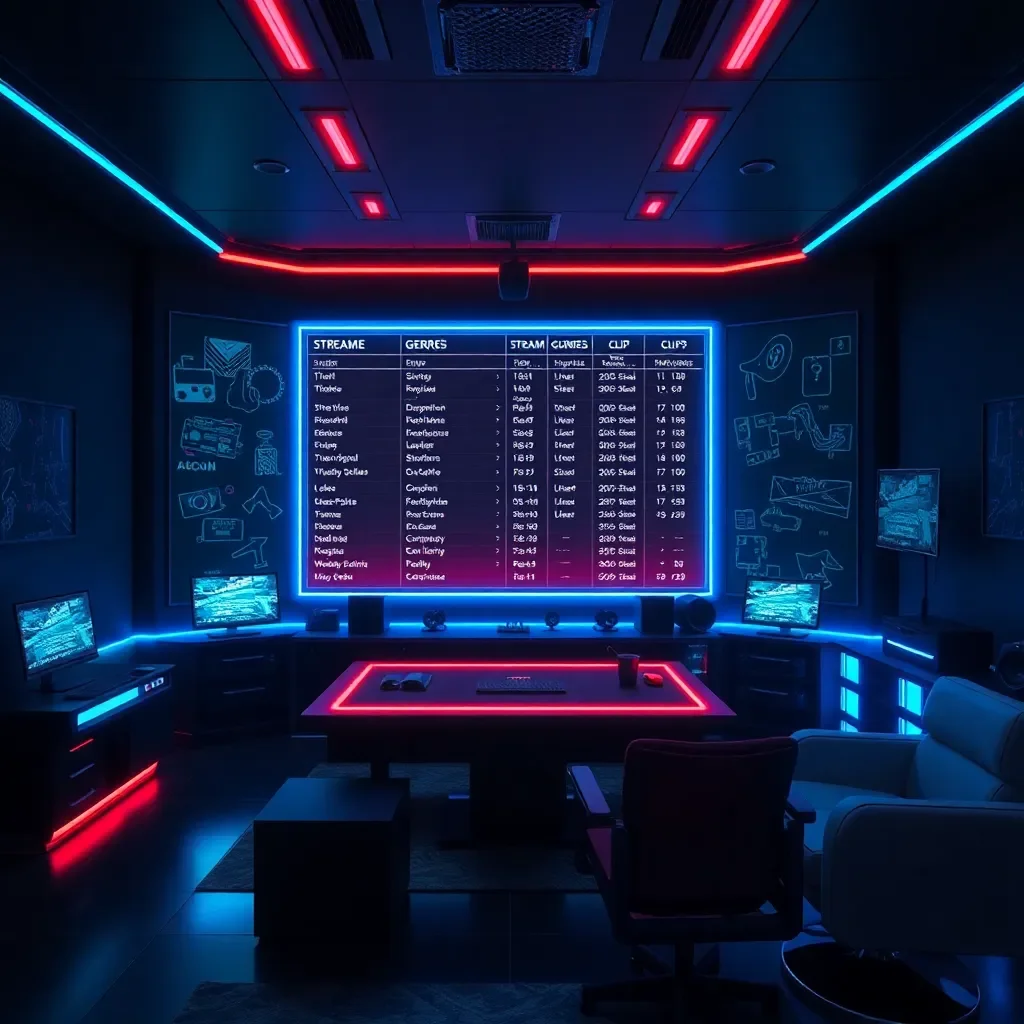
    Stream type How many videos from 2 hours Why
    Competitive games 15–35 Wins, mistakes, reactions, tense moments
    Humor and chat 10–30 Many phrases, jokes, arguments with chat
    Calm playthrough 3–12 Fewer sharp events
    Talk stream 5–15 Depends on topics and brightness of phrases
    Music or creativity 3–10 Needs context, fewer quick scenes
    Podcast format 3–10 Quotes, arguments, and strong thoughts work
    IRL stream 5–20 Everything depends on external events

    These numbers are a working estimate based on VibeVO’s internal data. It’s best to use them as a range, not a promise.

    Illustration 1

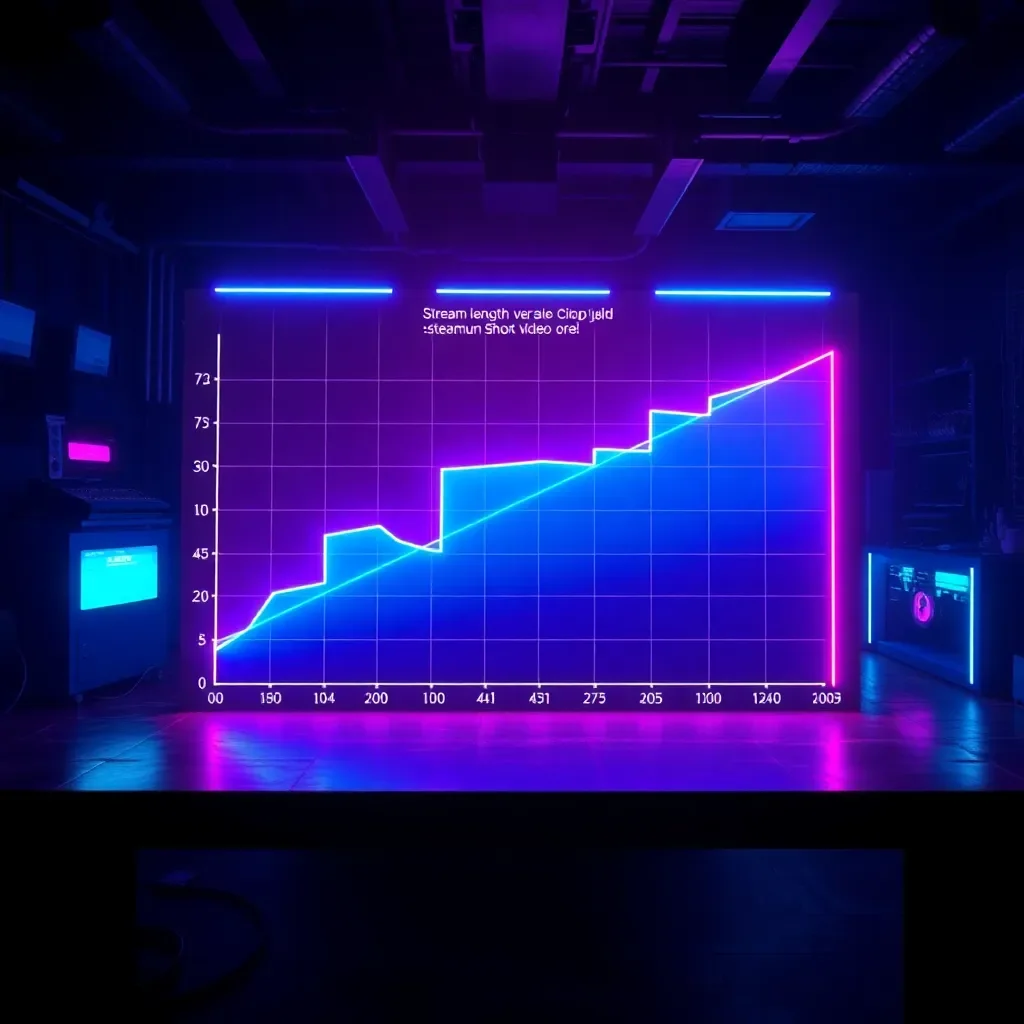
    Table: Stream Length and Approximate Number of Videos

    Stream Length How Many Moments Can Be Found How Many Are Worth Publishing
    30 minutes 2–8 1–4
    1 hour 5–18 3–8
    2 hours 10–50 5–30
    3 hours 15–60 8–35
    4 hours 18–70 8–35
    6 hours or more 20–90 10–40

    The main idea: you can cut more than you publish. A good team doesn’t post everything. They select moments that are understandable to a new audience.

    Why You Shouldn’t Publish All Videos

    If you get 40 clips from a stream, it doesn’t mean you need to post all 40. Weak videos can hurt the overall result: people scroll past them, visit your profile less, and react worse to subsequent posts.

    It’s better to choose:

    Сколько коротких видео можно сделать из одного стрима? — illustration 2
    • videos with a quick start;
    • moments that are understandable without context;
    • emotional scenes;
    • short stories with a beginning and an end;
    • videos that show the streamer’s personality.

    TikTok, in its recommendations for advertising and creative materials, emphasizes the importance of a strong start and video structure: beginning, main part, and ending. This also applies to organic streamer videos: the viewer should quickly understand why it’s worth watching further.

    Illustration 2

    How a Streamer Can Use One Stream for Promotion

    The simplest plan:

    1. Go live.
    2. Save the recording.
    3. Upload it to a service or send it to editors.
    4. Get a set of short videos.
    5. Publish them on a schedule.
    6. See which videos bring in new viewers.

    If you do this regularly, every stream becomes not just a live broadcast but also raw material for promotion. This is especially important given the growth of live streams: Stream Hatchet reports that in 2025, the total number of hours watched for live streams reached 36.4 billion.

    How Many Videos to Actually Publish

    For a beginner streamer:

    • 4–7 videos per week is a good start;
    • 1 video per day is a solid, sustainable pace;
    • 2–3 videos per day if you have many strong moments;
    • More than 3 per day only if you have a team and consistent quality.

    If VibeVO or another team handles the editing, the streamer doesn’t need to maintain this pace themselves. Their job is to deliver good streams and upload recordings.

    Illustration 3

    Frequently Asked Questions

    Which gives more videos: a two-hour or a four-hour stream?

    A four-hour stream usually gives more moments, but not always more good clips. Often, a two-hour broadcast is denser, livelier, and easier to edit. If a four-hour stream has many repetitions and pauses, the return will be lower.

    Does a podcast give as many clips as a stream?

    Usually not. A podcast may yield fewer clips because there are fewer visual events. But good quotes, debates, and strong ideas are excellent for short videos.

    Illustration 4

    Do you need to publish all clips?

    No. It’s better to publish only the strong ones. The rest can be kept for reprocessing, compilations, Discord, Telegram, or future publications.

    Ready to turn every stream into a source of promotion? Start with one broadcast: save the recording, find 5–10 strong moments, and publish them within a week. You’ll see how short videos start working for your growth.

  • Podcast Slicing into Short Videos

    Podcast Slicing into Short Videos

    How to turn a podcast episode into short videos: choose strong phrases, add subtitles, frame the shot, and hand off the clips to the team. Turning podcasts into short videos is about transforming a long episode into short vertical clips for TikTok, Reels, YouTube Shorts, and LinkedIn. Since a podcast relies on speech, the main focus is on strong phrases, controversial moments, subtitles, and clear delivery. Typically, from a 60-minute episode, you can get three to ten ready-made clips.

    Podcasters don’t have to do the clipping themselves. You can upload the episode to a platform, hand it off to editors, or use services that help find strong fragments. In the VibeVO model, the team can break down the episode themselves, create short clips, prepare them for publication, and work toward results — reach.

    How Podcast Clipping Differs from Stream Clipping

    A stream often has on-screen action: a win, a mistake, a reaction, gameplay, chat. In a podcast, the main action is the thought. Therefore, the clip must make the thought noticeable.

    For a podcast, the following are especially important:

    • a strong opening phrase;
    • large subtitles;
    • a clear topic;
    • the right framing of the hosts;
    • brief context;
    • no long pauses.

    Podcasts are increasingly being watched, not just listened to. Edison Research in The Infinite Dial 2025 reports that 48% of Americans aged 12+ have both listened to and watched a podcast, and YouTube has become the most commonly used service among weekly podcast listeners in the US.

    Which Moments to Choose

    Strong Phrase

    This is a thought that can be used as a headline. Example: “Most creators lose not because of ideas, but because of a lack of a system.”

    Disagreement

    If the host and guest disagree, it’s good material for a clip. Disagreement creates tension. Example: “I disagree. TikTok isn’t killing long formats — it’s bringing people to them.”

    Personal Story

    Stories work if they start quickly. Bad: “Well, it was a long time ago, I’ll try to remember now…” Good: “I realized our podcast wasn’t working when no one finished listening to the best episode.”

    Unexpected Opinion

    Clips hold attention well when a phrase breaks expectations. Example: “Not every podcast needs YouTube.”

    How to Design the Clip

    If there is video:

    • use a close-up shot of the speaker;
    • show the second host if their reaction is important;
    • switch the shot when the speaker changes;
    • don’t leave empty pauses;
    • add large subtitles.
  • If there is only audio:

    Illustration 1

    Even an audio podcast can be turned into short videos, but if regular promotion is planned, it is better to record the episode with a camera.

    How to Make a Strong Beginning

    Two types of beginnings work best for podcasts.

    Start with a quote. “The main mistake of beginner authors is that they wait for inspiration.” After that, you can provide context.

    Start with a question. “Why does one episode get 100 views, while another gets 100 thousand?” The main thing is to give an answer quickly. If a question is asked and the answer starts 30 seconds later, the viewer will leave.

    How to Work with Multiple Hosts

    If there are several people in the episode, the video should be clear. Rules:

    Нарезка подкастов в короткие видео — illustration 2
    Нарезка подкастов в короткие видео — illustration 2
    Illustration 2

    If it is a debate, you can show both. If it is a strong thought, a close-up of one person is better.

    Where to Publish Podcast Videos

    TikTok. Short, emotional, and controversial clips work best.

    Instagram Reels. Personal stories, expert phrases, and visually clean videos perform well.

    YouTube Shorts. Suitable for educational, conversational, and thematic clips. YouTube supports Shorts up to three minutes, but podcast videos are often better kept shorter.

    LinkedIn. Good for business podcasts: entrepreneurship, marketing, career, technology, media, management.

    Illustration 3

    Sensor Tower in the State of Mobile 2025 report states that users spent 4.2 trillion hours in apps over the year. This is another reason to format a podcast so that it works specifically in the mobile feed.

    How Many Videos Can Be Made from One Episode

    Episode Length How Many Moments Can Be Found How Many to Publish
    30 minutes 3–8 2–5
    60 minutes 5–18 3–10
    90 minutes 8–25 5–12
    2 hours 10–30 6–15

    This is an estimate based on internal VibeVO data. A strong episode with a guest can yield more videos. A calm conversation without bright phrases yields fewer.

    Important: Consent of Guests and Co-hosts

    Before publishing short videos, make sure the guest and co-hosts agree to the clips. Especially when it comes to personal stories, controversial topics, business, health, finances, or legal issues. You cannot cut a phrase in a way that changes the meaning of a person’s position.

    Frequently Asked Questions

    Can I cut an audio podcast without video?

    Yes. You can use a cover image, guest photo, sound wave, and large subtitles. But video with a camera usually gives more of a live feel.

    Illustration 4

    How many clips will I get from a 60-minute episode?

    Usually 3–10 good clips. There may be more candidates, but you should only publish those with a strong idea, debate, or story.

    Do I need to make different clips for different platforms?

    Yes. For TikTok, it’s better to be faster and more emotional. For LinkedIn, calmer and more thesis-driven. For Shorts, clearer on the topic. The same fragment can be adapted for different platforms.

    Conclusion

    Repurposing podcasts into short videos is not just a technical task, but a strategic tool for audience growth. Choose strong moments, format clips with the platform in mind, and always check participants’ consent. Start with one episode: find 3–5 standout fragments, adapt them for TikTok, Reels, and Shorts, and evaluate the result. Ready to try? Upload your podcast and make your first clip today!