Tag: video repurposing

  • Stream cutting: how to turn a 2-hour broadcast into 10+ viral clips

    Stream cutting: how to turn a 2-hour broadcast into 10+ viral clips

    Every streamer faces a problem: how to mass-clip 100+ clips from a multi-hour broadcast without spending days on it? Stream clipping is not just about trimming videos; it’s an assembly line for creating unique content for different platforms. If you’re tired of the routine, this material is for you. We’ll break down how to get 10 posts from one stream using existing raw footage, and why speed is more important than editing quality here.

    What is stream clipping and why is it critical?

    Stream clipping (or video repurposing) is the process of transforming one source recording into several finished content units, each optimized for a specific platform. For a streamer, this means turning VODs into Shorts, TikToks, Reels, Discord clips, and weekly highlights. This is not the same as simply reposting the same file to all platforms – such content quickly gets lost in the feed.

    Why do streamers need clipping?

    • Raw footage disappears: VOD recordings on Twitch are stored for only 7-60 days, on Kick – 7-30 days. If you don’t act fast, your valuable material will be deleted forever.
    • Moment discovery: The hardest part isn’t resizing, but finding those “highlights”. A streamer scans 6 hours of footage to find 4-5 valuable fragments.
    • Viewers already know: The “Clip” button on Twitch allows viewers to mark the best moments. Your “Clips” section is a ready index of potentially viral content.
    • Efficiency: One stream can yield 8-12 posts: short clips, long highlights, promos, and community materials. This allows you to publish content 7 days a week without increasing broadcast time.

    “Repurposing isn’t a marketing tactic borrowed for gaming. For a streamer, it’s more like basic hygiene, because the source material is abundant, unscripted, and disappears on a timer.”

    Why are streams ideal raw material for clipping?

    Streamers generate more source material in one session than most content creators in a month. Here are three key properties that make live gameplay a unique source:

    • Unscripted: Reactions are live and genuine, and these are what attract attention.
    • Huge volume: You choose, not create. The task is to find gems in tons of data.
    • Natural moments: Games themselves create “highlights”: cool moments, victories, epic fails, chat reactions. You don’t need to invent a hook, you find it.

Deadline Matters: Why Speed is Critical

Unlike marketers whose webinars sit for years, streamers work with material that has an expiration date. How long does it take to cut? Very little, if you act quickly.

  • Retention Window: For a new streamer, this is only a week. The entire pipeline must operate within this window.
  • Preservation: Anything you want to save for future compilations needs to be pulled immediately before the VOD is deleted.

The solution is simple: process each stream within a day or two after it ends, even if you’re just extracting raw moments for later processing.

How to Turn One Stream into 8-12 Posts: A Step-by-Step Guide

Highlight editing is not just copying. Each format requires its own approach.

7 Formats for Cutting Gaming Streams

  1. YouTube Shorts: Epic moments, boss kills. Quick climax.
  2. TikTok: Reactions, not skill. Viewers are more interested in personality than gameplay.
  3. Instagram Reels: Cross-posting, where framing quality plays a key role. The face must be in the shot!
  4. Weekly Highlight Compilations: A long video for YouTube, collecting the best from several streams. Turns casual viewers into subscribers. Details in the article: Stream Content Repurposing Guide.
  5. Stream Teasers: A 15-second snippet from a past session, published the morning before the next broadcast. Shows what to expect.
  6. Clips for Discord Community: Low-cost but highly effective format. Community members will rewatch and quote clips they participated in.
  7. GIFs, Emotes, Memes: A recurring facial expression becomes a channel emote. A ridiculous death becomes a GIF. This is the only format that continues to circulate without your involvement.

Important: for the first three formats, vertical video (9:16 crop from horizontal) is not an option, but a mandatory condition. And subtitles for cuts are not just a nod to accessibility, but a way for the clip to survive with the sound off.

Automatic Stream Cutting: Is a Tool Necessary?

Manual cutting without loss of quality takes hours and doesn’t scale well. The more you stream, the further behind you get. Most people give up repurposing not because it doesn’t work, but because the amount of work becomes unbearable.

Opus Clip Alternative and Other Services

Automated tools allow you to maintain control over selection, but significantly speed up the process. They highlight moments with strong signals, and you decide what to publish. There are services that help create short reformatted videos, such as Eklipse.

Key takeaway: your viewers have already done some of the work. The Clip button on Twitch captures 25 seconds before and 5 seconds after it’s pressed. Your clips page is a ready-made, audience-curated index of the best moments. Start there.

Stream cutting: how to turn a 2-hour broadcast into 10+ viral clips — illustration 2

How Eklipse fits into the workflow

Eklipse takes over the selection and formatting stages, where manual cutting usually “dies.” The service can scan VODs and automatically find highlights. If you prefer to mark moments as you go, voice commands allow you to do so right during the game, further reducing selection time.

Frequently Asked Questions

What is video repurposing?

Video repurposing is the process of transforming one original recording into multiple finished content units, each cut and formatted for a specific platform. For streamers, the source is a VOD, and the result is vertical clips, highlight compilations, community clips, and promotional materials.

How is repurposing different from reposting?

Yes. Reposting sends the same file to multiple platforms. Repurposing creates a new version for each destination, taking into account the aspect ratio, length, and subtitles specified by the platform. Reposting a horizontal video looks like imported content in vertical feeds.

What is the best video cutting tool for streamers?

The one that solves the selection problem, not just formatting. Streamers work with hours of material, not minutes, so a tool that only trims and adds subtitles leaves the slowest step untouched. Look for automatic moment detection in the full VOD, vertical cropping, and subtitles in one pass.

How many clips should be created from one stream?

8-12 posts is a realistic range for one session: 4-6 short clips, one long highlight compilation, a couple of community clips, and a teaser. The quality of the moment is more important than the quantity. Three good clips will outperform ten “passable” ones.

Can AI cut gaming videos?

It can handle the mechanical steps. Detection finds potential moments from a long recording, and editing tools trim to a vertical format, add subtitles, and export according to platform requirements. The selection of moments that represent your channel remains with a human.

How long do I have to cut a stream?

Less than you think. Twitch stores past broadcasts for 7 days for most channels, 14 for affiliates, and 60 for partners, Turbo, and Prime subscribers. Kick’s help center indicates 7 days for unverified channels and up to 30 days for verified ones. Process each stream within a day or two after it ends.

Monetizing your stream through clips is not a myth, but a reality. Streamers who seem productive rarely produce more. They simply get more content from the same broadcast. Clipping allows you to be everywhere, even when you’re not live, and significantly expands your audience. Scan your last VOD and see what raw material is there. The person who clips streams can become your best ally. Start today!

You don’t have to be a streamer to create amazing gaming clips. Let Eklipse AI automatically find your best moments and turn them into epic highlights! Limited free clips are available. Don’t miss your chance!

  • Video Repurposing: How Streamers Grow with Clips

    Video Repurposing: How Streamers Grow with Clips

    Video repurposing: how streamers grow with clips

    Streamers who consistently publish clips after every stream grow faster than others. The KasaiVex case is clear proof: starting with 47 subscribers, no clip exceeded 6,000 views, but over one program cycle — 1,710 followers. The secret isn’t virality but consistency: 29 published clips versus the usual three. Video repurposing is not just a trendy term but a working growth mechanism for small channels.

    Why streamers stop publishing clips

    The main reason isn’t a lack of highlights but routine. Watching VODs, selecting moments, vertical reformatting, captions — this takes more time than the stream itself. So publications happen once or twice and then stop. Consistency is a workload problem, and it wins before the audience has time to react.

    The math of posting frequency

    Short-video platforms reward frequency. One post per week gives TikTok and Shorts seven times fewer chances to show content than daily posts. Every missed stream is lost reach that small channels can’t afford.

    The question that drives growth: how to post after every stream without burning out? Solve this — and views will come on their own.

    Content Agent: AI clip maker from Eklipse

    Content Agent automates the four manual steps that kill consistency. After a stream, one tap instead of an hour of work.

    • Step 1: Discovery. Scans VODs from Twitch or Kick, finds top 3 moments — kills, clutches, hype peaks.
    • Step 2: Justification. Each clip gets an explanation of why it’s good and a hook score — for TikTok or Shorts.
    • Step 3: Captions and timing. Generates subtitles and calculates the best posting time.
    • Step 4: Publishing. One tap — and the clip goes to TikTok, Shorts, and Reels.

    The tool turns posting from “an hour of work I’ll skip” into “a ten-second decision.” That’s the difference between one post and publishing after every stream.

    Video Repurposing: How Streamers Grow with Clips

    What three real cases showed

    Three creators, starting below 50 subscribers, over one program cycle. Numbers from Eklipse records and public post history.

    • Tony — 13 clips, 61,500 views, +209 subscribers from a start of 4. Net result: post — views bring followers.
    • Dodger — 34 clips, 11,400 views, +289 subscribers. Volume even without big views moves the number.
    • KasaiVex — 29 clips, best clip — 5,900 views, +1,663 subscribers. More than the other two combined. No clip went viral.

    Why modest clips beat the virality expectation

    KasaiVex inverts the standard advice. Common belief: growth is a lottery, wait for one hit. But here the best clip didn’t reach 6,000 views, yet growth was maximal. The reason is compounding of modest clips: 29 posts, each bringing a few hundred or thousand views, each a new surface for discovery. Frequency builds an audience that a single viral spike often doesn’t.

    Where it works and where it doesn’t

    The approach is ideal for active Twitch and Kick streamers with clear peaks: FPS, battle royales, kills, and reactions. AI finds clean moments, and posting frequency gives maximum effect.

    Weak spots: if you don’t stream on Twitch or Kick, there’s no VOD to scan. For Just Chatting or slow strategies, the detector finds moments worse — it’s tuned for gaming peaks.

    Video Repurposing: How Streamers Grow with Clips

    Frequently asked questions

    What really grows a small channel?

    Consistent posts, not viral clips. In three cases, growth correlated with the number of clips, not with views of one. The biggest gain — 1,663 subscribers with the best clip at 5,900 views.

    How often should I post clips?

    After every stream. Platforms love frequency, each post is a new chance. Leaders published 29 and 34 clips, not one or two “perfect” ones.

    Do I need a viral clip?

    No. The strongest case had no clip with views above 6,000. Many modest clips gave more growth than one viral hit due to repeated discovery.

    How does Content Agent help?

    It removes four manual tasks: watching VODs, selecting moments, vertical reformatting, and captions. It finds top 3 moments, formats, captions, and publishes to TikTok, Shorts, and Reels with one tap.

    Video Repurposing: How Streamers Grow with Clips

    Is it free?

    Content Agent is a paid feature of Eklipse. The account is free, but the clip generation engine is part of the paid product.

    Does it work for Kick?

    Yes, it scans Twitch and Kick VODs equally. For Kick, use Eklipse’s clip tool.

    A pattern worth copying

    Three creators, start below 50 subscribers, growth — and the common thread isn’t luck. You don’t need a breakout clip. You need to publish good-enough moments after every stream, and the tool handles the routine. Video repurposing is a systematic approach that turns every stream into a new source of audience.

    Try Eklipse and start posting after every stream. Your next clip could be the start of the growth you’ve been waiting for.

  • Snapchat bans fully AI-generated videos in Spotlight but promotes its own AI tools

    Snapchat bans fully AI-generated videos in Spotlight but promotes its own AI tools

    Snapchat bans fully AI-generated videos in Spotlight but promotes its own AI tools

    Every major social network is run by a tech giant, and in the era of AI content, this has become especially noticeable. Snapchat is the latest platform trying to balance monetizing generative AI with preserving “authenticity”. New Spotlight rules introduce a complete ban on fully AI-generated videos, but the company is actively promoting its own AI tools.

    New Spotlight rules: complete ban on AI videos

    Snapchat has announced that fully AI-generated videos will no longer appear in Spotlight recommendations. This means creators of such clips will not be able to submit them or receive payments through the monetization program. The key word here is “fully”: videos partially created with AI are still allowed.

    “As low-quality, repetitive AI content becomes increasingly common online, we want Spotlight to remain a place where people can discover authentic creativity from real people,” the company said in its official blog.

    Snapchat bans fully AI-generated videos in Spotlight but promotes its own AI tools

    Why Snapchat isn’t abandoning AI entirely

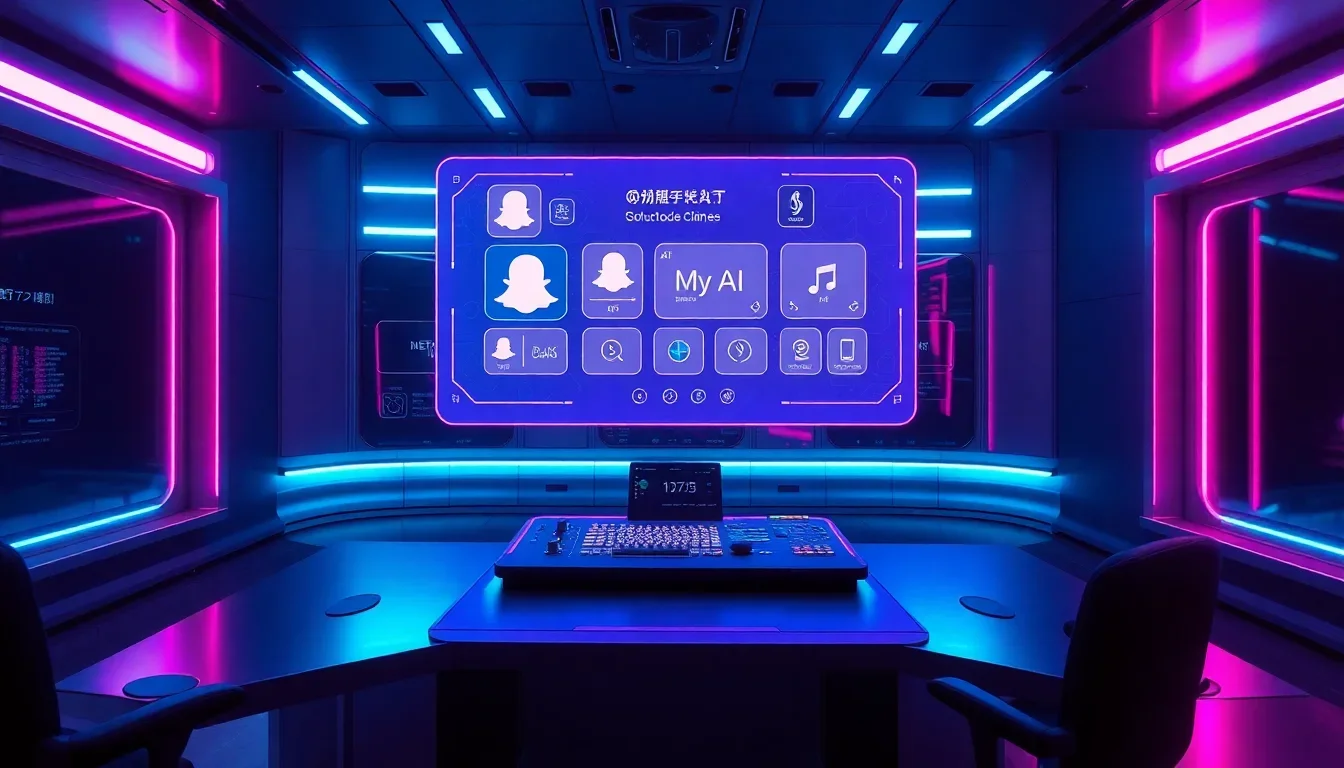
    Despite the ban, Snapchat is actively promoting its own generative features: AI Lenses, My AI, AI Snaps, song generation from chats. The statement emphasizes: “We are not rejecting AI.” Content enhanced with built-in tools will remain in recommendations, but with transparency labels.

    “We know that for some, AI is an important part of the creative process, and we believe it can unlock new forms of self-expression,” — Snapchat.

    Context: what other platforms are doing

    Snapchat is not the first platform to tighten rules on AI content. YouTube has been fighting “slop” for several months and last month banned videos with AI “experts” in medicine and finance. LinkedIn added a button to report AI content, and Pangram data shows that up to 41% of LinkedIn content is LLM extrusion.

    Snapchat’s strategy: “video DNA” and bypassing bans

    For marketers and content creators, this is a signal: platforms are learning to distinguish “clones” from “originals.” Content repurposing is not just re-uploading, but deep reworking: changing the background, tone, structure. With AI tools, you can create dozens of variations of one creative, adapting them for TikTok, Shorts, and Reels without breaking the rules.

    Snapchat bans fully AI-generated videos in Spotlight but promotes its own AI tools

    Frequently asked questions

    Can I use AI to create videos on Snapchat?

    Yes, but only as a supporting tool. Fully generated clips will not pass Spotlight moderation and will not receive payments.

    How to bypass the ban in advertising using repurposing?

    Create creative variations: change the background, voice tone, subtitles, angles. This reduces the risk of a ban and increases the effectiveness of A/B tests.

    Should I order a new video or repackage an old one?

    If the budget is limited, repurposing is more profitable: one webinar can be turned into 50 clips for different social networks. It’s cheaper than shooting from scratch and faster.

    Snapchat bans fully AI-generated videos in Spotlight but promotes its own AI tools

    Conclusion

    Snapchat is balancing between “authenticity” and its own AI tools. For creators, this is an opportunity: use AI to speed up work, but add a “human” layer. Adapt content to each platform, test different variations, and remember: algorithms love uniqueness.

    Ready to repackage your videos? Start small: change the background, add subtitles, re-voice. And you’ll see your reach grow.