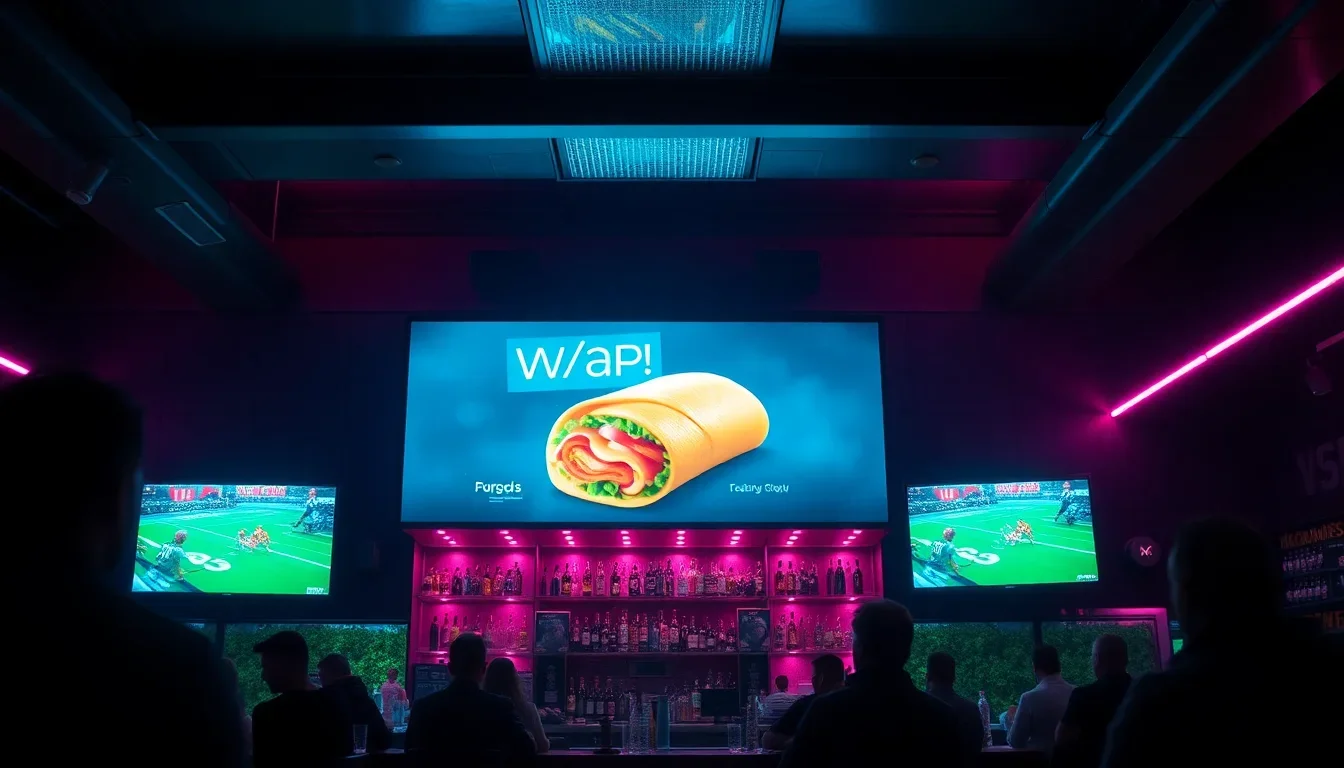
Banner advertising in Shorts and other short video formats is becoming a powerful tool for brands seeking massive reach without huge budgets. The restaurant chain Sweetgreen proved this in practice by launching video banners on the Atmosphere TV platform during the 2026 FIFA World Cup. This case is a vivid example of how banner advertising in video can draw attention to a product and increase foot traffic to offline locations.
Why Banner Advertising in Video Proved Effective
Sweetgreen launched new wraps in May 2025, and the World Cup became the perfect moment to promote them. Vice President of Marketing Katie Sheehan noted that portable dishes like wraps are better suited for sports content than salads. Video banners allowed the brand to integrate into the atmosphere of sports broadcasts without resorting to traditional influencer videos.
The campaign was part of a broader wraps promotion, including social media and TikTok. However, it was the video banners on Atmosphere TV screens that provided message repetition, which, according to Sheehan, is critical for ad recall.
How Banner Advertising in Video Works: Technology and Reach
Atmosphere TV positions itself not as a DOOH platform, but as connected TV for people outside the home. The technology allows placing banners in video on screens in venues such as bars and restaurants. This enables brands to target audiences within a 2-3 mile radius of their locations, which is more effective than regional DMA buys (up to 10 miles).
For Sweetgreen, this meant focusing on key markets: Chicago, Los Angeles, Boston, and Washington. This approach avoided a “broad national buy” and concentrated on areas with high density of the target audience.
Campaign Results: Numbers and Statistics
According to the brand, audiences who saw the campaign on Atmosphere TV screens visited Sweetgreen physical stores 113.9% more often than those who did not see the ad. This proves that video banners can be an effective tool for driving traffic to offline locations.
It is worth noting that in July, due to a cyclospora outbreak, foot traffic dropped by 4.7% compared to the average Saturday figure. However, the campaign was not a reaction to this incident, Sheehan emphasized.
“Repetition over time is a good way to reinforce a message, especially when the ad is tailored to the environment,” she added.
Why Banner Advertising in Video Is an Alternative to Influencers
Banner advertising in short videos, such as YouTube Shorts, TikTok, and Reels, offers brands cheap reach and transparent statistics. Unlike influencers, where the cost per million impressions (CPM) can be high, video banners allow for CPMs cheaper than 50 rubles. This is especially relevant for info-businesses, mobile apps, and crypto projects, where mass reach without big budgets is important.
Programmatic video banners automate placement across hundreds of videos, saving time and money. Hypothesis testing can be done for as little as 1000 rubles, without spending on production. This makes banner advertising in video attractive for small and medium businesses.
Frequently Asked Questions
What is banner advertising in video?
It is overlay advertising that appears on top of video content on platforms like YouTube Shorts, TikTok, or Reels. It can be static or animated and is often used for quick audience reach.
How to place a banner on TikTok?
To place a banner on TikTok, you can use the platform’s official advertising tools or contact partners that offer automated solutions for video banners. It is important to set up targeting to reach the desired audience.
What is the cost of CPM in banner advertising?
CPM (cost per thousand impressions) can be below 50 rubles, especially when using programmatic platforms. This makes advertising accessible to small businesses and startups.
Conclusion
Banner advertising in short videos is an effective way to get massive reach for pennies, without resorting to expensive influencers. The Sweetgreen case shows that even large brands use this tool to draw attention to new products. If you want to test video banners, start with small budgets and analyze the results.
The real math speaks for itself: a banner without production can bring traffic and sales. Don’t pay an influencer until you’ve tried this format. Start small—and you’ll see how banner advertising in Shorts can become your main customer acquisition channel.
You recorded a one-hour webinar, interview, or review, but no one watches it in full? From one long video, you can create a series of short clips that will work for your business. The main thing is to correctly select fragments and adapt them for platforms. In this article, we will discuss how to cut a long video into short clips to increase engagement and reach.
Which long videos are suitable for cutting
Materials with a clear semantic structure are best for cutting: webinars with sections, interviews with questions and answers, reviews with demonstrations, client cases. It is more difficult to work with endless podcasts, live streams with chat, or recordings where the speaker references invisible slides.
A good source answers three questions:
Is there a complete thought in each fragment?
Can it be watched without context?
Is there visual dynamics?
Important: we are only talking about your own content—live streams, webinars, interviews, reviews, product videos. Cutting others’ films or podcasts without rights risks complaints and reputational damage.
How to find fragments for short cuts
Start by watching the entire recording and marking the meaning. Look for scenes that could become a separate publication: a question, a mistake, a conclusion, an example, a demonstration, a controversial thought. Use timestamps to mark the beginning and end of the fragment.
PRO tips for selection:
Choose a fragment with one thought—it should not require additional context.
The first 2-3 seconds should grab attention: a hook, intrigue, a question.
Check that after vertical cropping, the frame still contains the face, hands, product, or slides.
How to prepare video fragments for editing
Before editing, decide on the type of clip: talking head with subtitles, cutaways, or a “question on screen—answer” format. Subtitles are mandatory—many watch without sound. The thumbnail should be clear and high-quality; for a series, maintain a consistent logic.
Collect fragments in a table: timestamp, topic, purpose, first frame, on-screen text, description, platform. This will save you when you have 18 cuts from 3 webinars.
For Reels, emotional and visual dynamics are important: lively speech, showing the process, reactions, before/after. For Shorts, a quick title and the first seconds explaining the topic are key. In the description, add a key phrase, a link to the full version, and a question for comments.
If the source is horizontal, check that important details are not lost in the vertical frame. Sometimes a close-up is better than trying to fit the entire wide frame. If necessary, add cutaways or text accents.
How to publish a series without spamming the feed
Do not post all cuts in a row. Distribute them on a calendar: 1 clip every 2-3 days for a small series, 2-3 per week for 5-8 clips, or create a rubric for 10+ fragments. Alternate with other content: posts, stories, case studies. If the audience starts reacting poorly, take a break.
For automation of publications, use services like SMMplanner: spread them on the calendar, prepare different descriptions for each platform.
How to make short clips from a long video: a scheme
Select a fragment with one thought, remove context.
Adapt the frame to a vertical format.
Add a clear first screen and subtitles.
If the clip starts with an answer, put the question in text.
Distribute the cuts on the calendar, do not publish everything at once.
Frequently asked questions
Where to cut a long video so the clip doesn’t look like a snippet?
Choose fragments with a complete thought and a clear beginning/end. Use timestamps and check that the meaning is understandable without context.
Should I publish all cuts in a row?
No. It is better to collect a series and distribute it on the calendar so that one material works longer and does not spam the feed.
When is it better not to make cuts?
If the fragments do not work without context, there is no important visual information in the frame, the speaker references invisible materials, or the publication violates rights. Sometimes it is better to make an article or checklist from a long video.
Conclusion
Cutting a long video into short clips is not just trimming, but strategic work with content. Select fragments with one thought, adapt them to the platform format, and publish them on a calendar. Try the SMMplanner service for scheduling—it is convenient and saves time. Start right now: choose one long video and create 3-5 short clips from it to see the result!
Launching a short video ad campaign in 48 hours is not a myth, but a clear action plan. If you already have ready-made creatives, you can go from uploading materials to the first impressions on TikTok, Reels, Shorts, or VK in just two working days. In this article, we will break down a step-by-step algorithm to help you launch an ad campaign in short videos quickly and without unnecessary delays.
What to Prepare Before Launch
Before launching, gather not a lengthy presentation, but a working set for moderation and placement. The less uncertainty at the start, the higher the chance of meeting the 48-hour deadline.
1. Ad Materials
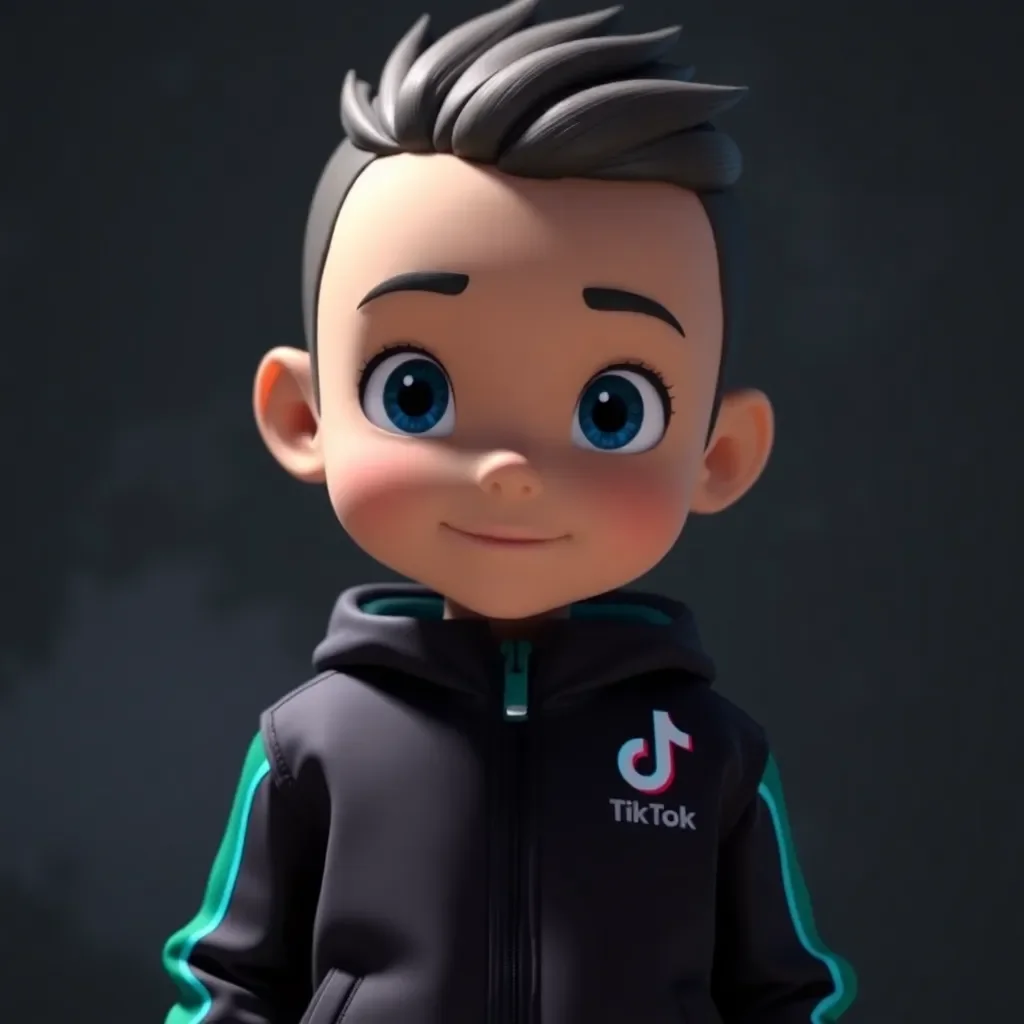
Prepare one animated banner for YouTube, Instagram, and VK. It should include a logo, a short message, a clear call to action, and a version without small text. For TikTok, prepare a separate version: an animated waist-up character in branded clothing. TikTok often visually “crops” edges and covers part of the screen with its interface, so a full-length character may look worse. Keep the face, logo, and key message closer to the center.
2. File Requirements
Check dimensions, duration, file size, text readability, background transparency, logo presence, and the absence of controversial claims. Before uploading, review VibeVO’s ad material requirements.
3. Display Geography
Specify countries, regions, or cities. Do not just write “Europe” or “CIS” if you need specific markets. Geography affects placement selection, launch speed, available impression volume, and reach cost.
4. Budget
Top up your balance in advance. Do not leave payment for the last step: the campaign may be ready for moderation but will not go live without funds in the balance.
5. Campaign Request
Specify the goal, platforms, geography, budget, deadlines, landing page link, and restrictions. If there are prohibited topics, words, images, or content categories, include them immediately.
6. One Person Responsible for Approval
A 48-hour launch breaks down when each department makes separate edits. Appoint one person to confirm the final version.
Hour 0–12: Request, Materials, and Submission for Moderation
In the first hours, do not re-discuss strategy, but assemble the campaign into a working form. Open your account, create a campaign, select platforms, upload ad materials, and ensure the balance is topped up.
If materials are already ready, the main path looks like this:
Upload the animated banner for YouTube, Instagram, and VK.
Upload the TikTok version with a waist-up animated character.
Specify the display geography.
Specify the budget and campaign duration.
Check the link to the website or product page.
Submit the campaign for moderation.
Monitor the review status.
If all materials are already approved, the launch does not have to take the full 48 hours. According to VibeVO operational data, in a typical case, an advertiser can go from uploading ready-made materials to submitting the campaign for moderation in about two hours. The remaining time should not be spent “holding a pause,” but rather used to review the first impressions and adjust the budget.
If there are no materials, do not call it a 48-hour launch. This is a launch with creative preparation. In this case, a banner, character, animation, text, and platform-specific versions are first created and approved. A realistic timeline for such preparation is 2–3 days.
Hours 12–24: selecting placements and reviewing materials
At this stage, the system or team selects available placement spots based on your geography, budget, and platforms. For a fast campaign, there is no need to manually negotiate with each creator. It is more important to use a ready stream of short videos, where an ad banner or overlay is added on top of the content and goes through moderation.
Check four things.
First — readability. The logo and text must be visible within one second. If the viewer has to squint, the overlay does not work.
Second — safe area. Do not place important text at the very top, bottom, or corner. On short videos, there may be buttons, captions, the author’s name, music, or the platform interface there.
Third — separate versions. Do not use the same file for all platforms without checking. For YouTube, Instagram, and VK, you can use one base animated banner, but it must be checked in preview. For TikTok, a separate version with a waist-up character is needed.
Fourth — moderation. Remove controversial promises, medical claims, text that is too small, third-party logos, materials without rights, and any elements that could cause rejection.
Hours 24–48: launch, impressions, and monitoring
Once the campaign has passed moderation, it goes live for impressions. At this stage, it is important not just to confirm that the ad “has launched,” but to check how it is gaining reach.
Look at the initial metrics:
whether impressions are coming in;
whether the budget is being spent;
whether there is a moderation stop;
whether reach is growing fast enough;
whether the cost per thousand impressions is not too high;
whether the logo is visible on actual placements;
whether the character or banner is being overlapped by the interface;
whether the link works;
whether transitions, direct visits, and search queries by name appear.
If impressions are slow, check geography and restrictions. If the banner is hard to read, replace the file rather than stopping the entire campaign. If the TikTok version looks cropped, return to a waist-up character and a strengthened composition center.
What Pushes Launch Beyond 48 Hours
No ready materials. This is the main reason for delay. If there is no animated banner and TikTok character, you first need to prepare creatives. This usually takes 2–3 days including revisions and approvals.
Balance not topped up. The campaign may be set up, but it won’t go into full launch without a budget.
Too many approvers. If every department can stop the launch, 48 hours turn into a week.
One file for all platforms. What looks fine in YouTube Shorts may be cropped or overlapped in TikTok. Create a separate TikTok version.
Too much text. Short videos cannot handle long legal disclaimers on a banner. Keep the main points and put details on the landing page.
Controversial claims. Words like “best,” “guaranteed,” “cures,” “risk-free,” “number one” can delay moderation. If the claim cannot be substantiated, remove it.
Materials without rights. Do not use others’ clips, music, faces, logos, or images without permission.
Metrics to Monitor from the First Hour
Stage
Metric
Why to Monitor
Before launch
Material readiness
Indicates whether launch can happen in 2 hours or requires 2–3 days of preparation
Before launch
Balance
Without budget, the campaign won’t go live
Moderation
Review status
Helps quickly identify what is delaying the start
First hours
First impressions
Confirms the campaign has actually started working
First hours
Budget spend
Shows whether the campaign is gaining the required pace
First hours
Cost per thousand impressions
Helps assess reach affordability
After launch
Reach
Main metric for awareness campaigns
After launch
Contact frequency
Shows how many times a viewer sees the banner
After launch
Logo visibility
Checks whether the trademark is recognized
After launch
Search by name
Helps see growth in interest in the trademark
After launch
Unpaid visits
Shows secondary effect of awareness
For an awareness campaign, clicks are not the only thing that matters. Your goal is for people to see the trademark many times in the familiar environment of short videos, remember it, and start searching for the name, visiting the site, or recognizing the product in other channels.
Frequently Asked Questions
What is the minimum time from application to launch? If advertising materials are ready, the balance is topped up, the geography is selected, and there are no additional revisions, the minimum working time in VibeVO is about two hours before sending the campaign for moderation and starting impressions after review. This is VibeVO’s operational data, not a universal guarantee for any campaign.
What most often delays launch beyond 48 hours? The main reasons: no ready animated banner, no TikTok character, balance not topped up, text not approved, too many people responsible for revisions, incorrect file size, controversial claims, or materials without rights.
Do I need ready-made advertising materials to start? You can start an application without them, but you cannot quickly launch a campaign. To launch within 48 hours, and especially within two hours, ready and approved materials are needed. If they are not ready, preparation usually takes 2–3 days.
What materials are needed at a minimum? Minimum: one animated banner for YouTube, Instagram, and VK, as well as a separate TikTok version — an animated character from the waist up in branded clothing. Also needed: a logo, short text, a call to action, and a link.
Why does TikTok require a separate version? Because the interface and screen cropping can cover important elements. A character from the waist up stays better centered in the frame, preserving the face, clothing with the logo, and the main advertising signal.
Can I launch a campaign for millions of reach? Yes, if the budget is sufficient, placements are available, and the materials pass moderation. The format of banners and overlays in short videos works well for mass reach: the viewer sees the brand in their usual stream of videos, which supports growth in awareness, unpaid visits, and search queries for the name.
Conclusion
Launching an advertising campaign in short videos within 48 hours is a realistic task if you prepare materials in advance, top up your balance, and appoint one person responsible. Follow this plan, and you can quickly reach the audience on TikTok, Reels, Shorts, and VK. Ready to start? Gather your creatives, check the requirements, and send your campaign for moderation today!