
Tag: programmatic advertising

  • Google’s Ad Business Will Stand: Court Rejects Asset Split

    Google’s Ad Business Will Stand: Court Rejects Asset Split

    A U.S. federal court has ruled that Google will not have to break up its advertising business, despite the company being declared a monopolist in April. Judge Leonie Brinkema rejected the Department of Justice’s demand to sell the AdX ad exchange and, potentially, the DFP ad server, both part of Google Ad Manager (GAM). This decision calls into question the ability of regulators to rein in giants like Google.

    Why did Google avoid a breakup of its advertising empire?

    Judge Brinkema found that a forced breakup of Google’s business could cause more harm to publishers than current anti-competitive practices. She pointed to potential negative consequences for small publishers who use DFP for free. Additionally, the acquisition of AdX by another party (e.g., Microsoft) could create new complexities.

    Google’s proposed measures and their impact

    Google had previously proposed a number of measures to enhance competition:

    • Providing competitors with real-time bid data for display advertising sold through AdX.
    • Abolishing “Unified Pricing Rules” and allowing publishers to set different minimum prices for individual bidders in GAM.
    • Refraining from using “first-look” and “last-look” privileges to adjust its bids. Google claims it stopped this practice several years ago.

    “What is a web publisher to do if they want to use a different ad server but still get demand from Google buyers?” asks Jay Friedman, co-founder of CartographAI and former CEO of Goodway Group.

    Market and expert reaction to the court’s decision

    While many Google critics are disappointed, some ad industry players are willing to see how the proposed measures will play out. For example, PubMatic, an AdX competitor, stated: “We expect the court’s adoption of behavioral remedies to create a level playing field for all market participants. The court’s focus on behavioral remedies will likely provide a faster path to addressing the current competitive harm from Google’s unlawful monopoly.”

    Behavioral remedies versus full divestiture: arguments from both sides

    The Department of Justice insisted that forced divestiture would be a “cleaner and less risky solution,” expressing distrust in Google’s ability to comply with prescribed behavioral measures. However, Google’s lawyers countered that “distrust is not a lever to circumvent established antitrust principles.”

    Previous rulings and the future of Big Tech regulation

    This is not the first time Google has been found to be a monopolist but avoided a breakup. In August 2024, Judge Amit Mehta found Google’s monopoly in online search but did not force the sale of Chrome or Android. Instead, Google was ordered to share search data with competitors.

    Google's Ad Business Will Stand: Court Rejects Asset Split — illustration 2

    Such decisions make ad industry insiders doubt the ability of regulators to deal with Big Tech. One former media buyer anonymously remarked that even “trust-buster” Theodore Roosevelt would be astonished by the lack of courage in the judiciary today.

    Frequently Asked Questions

    What is Google Ad Manager (GAM)?

    Google Ad Manager (GAM) is an integrated ad management platform that combines the AdX ad exchange and the DFP ad server. It allows publishers to sell ad space and advertisers to buy it.

    Why did the U.S. Department of Justice want to break up Google?

    The U.S. Department of Justice accused Google of monopolizing the ad tech market and insisted on breaking up the company to restore competition and prevent anti-competitive practices.

    What behavioral measures did Google agree to take?

    Google agreed to a number of measures, including providing bid data to competitors, abolishing “Unified Pricing Rules” for publishers, and refraining from “first-look” and “last-look” privileges in bidding.

    Conclusion: pennies for a million or millions for pennies?

    So, banner advertising in video remains a battleground where Google is currently holding its ground. For us, arbitrageurs, this means one thing: CPM cheaper than 50 rubles in Shorts, Reels, and TikTok is still possible. Don’t wait for these “behavioral measures” to level the playing field. While the court deliberates, competition, however skewed, offers loopholes. Continue to test hypotheses, seek cheap reach, and scale mass reach for pennies. And remember, real math is always on our side if we know how to calculate and act quickly while the “big guys” are sorting things out in court. Forget about bloggers and their million-dollar price tags – buying reach without creating a video through programmatic platforms is our path to profit. Learn how to set up your first campaign and start earning right now!

  • Banner Advertising in Shorts: How Sweetgreen Used Video to Reach World Cup Fans

    Banner Advertising in Shorts: How Sweetgreen Used Video to Reach World Cup Fans

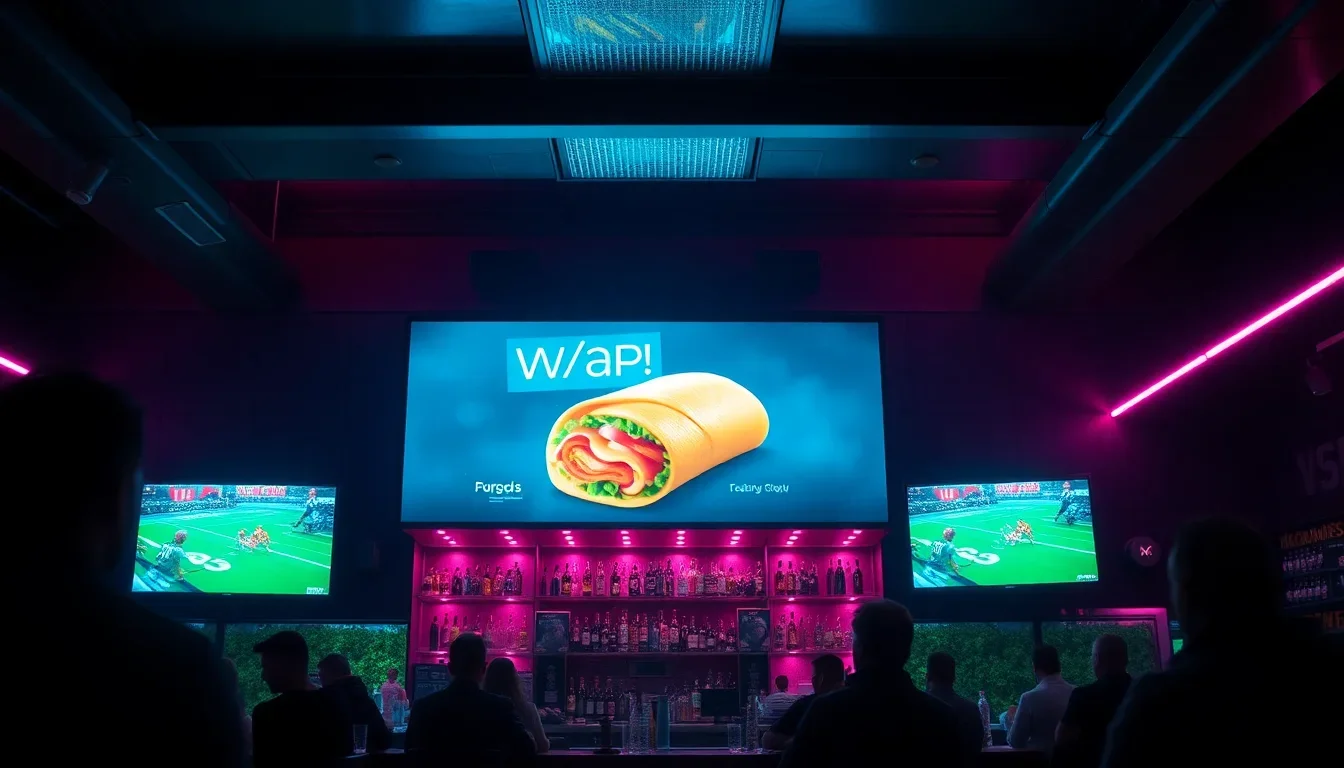
    Banner advertising in Shorts and other short video formats is becoming a powerful tool for brands seeking massive reach without huge budgets. The restaurant chain Sweetgreen proved this in practice by launching video banners on the Atmosphere TV platform during the 2026 FIFA World Cup. This case is a vivid example of how banner advertising in video can draw attention to a product and increase foot traffic to offline locations.

    Why Banner Advertising in Video Proved Effective

    Sweetgreen launched new wraps in May 2025, and the World Cup became the perfect moment to promote them. Vice President of Marketing Katie Sheehan noted that portable dishes like wraps are better suited for sports content than salads. Video banners allowed the brand to integrate into the atmosphere of sports broadcasts without resorting to traditional influencer videos.

    The campaign was part of a broader wraps promotion, including social media and TikTok. However, it was the video banners on Atmosphere TV screens that provided message repetition, which, according to Sheehan, is critical for ad recall.

    How Banner Advertising in Video Works: Technology and Reach

    Atmosphere TV positions itself not as a DOOH platform, but as connected TV for people outside the home. The technology allows placing banners in video on screens in venues such as bars and restaurants. This enables brands to target audiences within a 2-3 mile radius of their locations, which is more effective than regional DMA buys (up to 10 miles).

    For Sweetgreen, this meant focusing on key markets: Chicago, Los Angeles, Boston, and Washington. This approach avoided a “broad national buy” and concentrated on areas with high density of the target audience.

    Banner Advertising in Shorts: How Sweetgreen Used Video to Reach World Cup Fans

    Campaign Results: Numbers and Statistics

    According to the brand, audiences who saw the campaign on Atmosphere TV screens visited Sweetgreen physical stores 113.9% more often than those who did not see the ad. This proves that video banners can be an effective tool for driving traffic to offline locations.

    It is worth noting that in July, due to a cyclospora outbreak, foot traffic dropped by 4.7% compared to the average Saturday figure. However, the campaign was not a reaction to this incident, Sheehan emphasized.

    “Repetition over time is a good way to reinforce a message, especially when the ad is tailored to the environment,” she added.

    Why Banner Advertising in Video Is an Alternative to Influencers

    Banner advertising in short videos, such as YouTube Shorts, TikTok, and Reels, offers brands cheap reach and transparent statistics. Unlike influencers, where the cost per million impressions (CPM) can be high, video banners allow for CPMs cheaper than 50 rubles. This is especially relevant for info-businesses, mobile apps, and crypto projects, where mass reach without big budgets is important.

    Programmatic video banners automate placement across hundreds of videos, saving time and money. Hypothesis testing can be done for as little as 1000 rubles, without spending on production. This makes banner advertising in video attractive for small and medium businesses.

    Frequently Asked Questions

    What is banner advertising in video?

    It is overlay advertising that appears on top of video content on platforms like YouTube Shorts, TikTok, or Reels. It can be static or animated and is often used for quick audience reach.

    Banner Advertising in Shorts: How Sweetgreen Used Video to Reach World Cup Fans

    How to place a banner on TikTok?

    To place a banner on TikTok, you can use the platform’s official advertising tools or contact partners that offer automated solutions for video banners. It is important to set up targeting to reach the desired audience.

    What is the cost of CPM in banner advertising?

    CPM (cost per thousand impressions) can be below 50 rubles, especially when using programmatic platforms. This makes advertising accessible to small businesses and startups.

    Conclusion

    Banner advertising in short videos is an effective way to get massive reach for pennies, without resorting to expensive influencers. The Sweetgreen case shows that even large brands use this tool to draw attention to new products. If you want to test video banners, start with small budgets and analyze the results.

    The real math speaks for itself: a banner without production can bring traffic and sales. Don’t pay an influencer until you’ve tried this format. Start small—and you’ll see how banner advertising in Shorts can become your main customer acquisition channel.