Data cut-off 03.09.2026. CPV = CPM ÷ 1,000. This is a reward rate with eligibility conditions and limits, not the actual cost of the entire campaign. Fund does not equal expenses. Views are a total counter, not unique reach; approved works are counted separately. Views do not equal unique reach or sales. Conclusions about marketing mechanics are an editorial analysis; the presence of a campaign around a brand does not necessarily mean direct placement by the brand.
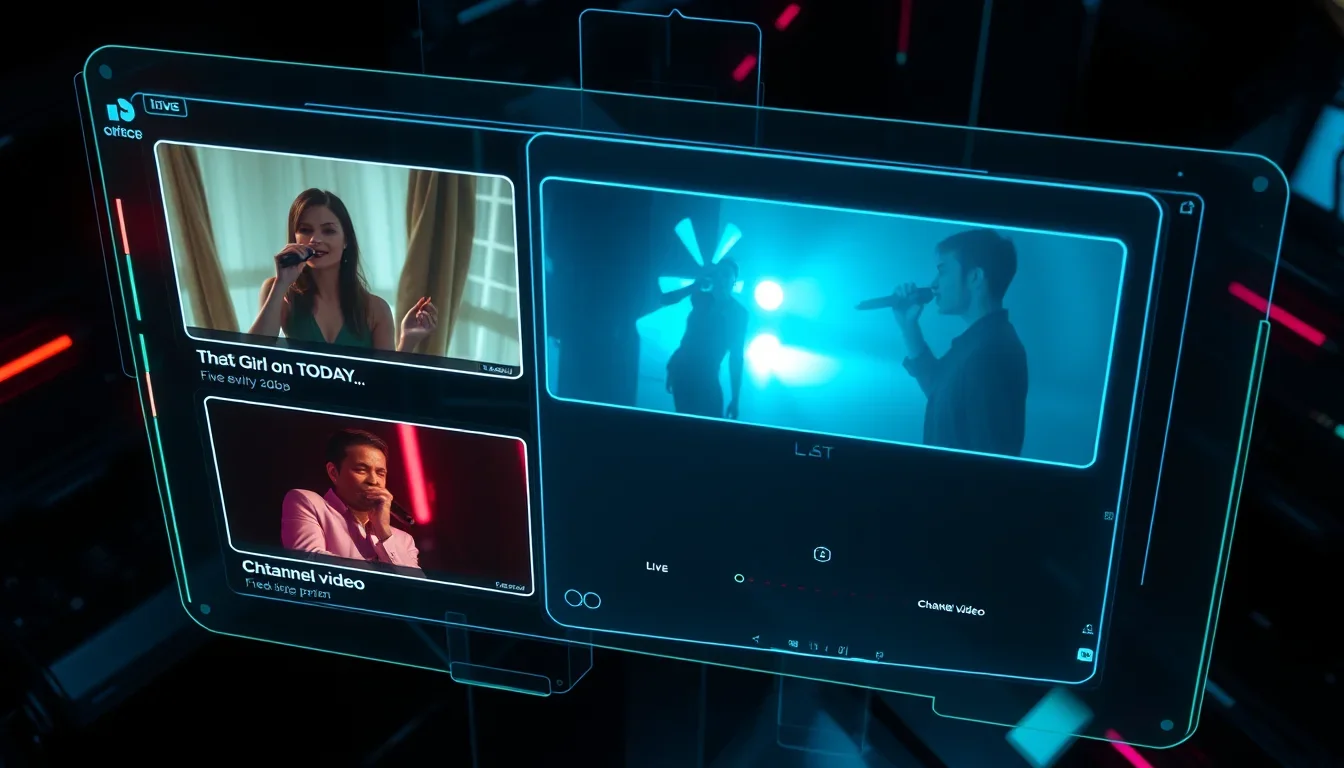
Instead of a single universal advertisement for the new album, Tyla’s campaign offered a whole set of source materials. Creators could work with the first live performance of That Girl on TODAY, a Chanel video, and the Is It Love performance. The task was simple: find the best moments, turn them into short posts, and maintain interest in A*POP through different facets of the artist.
Multiple sources allow for changing the emotional emphasis while maintaining attention on one album. Editing highlights can showcase different performances and find a unique short story in each. For a music brand, this is a useful variety: the campaign does not depend on a single promotional video. One viewer will notice the performance of a specific song, another — the artist’s presentation in a different stage situation. The overall release ties these introductions together. The creator’s task is to choose a moment that clearly conveys the character of the material and generates interest in the music beyond it.
Are you preparing an album and have already filmed several performances or videos? Gather them as the basis for a video clipping campaign on VibeVO, so creators can find different entry points into your release.
Tired of draining budgets on influencers who don’t deliver real returns? It’s time to rethink your video marketing approach. While competitors chase after “millionaires,” digital arbitrageurs have long since explored new horizons: <a href="/blog/banner-advertising-in-shorts-how-to-get-reach-for-pennies-and-not-pay-bloggers/" title="Banner advertising in short videos: reach for pennies without filming”>banner advertising in short videos. This isn’t just a trend; it’s real math where you can get reach for pennies, and a CPM cheaper than 50 rubles is not a myth, but a daily reality.
I’ve tested dozens of hypotheses, and the conclusion is clear: programmatic video banners are a goldmine for those willing to think in numbers. No multi-million dollar productions, no endless approvals with “creative” teams. Just transparent statistics and massive reach that can be purchased without creating your own video. This is the ideal solution for promoting mobile apps, advertising crypto projects, infobusiness, and any other niche where results matter, not pretty words.
Why don’t classic “best examples” work?
Most articles about “best video marketing examples” resemble a Vimeo Staff Picks compilation — beautiful visuals without analysis. We approached the issue differently.
Exactly. These “masterpieces” often cost millions, and their editing is a separate art form, inaccessible to the average business. We are interested not in “what succeeded,” but in “why it succeeded” and “how to replicate it for 1000 rubles.” We will analyze 5 key criteria that determine the success of a video campaign and show how to apply them to native banner advertising in Shorts, Reels, and TikTok.
5 criteria for successful video advertising for arbitrageurs
Goal and funnel stage: Advertising for awareness (TOFU) should not try to close a deal. A demo video (BOFU) is not the place for “heroic shots.” Each stage requires its own approach.
Platform nativeness: The rhythm of TikTok differs from YouTube Pre-roll, which, in turn, is not like a 30-second TV spot. A banner in Shorts must be native.
Hook in 3-5 seconds: For top-of-funnel (TOFU) stages — 3 seconds, for middle/bottom (MOFU/BOFU) — 5 seconds. If you hook them, half the battle is won.
Measurable result: If a format has been working for two years and a brand continues to invest in it — that’s an indicator. We need specific metrics.
Budget: We exclude $5 million Apple productions if their techniques cannot be replicated with minimal costs. Our goal is the lowest CPM in shorts.
Video: The Engine of the Sales Funnel
Short videos are not just a hype. They are a tool that allows you to guide a lead through all stages of the funnel much more effectively than static creatives. A short clip captures cold attention (TOFU), an explainer video answers the question “is this right for me?” (MOFU), and a testimonial closes the deal (BOFU).
According to HeyGen Community (2025), videos at the lower stages of the funnel “drive conversions, shorten sales cycles, and increase retention,” demonstrating functionality and results. And production costs? They’ve plummeted! Basic platforms are free or cost $0-50 per month; advanced ones are $50-100+ (Percify, 2026). What once required a six-figure agency fee is now done by a freelancer with a laptop.
Examples that really work (and how to adapt them for banners)
TOFU: Capturing attention in 3 seconds. The hook is everything!
At this stage, we trade impressions for attention. The main thing is the density of hooks. Cut early, cut often. Priority is the first three seconds.
Dove “Real Beauty Sketches” (Ogilvy): The gold standard of storytelling. A forensic artist draws women based on their descriptions and descriptions from strangers. Editor’s note: The secret is that the transitions between sketches are synchronized to a single rhythm, creating emotional engineering.
Apple “Shot on iPhone”: A campaign that has worked for years. User footage becomes advertising. Editor’s note: Apple uses jump cuts between clips, creating a sense of authenticity. This can be replicated by using automatic banner placement on hundreds of videos with different content.
Coca-Cola “Share a Coke”: Personalization across all channels. Editor’s note: Videos use close-ups of labels, then show an emotional reaction. This “close-up – wide shot” pattern is a reliable hook structure.
Always “Like a Girl” (Leo Burnett): A documentary style that changes the meaning of the phrase. Editor’s note: The editing lingers on faces longer than usual, creating an awkward pause that makes the viewer feel the meaning.
Orange Polska (Venture Videos): A less known but more reproducible example. Personalized videos for TOFU, created using stock footage and one editor. Personalization through name overlays and dynamic text. Ideal for a banner without filming.
Liquid Death “Sell Your Soul”: Comedic absurdity in TikTok and Instagram. Fast pace, cuts every 0.7-1.2 seconds. Editor’s note: Liquid Death often starts with faces speaking in mid-sentence, which makes the algorithm and the viewer “listen in.”
Lesson from TOFU: The first three seconds do the main work. For banner advertising in short videos, this means: a bright, clear banner that is instantly readable, with an unconcealed banner that cannot be missed.
MOFU: Building Trust. Clarity is our main trump card.
Here we demonstrate how everything works. The main thing is clarity. Overlay advertising can be ideal for this.
Adobe Creative Cloud: Tutorial library. Each video answers one question. Editor’s note: cursor effects (a soft circle on click) guide the viewer’s eye. A small detail, but important.
FreshBooks: Small business testimonials. Sarah McGovern talks about accounting problems and how FreshBooks solved them. Editor’s note: visual interest (b-roll of her workspace) is maintained under the audio, keeping the focus on the words.
HubSpot Academy: Explainer videos. First the concept, then examples from HubSpot. Editor’s note: 6-8 minute videos are optimal for retaining information.
Mondu (B2B BNPL): Demo on a product page with animated visualizations, upbeat music, and clear steps. Editor’s note: consistent design eliminates confusion in B2B videos.
Notion: Onboarding videos (60-90 seconds), one function each, embedded in the product. Editor’s note: some tutorials are made with on-screen text instead of voiceover, allowing them to be watched without sound.
Slack “So yeah, we tried Slack” (Sandwich Video): A two-minute mock-documentary about how Slack works. Editor’s note: editing by movement (someone reaching for a mug, scrolling a phone) maintains a continuous flow of the story.
Lesson for MOFU: Value is in the second 30 seconds. Clarity is more important than polish. A banner for infobusiness or a mobile application should clearly convey the benefits.
BOFU: Closing the deal. Evidence is everything.
At this stage, the camera stops being “creative” and just works. The editor’s task: not to interfere with the evidence. Transparent statistics and hypothesis testing for 1000 rubles are appropriate here.
Drift “This Won’t Scale”: Case study from the founder. David Cancel talks about client results with specific metrics. Editor’s note: intentionally “loose” editing (one shot, on-screen text, “umms” and “uh-huhs” are allowed).
HubSpot: Onboarding video for upgrading from free to paid plan. Editor’s note: shorter versions (up to 90 seconds) convert better.
Loom: Client comparison videos. Clients record videos directly in Loom, which becomes a marketing asset.
Mailchimp: Customer stories. Mini-documentaries (2-4 minutes) about small businesses using Mailchimp. Editor’s note: a consistent visual style (natural lighting, handheld camera, ambient sound) ties all parts together.
Lesson for BOFU: Trust > polish. If you earn trust from the first second, polish will matter in the second. If not, polish will look like marketing. Perfect for crypto project advertising, where trust is a key factor.
Performance Marketing: Iterations, not awards.
Build a process for iterations, not for awards. Choose a hook format and test variables. Quickly discard unsuccessful options.
Ridge Wallet: Hundreds of UGC ads using the same three-part format: hook (problem); demonstration (product solves problem); close (offer). Editor’s note: ads are usually no longer than 30 seconds, with a price call-to-action in the last 3 seconds.
Ag1: Podcaster reads. Long sponsored integrations broken into 30-60 second segments. Editor’s note: retaining the host’s filler words (e.g., “um,” “uh”) indicates they were reading from a script.
Manscaped: Ads from TikTok creators. Creators use one script template but with different faces. Editor’s note: intentional use of a handheld, shaky camera mimics native TikTok creative, eliminating “this is an ad.”
Hims & Hers: Explainer ads (60-90 seconds) that are also direct response ads. Editor’s note: using kinetic typography instead of lower thirds maintains visual flow with the script.
Olipop: Ads from founder Ben Goodwin. Discusses gut health while looking directly into the camera. Editor’s note: limited editing (usually shot in one take with a few zooms) maintains trust.
Magic Spoon: Over 100 creative variations produced in the first year. Editor’s note: winning hooks were almost always close-up “food porn” in the first two seconds.
Overall lesson: Create for iterations, not for awards. Choose a hook format and test variables. Quickly discard unsuccessful options. For short-video banner ads, this means the ability to auto-place on hundreds of videos and instantly collect performance statistics.
Common Success Patterns
Motion-based editing outperforms dialogue-bit editing for attention retention.
Calls to action (CTAs) in the last 15% of the runtime work better than in the middle.
On-screen subtitles are essential for soundless platforms (Meta, TikTok, LinkedIn).
Most viral videos contain one emotional turning point, not three.
Don’t try to “do like Dove.” Emulate the structure of funnel-format compliance, not specific creative. Planning sequence:
Choose a funnel stage.
Choose a primary platform (it determines aspect ratio, timing, pace).
Find an example that matches both points.
Write a one-line hook (if it doesn’t work in Slack, it won’t work anywhere).
Script and cast around the hook, not the product.
Carefully consider the first 3 and last 3 seconds.
Shoot two versions of the hook. Always.
Metrics and Pitfalls
TOFU: 3-second view, completion rate, CPM. If completion is less than 25% after 15 seconds, the hook isn’t working. Change only the beginning.
MOFU: Average watch time, CTR to next content, repeat visit frequency. If a 90-second explainer video is watched for less than 40 seconds, the problem is clarity, not the hook.
BOFU: Conversion rate, associated conversions, sales cycle length. This is the most complex but most important metric.
Pitfalls: Low-targeted placements lead to “vanity metrics.” Last-click attribution often undervalues MOFU videos. Use multi-touch models.
First 30 days: Define the funnel stage, choose a platform, create 3 video versions. Run for 2 weeks, discard the worst, iterate on the best. Internal teams often have problems with editing, not ideas. That’s why many hire external editors.
Tools:
TOFU: Smartphone, tripod, light.
MOFU: Adobe Premiere or DaVinci Resolve (free), screen recording tool.
BOFU: Professional camera, microphone, real interview.
Don’t overinvest in tools in the early stages and don’t underinvest in the later stages.
Frequently Asked Questions
What should be the video length for banner ads in short videos?
For TOFU videos on social media, the optimal length is from 6 to 15 seconds. For MOFU and BOFU, you can go up to 60-90 seconds, but remember about CPM cheaper than 50 and mass reach for pennies.
Is it possible to get cheap reach without creating your own video?
Yes, this is a key advantage of banner advertising in short videos. You can use auto-placement on hundreds of videos, which allows you to buy reach without creating a video and get transparent statistics.
How to test hypotheses with a minimal budget?
Start by testing hypotheses for 1000 rubles. Create several versions of banners without shooting, use programmatic video banners and track
In the world of performance marketing, the winner is not the one who created one brilliant video, but the one who built an AI testing process for advertising creatives and turned production into a conveyor belt. This is a nine-stage system that transforms a brand brief into a constant flow of approved, AI-generated, and labeled advertising materials. Each variant receives separate tracking so that winners are amplified, weak materials are turned off, and insights are fed back into the next brief. A mature system delivers 30–60 variants per week per brand.
Such a process is needed by companies that want not just to “create with AI,” but to regularly improve advertising materials. The point is not quantity for the sake of quantity. The point is a managed cycle: hypothesis → material → testing → launch → data → new hypothesis.
NIST AI 600-1 helps organizations identify risks of generative AI and select risk management actions that align with their goals. For advertising teams, this means: the process must include quality checks, AI disclosure, rights control, version tracking, and human decision-making at key stages.
You Don’t Have to Build Everything In-House: You Can Buy a Creative Stream from VibeVO
An in-house AI testing process is a strong model, but not every brand needs to build it internally. This requires people, tools, editing, review, version management, platform uploads, and continuous production. It is time-consuming and expensive, especially if the brand is just starting out.
An alternative is to sign a contract with VibeVO for a large volume of advertising materials and receive a stream of creatives cheaper than assembling a team in-house. The brand provides a brief, brand guidelines, restrictions, examples, and target volume. VibeVO connects authors, AI tools, and a review process, then delivers finished materials in batches.
Low cost per unit is achieved not by reducing quality, but through scale: parallel work by authors, ready-made production rules, repeatable templates, and AI tools to speed up rough generation.
Stage 1. Structured Brief
A regular brief is too loose. AI requires a structured format.
Field
Example
Product
Mobile app
Goal
Installation
Audience
18–35, Russian-speaking users
Main benefit
Saves time
Prohibited claims
Cannot promise income
Tone
Light, confident, no pressure
Formats
Talking head, demonstration, banner
Disclosure
Synthetic character must be labeled
Markets
CIS, USA
Tags
Angle, first frame, format, call to action
The more structured the brief, the easier it is to produce dozens of materials without chaos.
Stage 2. Creating Hypotheses
A hypothesis is a testable idea.
Bad hypothesis: “Make it look nice.”
Good hypothesis: “A first frame showing a problem will yield better retention than a first frame showing the product.”
Examples of hypotheses:
“Price works better than convenience.”
“A talking head is better than a screen demonstration.”
“A question in the first frame is better than a statement.”
“A banner with short text is better than a long explanation.”
“Local language reduces cost per action.”
Stage 3. Producing Variations with AI
AI is used to create different versions of:
scripts;
first frames;
images;
characters;
voiceovers;
banners;
short videos;
localized versions.
But each variation must be tied to a hypothesis. If the material does not answer the test question, it is not needed.
Stage 4. Brand Check Gates
Before launch, each material must pass through “gates.”
Check
Yes/No
Matches the brief
Does not violate brand guidelines
No prohibited claims
No unauthorized image or voice
No inappropriate context
AI disclosure present where required
Tracking tags present
Version and responsible person specified
McKinsey shows that successful companies are more likely to have processes determining when AI outputs must undergo human review. This is especially important in advertising production, where an error can reach the audience within minutes.
Stage 5. Metadata and Disclosure
Each material must receive metadata.
Minimum:
brief number;
version number;
who created it;
what type of AI was used;
whether there is a synthetic human;
whether there is a synthetic voice;
whether a mark is needed;
who approved it;
where it is placed.
For the EU, the AI Act transparency rules require that generative AI content be identifiable, and certain types of synthetic content, including deepfakes, be clearly labeled. These rules come into effect in August 2026.
Stage 6. Placement via Platforms
At this stage, it is important not to “dump everything” but to maintain structure.
Each piece of content should be placed with:
a separate title;
an angle label;
a first frame label;
a format label;
a call-to-action label;
a launch date;
a market;
a language;
an audience.
If the platform supports data transfer via an API, uploading and status updates can be automated. If not, it is important to at least manually maintain a consistent naming scheme.
Stage 7. Tracking at the Content Level
You cannot look only at the overall campaign. You need to see the result of each variant.
Label
Why It Is Needed
Angle
To understand which message works
First Frame
To understand what grabs attention
Format
To understand how best to present
Call to Action
To understand what drives action
Language
To understand localization
Platform
To understand context
Version
To understand changes
Meta Andromeda shows that advertising systems are increasingly using machine learning to select ads at the ad candidate delivery stage. Therefore, the diversity of content must be meaningful and measurable.
Stage 8. Statistical Decision: Amplify or Disable
Decisions must be made according to rules.
A simple order:
Disable content with poor first-second retention.
Disable content with low view-through rates.
Disable content with high cost per action.
Keep content that generates actions.
Amplify winners.
Create new variants based on the best combinations.
There is no need to wait for perfect statistics on all 100 pieces of content. The first wave can be read by early signals, the second by actions, and the third by return on investment.
Stage 9. Winners Return to the Next Brief
The process becomes powerful when data flows back.
For example:
best angle — “time savings”;
best first frame — a question;
best format — demonstration;
best call to action — “try for free”;
weak format — synthetic presenter;
weak topic — price.
The next brief no longer starts from scratch. It starts with proven signals.
Toolkit: In-House or Through a Contractor
Approach
Pros
Cons
Do it in-house
Control, brand knowledge, proprietary data
Need people, tools, processes
Buy a service
Quick start, ready-made process, experience
Need to verify rights, quality, and transparency
Hybrid
Balance of control and speed
Need clear area of responsibility
For an in-house process, you need:
image and video generation;
voice generation;
editing;
material storage;
version table;
brand check;
tagging system;
upload to platforms;
reporting.
For a contractor, you need to require:
who creates the materials;
what tools are used;
how source files are stored;
how rights are verified;
how disclosure is handled;
who is responsible for errors;
whether materials can be used commercially.
How working with VibeVO compares to in-house assembly
In-House Process
Working Through VibeVO
Hire a team
Hand over the brief and requirements
Buy tools
Use a ready-made production process
Set up verification
Receive materials after selection
Manage creators
Work through a single point of entry
Track deadlines
Receive batches of materials
Pay for a permanent team
Pay for an agreed volume and result
Slowly ramp up the process
Quickly launch production
For the brand, this reduces operational load. The team doesn’t spend weeks building a creative factory but immediately receives materials for testing and placement.
Working Cost Benchmarks
Below is not a universal market, but a practical model for planning.
Material
AI Process
Traditional Process
Banner / graphic
Cheap on variations
Cheap if a design template exists
10-second video
Cheaper at scale
More expensive with each new version
Synthetic character
Cheaper for a series
Real actor is more expensive but more trustworthy
Localization
Significantly cheaper
More expensive with re-dubbing and adaptation
Main brand film
Not always suitable
Usually better
A mature process can produce 30–60 variations per week per brand, if there are approved templates, verification rules, and a clear matrix. For regulated categories, speed is lower: legal review matters more than volume.
Large volumes of advertising materials become cheaper when production is structured as a flow. One brief is used for multiple variations. One mascot can appear in dozens of scenes. One product can be shown in different formats. One set of quality rules applies to the entire batch.