Tag: gemini

  • Is CPM profitable? Should Perplexity be excluded from AI visibility tracking?

    Is CPM profitable? Should Perplexity be excluded from AI visibility tracking?

    In the world of AI search, leaders are constantly changing, and the question of which platforms to track becomes critical for SEO specialists. Recent discussions have revolved around the Perplexity platform: should we continue monitoring it or focus exclusively on giants like ChatGPT, Gemini, and Claude? We will examine how changes in market share affect visibility assessment and how much money each spent ruble will bring to understand if CPM is profitable.

    Is Perplexity really losing ground?

    Ross Hudgens, CEO of Siege Media, claims that Perplexity’s market share is shrinking. Including it in general metrics alongside ChatGPT, Gemini, Claude, and Google AI products can distort the real picture of visibility. Hudgens urges: “Everyone should remove Perplexity from their LLM trackers today.”

    However, as experience shows, hasty conclusions can be erroneous. In March 2002, at the Search Engine Strategies conference, the reduction of tracked search engines from 15 to 5 was discussed. Google was then excluded from the list. This turned out to be a serious oversight, as Google was rapidly gaining momentum. A similar situation could repeat itself today.

    Data confirms Perplexity’s decline

    • According to StatCounter, in June 2026, Perplexity held 7.91% of AI chatbot referral share, almost on par with Gemini (7.94%).
    • By August 2026, Perplexity’s share had fallen to 4.31%, while Gemini grew to 10.9%.

    “A small market share does not always mean small strategic importance. It’s like investing in stocks: you shouldn’t always look only at current capitalization, but also at growth potential.”

    The market is consolidating, but not around a single leader

    The latest Similarweb data for May 2026 shows the dominance of ChatGPT (53.9% of global web visits among seven major AI assistants). Gemini accounts for 27.9%, Claude – 9.2%, DeepSeek – 4.1%, Grok – 2.4%, and Perplexity and Copilot – 1.3% each.

    Significant changes occurred not in the disappearance of Perplexity, but in the emergence of a strong second player. ChatGPT’s share of AI chatbot web traffic decreased from 76.4% a year ago to 52.7% in May 2026. Gemini grew from 9% to 27.3%, and Claude – from 1.6% to 8.9%.

    Key players and their advantages

    • ChatGPT: over 900 million weekly active users (February), over 1 billion active users across all products (end of July). This is a huge direct consumer base.
  • Gemini: The Gemini app exceeded 1 billion monthly users (August). It has Google distribution through Search, Android, and the entire product ecosystem.
  • Claude: Has gained a strong position in the enterprise segment and among developers. In April, over 100,000 customers used Claude on Amazon Bedrock. Annual revenue exceeded $65 billion (August).

These are not three versions of the same business, but three different distribution advantages. The market looks like an emerging oligopoly, not a “winner takes all” situation.

What SEOs Should Track

Google AI Overviews and AI Mode should not be viewed as ordinary LLMs. They are much more important. In June, Google reported that AI Overviews cover more than 2.5 billion users per month, and AI Mode exceeded 1 billion monthly users. AI Mode queries have doubled every quarter since launch.

According to Similarweb, AI Overviews appeared in 43% of Google search queries in the US by May 2026, compared to 15% a year earlier. AI Mode visits grew from 126 million in June 2025 to 279 million in May 2026.

This means that Google AI is a separate layer in the world’s dominant search ecosystem. For B2B companies, Claude is also of immense importance, despite relatively low consumer traffic. PwC, TCS, and Cognizant are actively integrating Claude into their workflows, training tens of thousands of employees. Over 1,000 business customers spend more than $1 million annually on Claude.

Three-Tier AI Visibility Measurement System

  1. First Tier: Platforms with scale and strategic importance. Track ChatGPT and Gemini separately. Add Claude for B2B, corporate, and professional audiences.
  2. Second Tier: AI search embedded in existing ecosystems. Track Google AI Overviews and AI Mode separately from ChatGPT, Gemini, and Claude. The goal is to measure how AI changes the search journey. Microsoft Copilot can also be included in this tier if the company has a significant presence in Microsoft 365.
  3. Third Tier: Emerging or specialized platforms. This includes Perplexity, Grok, DeepSeek. Do not ignore them, but do not give them equal weight. Monitor them for unusual visibility, referral traffic, citations, and growth.

Don’t Let Averages Mask Real Data

An aggregated LLM visibility metric can create a false sense of accuracy. For example, if a brand has 40% citation rate in ChatGPT, 35% in Gemini, 30% in Claude, and 90% in Perplexity, a simple average would be 48.75%. This number says little if Perplexity accounts for only a small fraction of the traffic important to the business.

CPM выгодный? Стоит ли исключать Perplexity из отслеживания ИИ-видимости? — illustration 2

Instead of asking, “What is our average LLM visibility?” you should ask, “Where do the people important to this business actually encounter our brand?”

This requires combining three data sets:

  • Audience Reach: usage, visits, platform distribution.
  • Visibility: mentions, citations, referring URLs, queries that generate them.
  • Business Impact: linking AI referrals to engagement, leads, sales, and other conversions.

My Verdict on Perplexity

Ross Hudgens is right about the problem, but not entirely right about the solution. Don’t remove Perplexity from your LLM tracker, but reduce its weight. If Perplexity generates 1% of your AI traffic, giving it 25% or 33% weight in your visibility score is unjustified. However, if it accounts for more than 5% of referrals, as Hudgens himself suggests, the argument for it becomes stronger.

Perplexity’s trajectory is worth watching. Similarweb’s August 2026 analysis still describes Perplexity as an active player in the AI search market, noting its ad-free strategy and focus on subscriptions and enterprise deals. This shows why “small” and “insignificant” are not synonyms.

Frequently Asked Questions

What CPM should be considered profitable for AI platforms?

Profitable CPM in AI platforms depends on your target audience and ROI. If a platform generates high-quality leads or sales, even with a relatively high CPM, it can be profitable. The main thing is to consider not only the cost per impression but also the conversion rate.

Is it worth testing hypotheses cheaply on new AI platforms?

Yes, cheap hypothesis testing on new AI platforms is essential. This is how you can discover the next Google. You shouldn’t spend huge budgets on them, but monitoring and minimal testing will allow you not to miss a potential breakthrough.

What is cheaper: a banner or a blogger, when compared to AI platforms?

The question of what is cheaper, a banner or a blogger, is incorrect in the context of AI. AI platforms offer a different type of interaction. Price comparison should be done through efficiency metrics: how much does 1 million impressions via a banner cost versus the cost of generating 100 AI videos or the cost of publishing 500 videos via AI tools. Each channel has its own unit economics.

How to estimate the cost of uniqueizing one video using AI?

The cost of uniqueizing one video using AI depends on the complexity of the task and the tool used. It is important to evaluate not only direct costs but also the time that AI will save. The price per minute of AI video with an avatar also varies, but it often turns out to be more profitable than manual labor, especially for large volumes.

Conclusion

The AI search market is dynamic. Ignoring Perplexity or other niche platforms entirely means risking missing important signals. However, blindly giving them equal weight with giants distorts the picture. A mathematical approach to analysis, weighing platforms by their real business impact, and constant monitoring of new players are key to success in SEO and a profitable CPM strategy.

We count cash, not just the number of platforms in the tracker. Don’t overlook the outsiders who are gaining momentum. Perhaps among them lies the next market leader. Start analyzing your data today so you don’t miss new opportunities!
  • Google to Allow Removal of Visible Watermark from AI Content

    Google to Allow Removal of Visible Watermark from AI Content

    Google has taken an important step towards content creators: users will now be able to remove the visible watermark from materials generated by its AI models. This applies to images, videos, and music created in Gemini, the Flow video editor, and other tools. Meanwhile, the invisible SynthID watermark and C2PA standard metadata will remain mandatory to preserve transparency of content origin. The decision is already being called revolutionary for AI content production and subscription-based neuro-production.

    New Option in Gemini and Flow

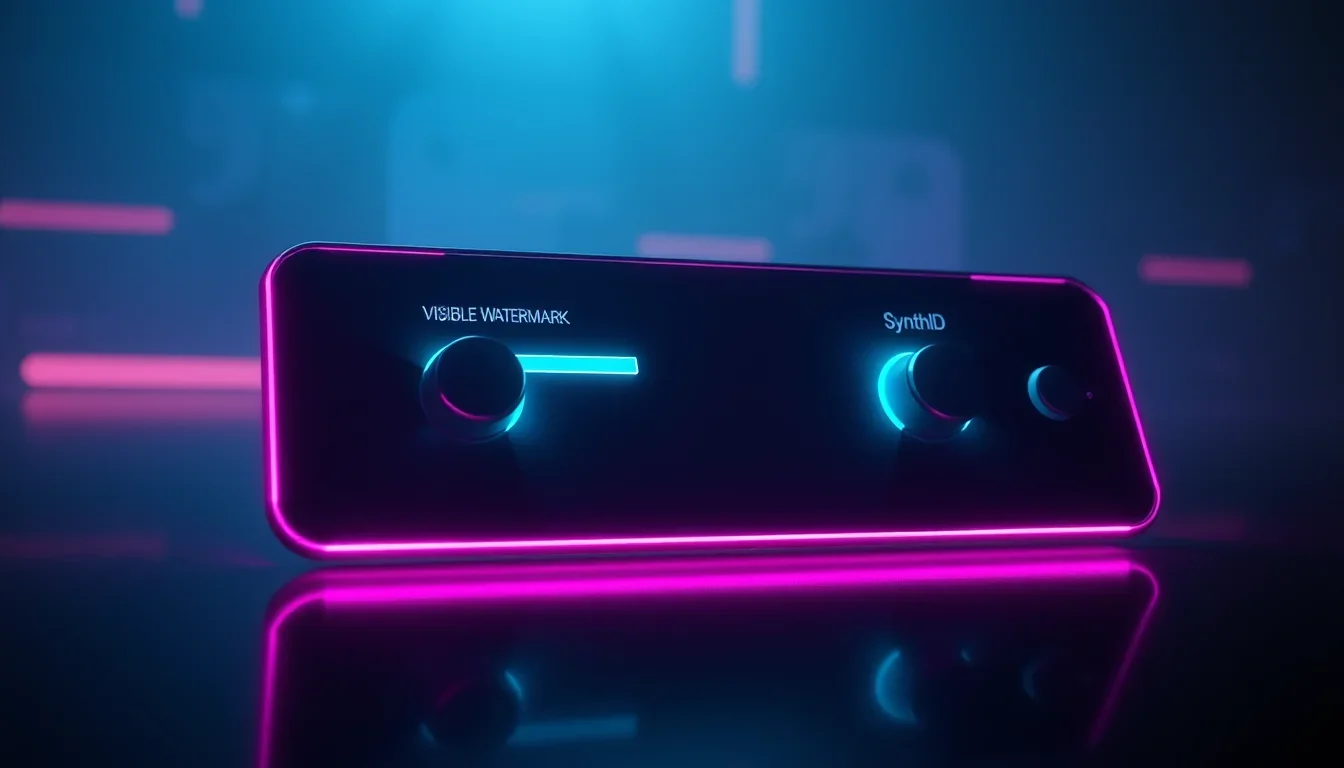
    Google’s Vice President of Gemini products, Josh Woodward, announced on social network X that the toggle will be available for the Nano Banana, Omni, and Lyria models. Users will be able to disable the visible watermark in Gemini and the Flow video editor, with support in Google Search coming later.

    This change reflects the evolution of the approach to AI media labeling: visible watermarks often hinder professional and creative use of content, but the need to identify AI-generated content remains. Woodward explained: “We are balancing creative control and safety: visible watermarks are now optional, but invisible SynthID and C2PA metadata still ensure transparency. You can use Gemini or Search to check whether an image was created by AI.”

    How It Will Work

    The feature will be rolled out in the coming days. Once available, users will be able to go to “Settings” → “Media watermark” and enable or disable visible labeling. This makes mass generation of AI videos for advertising more flexible, as visible marks often reduce the conversion of AI creatives compared to real UGC videos.

    Credentio: Local Validation for Developers

    Google is also open-sourcing a new library called Credentio, which will allow developers to embed a local content authenticity verification mechanism into their applications. This is a step towards a decentralized trust system for AI media.

    “We are balancing creative control and safety: visible watermarks are now optional, but invisible SynthID and C2PA metadata still ensure transparency” — Josh Woodward, Vice President at Google.

    Context: Regulatory Pressure

    Google’s decision follows a controversial move by Anthropic, which added a watermark to text and files created by Claude to comply with EU regulations. This highlights the growing importance of ethical labeling of AI content, especially when creating AI avatars with subtitles, AI voiceovers, and text-to-video generation for e-commerce and crypto projects.

    What This Means for Business

    For companies using an AI pipeline for mass generation of videos, for example, 500 videos per day, disabling the visible watermark simplifies the use of AI content in advertising without compromising trust. At the same time, the cost of one minute of AI video remains competitive compared to traditional production, and the mass generation API allows scaling production, which was previously impossible.

    Google разрешит убирать видимый водяной знак с ИИ-контента — illustration 2

    Frequently Asked Questions

    Will it still be possible to check if content was created by AI?

    Yes, the invisible SynthID watermark and C2PA metadata are preserved, so you can use Gemini or Search to verify the origin.

    When will the feature become available?

    The rollout will begin in the coming days, first in Gemini and Flow, then in Search.

    Why is Google doing this?

    To improve the usability of AI content for professional and creative tasks while maintaining transparency.

    This decision opens new opportunities for subscription-based neuro-production and AI content production, making the generation of AI videos for advertising even more attractive. If you are looking for where to order AI video for crypto or e-commerce, the process has now become even more flexible.

    Want to be the first to test new AI generation capabilities without visible watermarks? Subscribe to our updates to not miss the feature launch and get practical guides on using SynthID and C2PA in your projects.

  • AI Visibility: How to Distinguish Real Growth from Measurement Noise

    AI Visibility: How to Distinguish Real Growth from Measurement Noise

    Data on AI visibility is unstable: generative models produce different answers each time, so a single measurement can be misleading. A new study by IQRush proposes a stopping rule to determine when ratings become reliable. In this article, we will break down how to distinguish real growth from measurement noise and what practical conclusions follow for marketers.

    Why Single Measurements of AI Visibility Are Unreliable

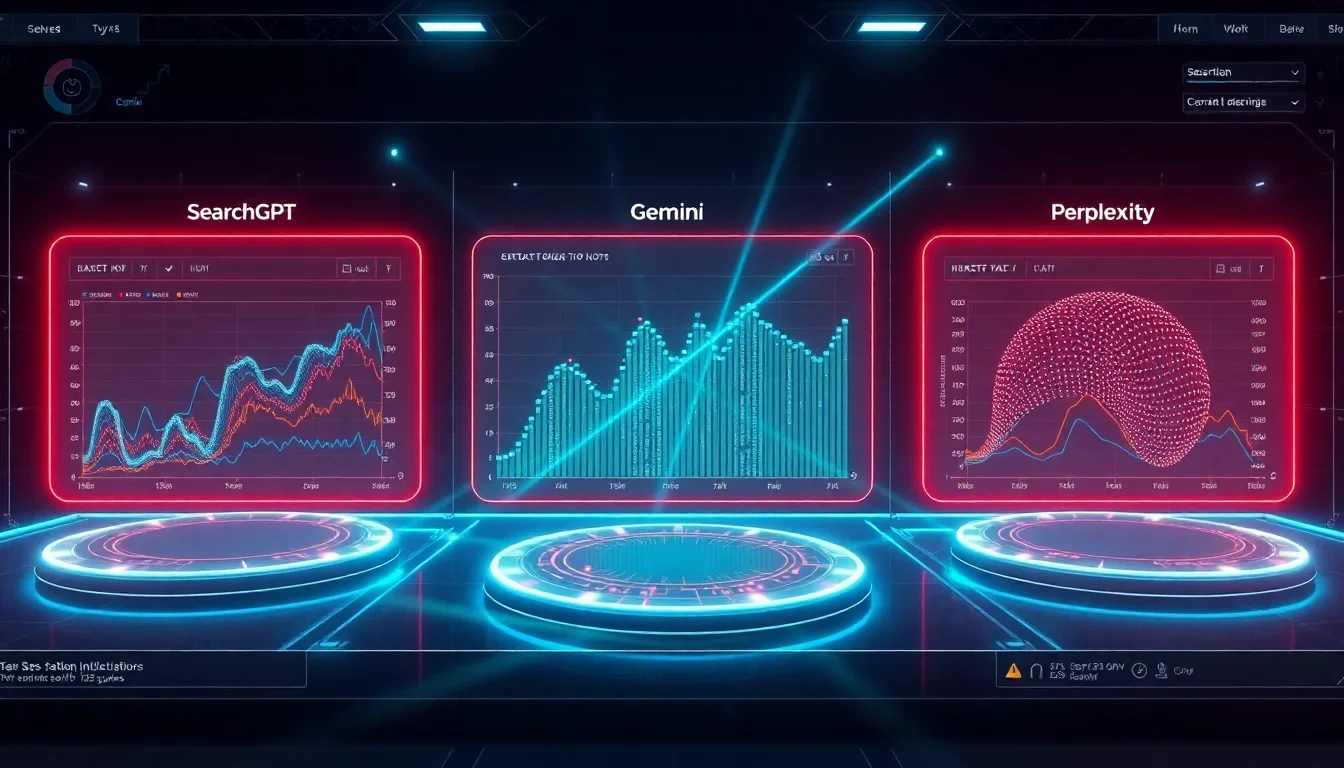
    Search engines like SearchGPT, Gemini, and Perplexity introduce randomness into every answer. The same query can yield different sources — this is a feature of the architecture. The study showed that, for example, when testing SearchGPT on the topic of running gear, Tom’s Guide received about 9.5% of citations, while Runner’s World received approximately 6.0%. The difference of 3.5 percentage points was within the margin of error, so claiming Tom’s Guide’s superiority was incorrect.

    How Much Data Is Needed for a Reliable Rating

    The answer consists of two conditions that must be met simultaneously. First: the order must stop changing. After collecting a sufficient number of responses, the top sites begin to stand out clearly. Second: the difference between the top sites must exceed the measurement error. If competitors are too close, the rating does not reflect real superiority.

    In 30 tests across different platforms and topics, the number of responses needed to meet both conditions ranged from 33 to 94 (only responses with citations were considered). In three out of 30 cases, this was not achieved even after 125 queries — all on SearchGPT, where the top sites were too similar.

    Practical Takeaways for Marketers

    Rand Fishkin (SparkToro) advises: before spending money on tracking AI visibility, make sure the provider “shows their math.” The IQRush study provides a simple stopping rule to avoid relying on intuition. If after updating content you see a 3 percentage point increase in citations, this could be natural variation. Measure indicators before and after multiple times — a single measurement is indistinguishable from noise.

    AI Visibility: How to Distinguish Real Growth from Measurement Noise

    Different Platforms — Different Data Requirements

    Gemini loads citations from the same sites within a single response, so many citations carry little new information. SearchGPT gives fewer citations per response but distributes them more widely — each response contains more independent data. The same number of responses on two platforms does not provide the same confidence: a budget sufficient for Gemini may leave you in the dark on SearchGPT.

    When Data Is Insufficient: Know When to Stop

    In three out of 30 tests, the top sites never clearly separated. In such cases, the right decision is to refrain from publishing a rating. A tracker that can say “insufficient data” is more valuable than one that outputs a confident order with every query.

    Only leaders can be trusted: with enough responses, they pull away from the middle and tail. But even for the top 10, the typical margin of error is about five positions, and every fifth position is more than 10. Do not publish exact rankings beyond the top of the list.

    Limitations of the Study

    This is a preprint based on 30 tests across three platforms using questions generated by ChatGPT, not real user queries. The exact numbers do not transfer to your topics — treat them as a form of the problem, not a table of values. In one test, 125 questions yielded only 104 useful responses (17% loss), so the actual number of queries should be higher.

    AI Visibility: How to Distinguish Real Growth from Measurement Noise

    The method was validated internally: the early rating was compared to the final one, not to an external benchmark. However, an independent team from the University of St. Gallen (Julius Schulte, Malte Bleeker, Philipp Kaufmann) published similar results on their dataset in April, confirming that a single reading is unreliable.

    The Future of AI Visibility: From Exact Numbers to Ranges

    Reporting on AI visibility is moving toward a format with margins of error, as in advertising and web analytics. Until Search Console reports which clicks came from AI, the task falls on you: run the check multiple times and report a range, not a single number from a dashboard.

    Frequently Asked Questions

    How many times should you query AI search to get stable data?

    From 33 to 94 responses with citations, depending on the platform and topic. There is no universal threshold.

    Can you trust AI visibility dashboards?

    Only if they show the margin of error and multiple measurements. A bare number without context is a red flag.

    AI Visibility: How to Distinguish Real Growth from Measurement Noise

    What to do if citations increase by 3% after a content update?

    Take several measurements before and after. If the difference persists — it’s real growth. If not — it’s noise.

    Which platforms require more data?

    SearchGPT — due to fewer citations per response but greater independence of each response. Gemini — conversely, gives many citations, but they often repeat the same sites.

    Conclusion

    The main takeaway: AI visibility is not a fixed metric but a range. Use the stopping rule, check multiple times, and do not publish ratings if the top sites have not separated. Only then will you get data you can rely on. Start implementing these principles today to make your AI visibility reports reliable and useful for decision-making.