Short videos have long ceased to be just a format for bloggers. Today, earning from short videos has become a reality, as income can be generated from creating and distributing vertical content by completing advertising tasks for brands and platforms. But how to start if there is no experience? How to transition from simply watching videos to real earnings? This is precisely why we created the VibeVO creator school, and today we are ready to share the impressive results of our graduates.
VibeVO School Statistics: From First Steps to Real Income
We launched the VibeVO creator school as an educational platform for those who want to master working with short videos and apply the acquired knowledge to real offers. Now we have enough data to analyze the journey of our participants after starting their training.
Learning Funnel: Who Makes It to the End?
As of today, the school’s funnel looks like this:
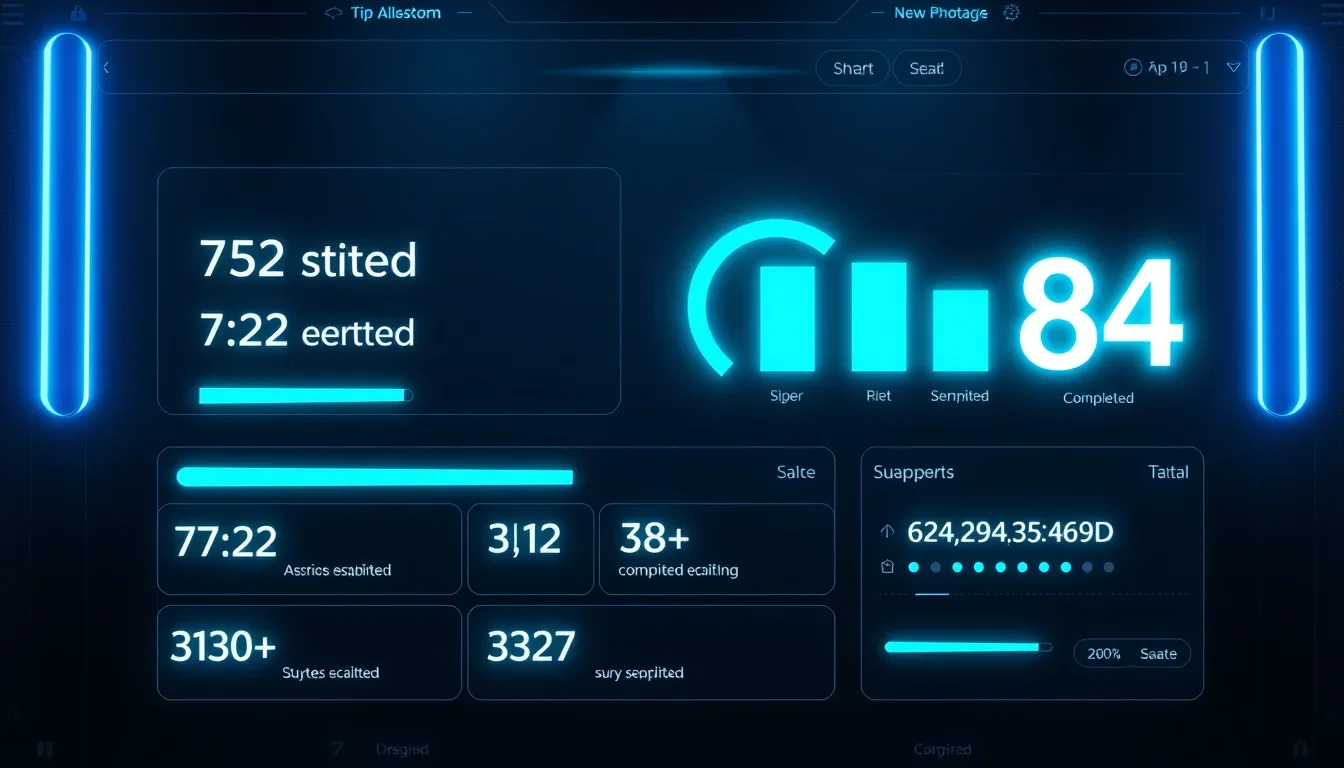
752 people started training.
310 people completed at least one lesson.
84 people fully completed the school.
This means that hundreds of participants have already taken the first practical step, and 84 people have successfully completed the entire program. For us, it is especially important not only the number of lessons watched but also how participants transition from learning to real content work. And here the numbers turned out to be even more interesting.
Impressive Results: School Participants Earned Over 21,500 USDT
Creators who completed at least one school lesson have earned an impressive amount on VibeVO over time:
21,506.36 USDT.
This amount includes accruals for completed tasks and content created on the platform. It is important to note that this refers to the earnings of these users on VibeVO throughout their activity, and not a guaranteed result of completing the school. The training itself does not automatically generate views and money. After completing the course, it is still necessary to choose offers, create content, publish it, and test various approaches.
However, the VibeVO school helps overcome the most difficult stage — transitioning from “I want to try” to concrete actions and starting your journey in the world of short video creation.
Almost Every Second Graduate Has Already Earned on the Platform
The most telling figure is the results of those who completed the training. Out of 84 school graduates, 40 have already earned on VibeVO. This accounts for 47.6% of graduates — almost every second one.
Behind each such figure is a creator who did not limit themselves to watching lessons: they chose an offer, created content, published it, and started getting results. This is the main goal of our school.
We do not aim to create training for the sake of training itself. Our goal is to give a person enough knowledge so that after the course they can confidently open the list of active offers and understand:
What content can be created.
How to approach creating short videos.
How to start publishing.
How to test various formats.
How to turn views into real earnings.
Key to Success: Start Publishing
The difference between a person who is “interested in earning from short videos” and a true creator often lies in just one action — the first publication. It is not necessary to immediately create a perfect video or gather millions of views. It is much more important to go through the entire cycle at least once: choose an offer, prepare content, publish it, and analyze the result.
After this, it becomes much easier to analyze statistics, adjust approaches, and scale what works. The results of VibeVO school graduates clearly demonstrate that this path is quite real and accessible to everyone.
Join Successful VibeVO Creators!
If you once started training at VibeVO school but stopped after the first lessons — now is the time to return and continue. And if you have never tried to earn from short content, start with the first lesson, understand the mechanics, and immediately apply the acquired knowledge to active VibeVO offers.
752 people have already taken the first step. 84 have completed the training. And almost every second graduate has already earned on the platform. You could be next! 🚀 Don’t miss your chance to start earning from creating short videos today.
The main secret to success is volume: the more clips you publish, the higher your earnings. In this guide, we’ll break down how to become a clipper from scratch, what payment paths exist, and how to automate the process with AI.
Who Is a Clipper and What Do You Need to Start
A clipper takes long content—a stream, game recording, podcast, or YouTube video—and cuts it into vertical clips lasting 15–60 seconds. You don’t need to be a streamer or have editing experience. The task consists of two parts: find a standout moment (clutch, multikill, funny reaction) and format it so the first three seconds hook the viewer.
Platforms promote vertical clips more actively than simply cropped horizontal videos. Therefore, it’s important not just to crop but to reformat to 9:16 and add subtitles. Subtitles are mandatory, as most people watch clips without sound.
How to Become a Clipper in 2026: Step-by-Step Process
Step 1: Choose One Niche
Don’t try to clip everything at once. Focus on one game (e.g., Call of Duty, Valorant, Fortnite) or one streamer. This helps the algorithm understand your audience and allows you to learn which moments perform best.
Step 2: Create Accounts for Publishing
Register on TikTok, YouTube Shorts, Reels, and X (Twitter). Use the same name everywhere so viewers can find you. In the description, specify your niche, e.g., “daily Warzone clips.”
Step 3: Get Source Material
If you stream, use your own VODs. If not, take public VODs from Twitch, Kick, or YouTube. Important: check the streamer’s rules—many require attribution or have official programs for clippers.
Step 4: Cut the Clip (Where Hours Used to Be Spent)
Manually searching for the best moments in a three-hour stream is the biggest mistake beginners make. In 2026, use AI services, such as Eklipse. Simply paste the stream link, and the neural network will automatically find kills, clutches, and standout reactions, then cut them. This takes minutes instead of hours.
Step 5: Reformat, Add Subtitles, and Publish
Convert the clip to a vertical 9:16 format and add automatic subtitles. Tools like Eklipse Studio do this in one pass. No need to edit each clip manually.
Step 6: Publish Daily and Analyze
Post at least one to two clips per day at the same time. Track which videos get more views and make more of those. Use a content scheduler to avoid missing days.
Two Earning Paths for a Clipper
Path A: Clipping Your Own Streams
If you already <a href="/blog/how-a-streamer-can-grow-on-tiktok-and-youtube-shorts/" title="How a streamer can grow on TikTok and YouTube Shorts”>stream, even to a small audience, you have unique content. clip your VODs and participate in creator reward programs, such as Eklipse Creator Rewards.
This program pays for views of your clips. In June 2026, 1,950 creators accumulated 7.85 million views, and 14 of them received cash prizes and games. It’s all free—just publish clips from Eklipse and fill out the participation form.
Path B: Creating a Channel with Clips of Other Streamers
The classic model: choose a popular streamer or game, create a channel with their best moments, and earn from ads or direct deals. TikTok and YouTube pay through reward programs. But competition is high, and many streamers have official clipping programs (e.g., on Kick). Participating in an official program is usually more profitable, as you get protection from strikes and direct income.
Why Volume Matters Most
One brilliant clip per week loses to ten average clips per week. Algorithms love frequency. Clippers who earn $1,000–2,000 per month publish at least one clip per day. Those who post sporadically almost never generate income. The only way to maintain volume is to automate clipping. AI tools turn one three-hour stream into 30 days of content.
Mistakes That Keep You at Zero
Irregular posting. The algorithm sees inconsistency as a sign of low quality. Better to post two clips per day for a month than 15 over a weekend and then silence.
Weak first frame. A clip starting with “well, it happened” is doomed. Start with the most striking moment.
Lack of subtitles. Without them, viewers will simply scroll past.
Clipping other people’s streams without checking the rules. Always look for the streamer’s official program — it’s safer and often more profitable.
Manual editing. This kills volume. Use AI.
Frequently Asked Questions
How to become a clipper with no experience?
Choose one game or streamer, create social media accounts, and use an AI service for editing. Publish daily. You can release your first clip on the same day.
How much do clippers earn?
With regular posting — $500–2000 per month after 90 days. Earnings depend on the number of clips released, not on talent.
How to become a clipper on Kick?
Join the official Kick clipping program and use a VOD editing tool like Eklipse. This is one of the most active paid programs.
Do I need to show my face?
No. Clipping is a faceless job. You use someone else’s or your own content.
Is it legal to clip other people’s streams?
Yes, but with conditions. Always check if the streamer has an official program and give credit. Otherwise, you risk bans.
What’s the fastest way to start earning?
If you already stream — edit your own VODs and participate in a rewards program, like Eklipse Creator Rewards. This requires no permissions, and views go directly toward payouts.
Conclusion
To become a clipper in 2026, you need three things: choose a niche, eliminate manual editing with AI, and choose a monetization path (your own streams through a rewards program or a channel with other people’s clips). Volume is the main factor for income, and only automation makes it achievable.
If you stream, start with clipping your own VODs and registering for Eklipse Creator Rewards. Try AI editing right now: paste the link to your latest stream and find out how many clips you could publish.
Patreon, a platform for creators to monetize content, is moving from persuasion to blocking AI scrapers. Instead of simply asking bots not to collect data via robots.txt, the company has begun actively blocking them using Cloudflare technologies. As reported on the Patreon blog, AI scrapers ignored old restrictions, making thousands of access attempts per week — now that number has dropped to zero.
Why Patreon Took Harsh Measures
AI scraping has become much more sophisticated since 2023, when Patreon first introduced protective mechanisms. Patreon’s payment gateway has long protected content from crawlers, but new features like the updated Home Feed and Quips posts have opened more data to AI.
Cloudflare now offers tools to limit AI bots, including the Pay Per Crawl marketplace, where sites can charge for scraping. Patreon uses AI Crawl Control technology to actively block training bots, leaving access only to those that index content to redirect users back to the platform.
What Changed Technically
Instead of passive robots.txt, Patreon has moved to active blocking at the infrastructure level. AI training bots can no longer access content, even if they ignore standard instructions. Patreon clarifies: “Consent should not depend on whether the scraper decides to behave well.”
During testing, weekly access attempts by individual AI bots fell from thousands to zero.
Patreon’s Position and Market Reaction
Drew Rowney, Patreon’s product director, stated: “Creators deserve a voice in how their work is used by AI companies. Our vision is audience growth without forced AI training.”
This is part of a global trend: more publishers and content creators are realizing that AI is consuming their content for model training. Cloudflare recently changed its policy, blocking “mixed” crawlers by default on pages with ads.
Frequently Asked Questions
Does Patreon block all bots?
No. Bots that index pages and redirect users back to Patreon are allowed. Only those that train AI models without permission are blocked.
This is a marketplace where site owners can charge AI bots for scraping. Patreon does not yet use this model but actively blocks unauthorized access.
Patreon demonstrates that even large platforms can effectively protect content without compromise. If you are a creator, consider: how is your work being used by AI? Patreon offers an alternative — control and respect for your labor.