Data cut 03.09.2026. CPV = CPM ÷ 1,000. This is a reward rate with admission terms and limits, not the actual cost of the entire campaign. The fund is not equal to expenses. Views are a total counter, not unique reach; approved works are counted separately. Views are not equal to unique reach or sales. Conclusions about marketing mechanics are an editorial analysis; the presence of a campaign around a brand does not necessarily mean its direct placement.
A beautiful AI video might appeal to a viewer who never finds out how it was created. In the Pippit campaign, this connection was enshrined in the requirements: the logo must be visible throughout the video. Authors were offered to cut videos created with Seedance 2.5, maintain pages about AI stories, AI cinema, or the product itself, and mention a limited-time offer.
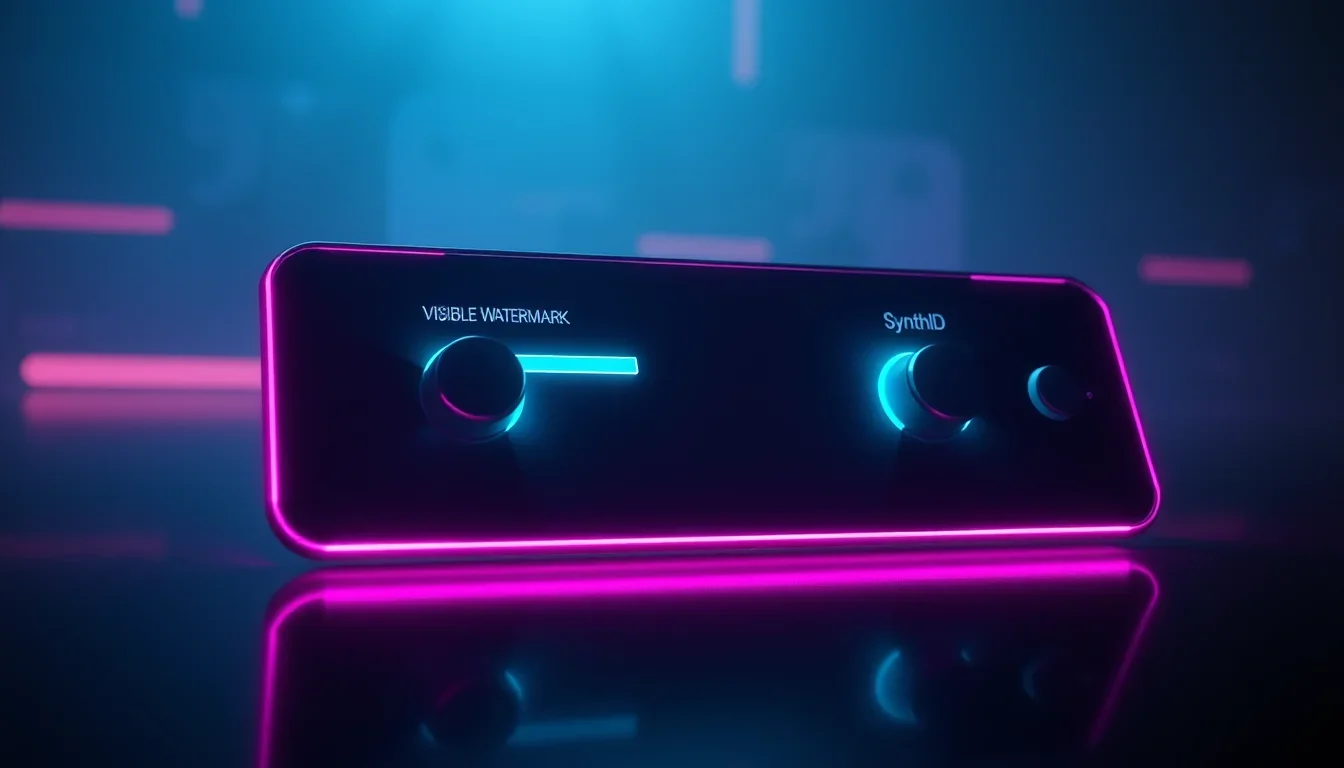
Google has taken an important step towards content creators: users will now be able to remove the visible watermark from materials generated by its AI models. This applies to images, videos, and music created in Gemini, the Flow video editor, and other tools. Meanwhile, the invisible SynthID watermark and C2PA standard metadata will remain mandatory to preserve transparency of content origin. The decision is already being called revolutionary for AI content production and subscription-based neuro-production.
New Option in Gemini and Flow
Google’s Vice President of Gemini products, Josh Woodward, announced on social network X that the toggle will be available for the Nano Banana, Omni, and Lyria models. Users will be able to disable the visible watermark in Gemini and the Flow video editor, with support in Google Search coming later.
This change reflects the evolution of the approach to AI media labeling: visible watermarks often hinder professional and creative use of content, but the need to identify AI-generated content remains. Woodward explained: “We are balancing creative control and safety: visible watermarks are now optional, but invisible SynthID and C2PA metadata still ensure transparency. You can use Gemini or Search to check whether an image was created by AI.”
How It Will Work
The feature will be rolled out in the coming days. Once available, users will be able to go to “Settings” → “Media watermark” and enable or disable visible labeling. This makes mass generation of AI videos for advertising more flexible, as visible marks often reduce the conversion of AI creatives compared to real UGC videos.
Credentio: Local Validation for Developers
Google is also open-sourcing a new library called Credentio, which will allow developers to embed a local content authenticity verification mechanism into their applications. This is a step towards a decentralized trust system for AI media.
“We are balancing creative control and safety: visible watermarks are now optional, but invisible SynthID and C2PA metadata still ensure transparency” — Josh Woodward, Vice President at Google.
Context: Regulatory Pressure
Google’s decision follows a controversial move by Anthropic, which added a watermark to text and files created by Claude to comply with EU regulations. This highlights the growing importance of ethical labeling of AI content, especially when creating AI avatars with subtitles, AI voiceovers, and text-to-video generation for e-commerce and crypto projects.
What This Means for Business
For companies using an AI pipeline for mass generation of videos, for example, 500 videos per day, disabling the visible watermark simplifies the use of AI content in advertising without compromising trust. At the same time, the cost of one minute of AI video remains competitive compared to traditional production, and the mass generation API allows scaling production, which was previously impossible.
Frequently Asked Questions
Will it still be possible to check if content was created by AI?
Yes, the invisible SynthID watermark and C2PA metadata are preserved, so you can use Gemini or Search to verify the origin.
When will the feature become available?
The rollout will begin in the coming days, first in Gemini and Flow, then in Search.
Why is Google doing this?
To improve the usability of AI content for professional and creative tasks while maintaining transparency.
This decision opens new opportunities for subscription-based neuro-production and AI content production, making the generation of AI videos for advertising even more attractive. If you are looking for where to order AI video for crypto or e-commerce, the process has now become even more flexible.
Want to be the first to test new AI generation capabilities without visible watermarks? Subscribe to our updates to not miss the feature launch and get practical guides on using SynthID and C2PA in your projects.
Google Vids: Create AI Videos with Your Own Avatar
Google has updated its Google Vids tool, allowing users to create digital avatars based on selfies and voice recordings. Now you can become the main character of AI videos using your own appearance and voice. The update also includes integration of the multimodal model Gemini Omni, which combines text prompts and reference images to generate videos.
New Features of Google Vids
Gemini Omni not only allows you to create videos from scratch, but also edit them: replace backgrounds, fix lighting, add effects. Step-by-step edits are supported — changes are made without needing to start over. This transforms Vids from a tool for work presentations into a full-fledged platform for creating AI content.
Personalized Avatars and Security
Avatars are linked to a Google account and marked with an invisible SynthID watermark. Access to the feature is limited to users over 18 in certain regions. Google emphasizes that avatars cannot be used to create deepfakes of company management.
Upload a selfie and voice recording to the tool. The neural network will create a digital copy that can be used in videos. The avatar is linked to your Google account.
Can Vids Be Used for Commercial Advertising?
Yes, Google positions Vids as a business tool. AI videos are suitable for ad spots, UGC campaigns, and content for crypto projects.
How Does Vids Differ from Synthesia?
Vids is integrated into Google Workspace and uses Gemini Omni for multimodal video creation. Synthesia focuses on avatars, but Vids offers deeper integration with text and images.
Try Google Vids today and create your first AI video with an avatar. It will change your approach to content production.