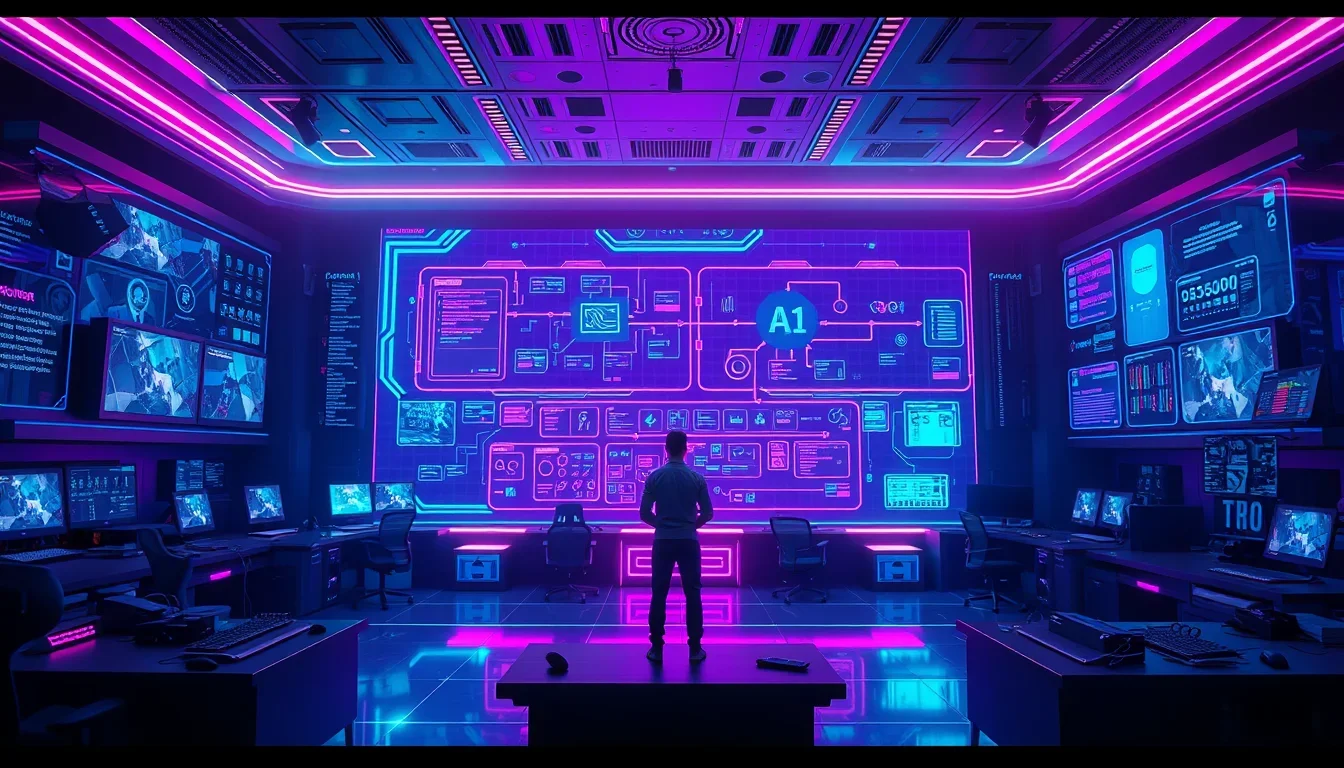
Mass video posting and automatic publication of short videos is a dream for many content creators. Imagine being able to schedule auto-posting so that publication to 5 platforms happens without manual labor, while you focus on other tasks. This article is a detailed breakdown of how a mysterious AI model, later identified as Z.ai GLM 5.3 Flash, generated a complex mass posting service of 127 nodes in n8n, spending only $4 in the process.
We will examine the architecture, the economics of the experiment, and the key lessons learned. Get ready to discover how artificial intelligence can radically change the approach to content creation and distribution, making it not only efficient but also incredibly economical.
Introduction to the Experiment: AI Coder for Complex Pipelines
From August 20 to 25, OpenRouter provided free access to the stealth/ox-alpha model, later de-anonymized as Z.ai GLM 5.3 Flash. This model, with a 1M token context and native multimodality (text, images, video), is positioned for “efficient coding and long-term agent tasks.”
- Experiment Goal: Stress testing a new LLM as a coder for a complex distributed pipeline.
- Task Scale: Five external APIs, binary streams, three dozen branching conditions, asynchronous polling – all in one workflow.
- Result: In three days (August 21 to 23), the model “vibecoded” a workflow of 127 nodes, capable of interacting with APIs, generating media and publishing Reels.
- Economics: 60.9 million tokens were spent, of which 85.3% were cache hits. The total cost at a blended price of $0.07/1M was about $4.
“In the Western market, there’s a boom in autonomous bundles like ‘scraping-photo/video generation-auto-posting’. I’m interested in pipelines and fault tolerance.”
Workflow Architecture: 5 Circuits and 127 Nodes
Initially, the workflow had 156 nodes, but after refactoring, their number was reduced to 127. There are 113 working nodes, excluding triggers and stubs. Each circuit performs its specific function, ensuring short video distribution.
Circuit 1: “Reconnaissance” (23 nodes)
This circuit is responsible for finding viral content. It runs on a schedule (24 hours) and analyzes competitors’ Reels.
- Scheme: Schedule (24h) → list of competitors → Reels via ScrapeCreators → virality math (views > avg × 2.5) → TRENDING tag.
- For trending videos, caption (/v1/НЕЛЬЗЯgram/post) and transcript (/v2/instagram/media/transcript) are retrieved.
Circuit 1.5: “Semantic Filter” (17 nodes)
Here, content relevance is evaluated using an LLM re-ranker.
- Model: Qwen3 Reranker 8B via chat/completions.
- Logic: evaluation on a 0-1 scale. Content below the threshold (e.g., 0.75) is filtered out, preventing the publication of irrelevant videos.
Circuit 2: “AI Dispatcher” (17 nodes)
The model does not copy content, but “extracts the DNA of virality” and generates an original idea.
- Output: strict JSON schema (angle, hooks, voice_script, video_prompt, NELZYAGRAM_caption).
- A valid draft is saved to Google Sheets with DRAFT status.
Circuit 3: “Media Workshop” (37 nodes)
This circuit is responsible for creating media files.
- Video: seedance-2.0-mini with a fallback to veo-3.1-lite, asynchronous polling (Wait 10s × 20 attempts).
- Voice: TTS outputs raw PCM, converted to WAV on the fly.
- Cover: image-generation with a neon tech-vibe.
- All operations with retries, warnings, and MEDIA_READY / MEDIA_FAILED statuses.
Circuit 4: “Distribution” (19 nodes)
The final stage is video cross-posting and content publication.
- Splicing: video with voice via ffmpeg (Write-Exec-Read to /tmp). Voice is optional.
- Publication: Google Drive (upload + share publicly) → Instagram Graph API (REELS container – publish) → permalink → Sheets update → Telegram report.
Key Techniques for Effective Interaction with LLM
The success of the experiment largely depended on the correct formulation of prompts. A unified panel for TikTok, YouTube, Instagram requires clear instructions.
- Role instead of request: using “Senior n8n solutions architect” changes the tone of generation, making responses more protected and less conversational.
- Prohibition on inventing parameters: the model must indicate “VERIFY MANUALLY” if unsure about parameters.
- Iterations by circuits: processing one circuit per message helps the model not get confused by dependencies.
- Output Contract: one JSON block, import instructions, and a list of questionable parameters.
Engineering Solutions and Fault Tolerance
The workflow contains many engineering solutions that ensure stability and fault tolerance.
PCM to WAV on the fly
The TTS model outputs raw PCM, which n8n and NELZYAGRAM do not understand. The model generated a Code node that adds a correct RIFF header using n8n’s built-in binary-helpers.
Static Data: cycle accumulator without duplicates
$getWorkflowStaticData('global') is used to collect trends, which avoids bloating the standard context and duplicating data.
Error Handling: 402 vs 5xx
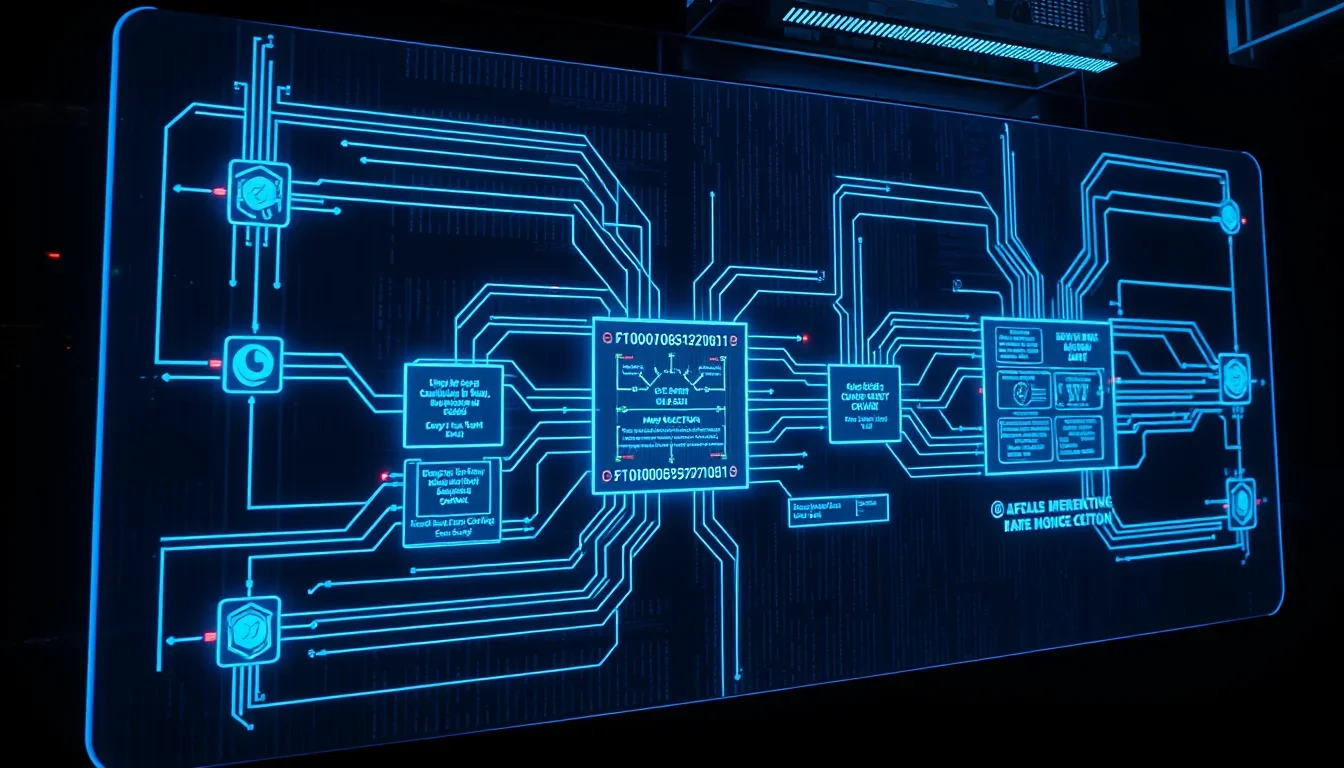
The system distinguishes between critical errors (402 — no funds) and temporary failures (5xx — service temporarily unavailable).
- 402: Telegram alert + StopAndError (no point in retrying without funds).
- 5xx: retry × 3 = fail-open (handle is skipped, pipeline continues).
Fail-open for reranker
If Qwen3 Reranker does not respond after three retries, all documents are assigned a neutral score of 0.5, which is filtered out. The pipeline does not break but quietly skips the round.
Model errors and my own
Despite the impressive result, both model errors and shortcomings in my approach were identified during the process.
Model flaws:
require(‘crypto’)in Code node (n8n does not supportrequire).- Google Drive erases binaries, which required a Rebuild Handoff Item node.
- Phantom nodes with non-existent
type/typeVersion. - Hardcoded
IG_USER_IDinstead of using credentials.
My own blunders:
- Misaligned reranker threshold (
MIN_RELEVANCE_SCOREin sticker and in IF node). - Insufficient polling attempts for video during peak hours (20 × 10s).
Economics of the experiment: $4 for 60.9 million tokens
The cost of 500 publications or even more, thanks to this experiment, turned out to be minimal.
- Free window: the stealth model was temporarily free.
- Prompt caching: 85% of requests were cache hits due to iterative development.
- Total cost: about $4 for 60.9 million tokens.
Price comparison with other models (average prices per 1M tokens):
| Model | Price per 1M (in/out) | Estimated for 60.9M |
|---|---|---|
| Anthropic: Claude Opus 4.8 | $5 / $25 | about $426 |
| OpenAI: GPT-5.6 Terra | $2 / $12 | about $183 |
| Anthropic: Claude Sonnet 5 | $2 / $10 | about $171 |
| Qwen: Qwen3.8 27B | $0.35 / $2.75 | about $36 |
| DeepSeek: V3.1 Terminus | $0.27 / $1 | about $21 |
| stealth/ox-alpha + cache | free | about $4 |
The paradox is that the free model built a factory that uses inexpensive services, saving significant funds on a monthly mass-posting package.
Workflow growth areas and further development
Further project development may include:
- Monolith splitting: into three workflows (Radar / Generate / Publish).
- Telegram bot: with human-in-the-loop management (“Publish / Regenerate”).
- Neuroavatar: integration of HeyGen: Avatar IV model for creating videos with avatars.
Conclusion
The experiment with stealth/ox-alpha showed that AI models are capable of creating complex and fault-tolerant pipelines for automatic publication of short videos. The key success factor is clear technical specifications and a structured approach to interacting with LLMs. This technology opens up huge opportunities for mass uploading with proxies and anti-detect, allowing to post to 10 accounts and more, significantly reducing labor costs.
If you are looking for how to choose a mass posting service, pay attention to solutions that use similar AI approaches. Mass posting via API is becoming more accessible and effective than ever. Try applying these principles in your projects and see their power!
Frequently Asked Questions
What is stealth/ox-alpha?
stealth/ox-alpha is the codename for an AI model that was later de-anonymized as Z.ai GLM 5.3 Flash. It has a 1M token context and native multimodality, designed for efficient encoding and agent tasks.
How much did the workflow creation experiment cost?
Thanks to a free trial period and a high cache hit rate (85%), the experiment cost about $4 for 60.9 million tokens.
What platforms are supported for cross-posting?
In this workflow, publishing to Instagram Reels via the Graph API was implemented. However, the architecture allows for expanding the list of platforms, including TikTok and YouTube, to create a unified dashboard.
Is it possible to publish 100 videos a day using such a system?
Yes, theoretically it is possible. The system is designed for automatic short video publishing and mass posting. Limitations will depend on the API throughput of the platforms used and computational resources.
How to ensure fault tolerance in mass posting?
Fault tolerance is ensured by protective logic: separation of 402 and 5xx errors, fail-open strategies for critical nodes, as well as asynchronous polling and retries. This guarantees that the schedule across 10+ accounts will be executed seamlessly, even during temporary failures.