In 2026, buying engagement boosting remains an accessible tool for promotion: the average price for 1000 views starts at $1.40 on TikTok and reaches $6.70 on YouTube. However, not everything is that cheap: comments and followers will cost several times more. We break down the latest Surfshark research and find out which metrics are worth buying and which to ignore.
Engagement Boosting Prices: What Costs What in 2026
Surfshark collected data from numerous engagement boosting services and found that fake activity remains “very affordable” for the average user. The cheapest type of boosting is views, while the most expensive are comments. At the same time, the price range across platforms is significant, opening up opportunities for savings.
Views: Cheapest on TikTok
The average price for 1000 views is $1.40 on TikTok and goes up to $6.70 on YouTube. This makes views the cheapest and most easily faked metric, so trusting them is the least safe. If you see a channel with millions of views but minimal engagement, that’s a reason to doubt the quality of the audience.
Comments: The Most Expensive Type of Boosting
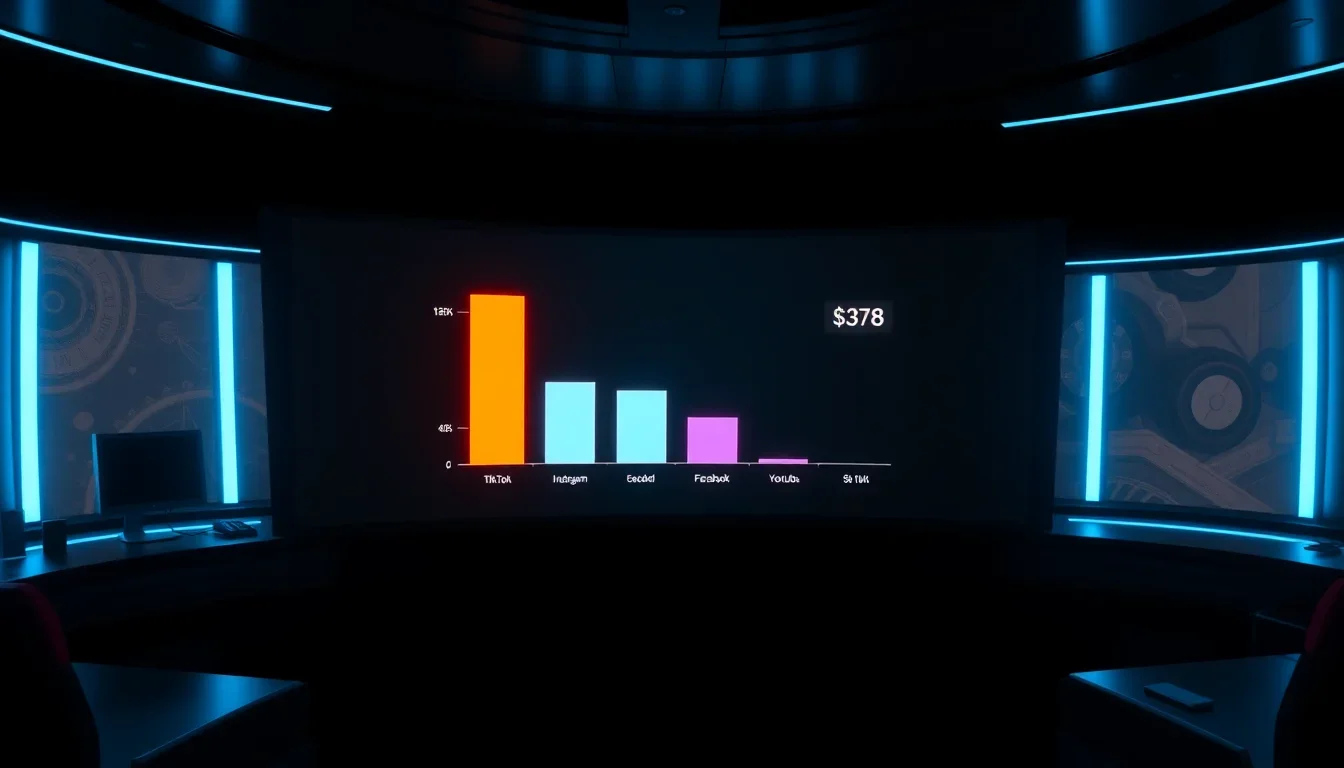
Comments are the most costly service. For 1000 random positive comments, the average asking price is:
$93 on YouTube
$104 on Instagram
$140 on TikTok
$287 on Facebook
The high price is explained by the complexity and labor intensity of creating fake comments. Facebook is likely the hardest platform for boosting, while YouTube is the easiest. This is why the presence of real comments is considered a more reliable quality signal than views.
Reposts and Shares: TikTok Leads in Price
For 1000 reposts on TikTok, the average asking price is $68, on Instagram and Facebook — $37 each, on X — $27, and on YouTube — only $17. YouTube’s strong recommendation algorithm makes sharing less significant, so it’s cheaper. For marketers, this means: if your goal is virality, TikTok will be the most costly but also the most effective channel.
Likes and Followers: Average Price Range
Likes occupy a middle position: from $10 to $25 per 1000. Followers on Facebook, TikTok, Instagram, and X cost $14-20 per 1000. But YouTube is a clear outlier: fake followers there cost an average of $78 per 1000, which is 4 times more expensive than on other platforms. The reason is YouTube’s unique system, where the number of subscribers is considered an achievement and directly affects monetization.
What Does This Mean for an Arbitrage Specialist?
The numbers show: views are the cheapest and least reliable way to boost, while comments are the most expensive and relatively reliable. If you see a channel with lots of views but few comments, that’s a reason to think about traffic quality.
For testing hypotheses, buying views is cheaper than launching a full campaign, but remember: platforms remove bots by the billions. Boosting can give a false sense of progress, so always compare costs with real conversion.
Frequently Asked Questions
How much does 1 million banner impressions cost?
It depends on the platform, but CPM is usually above $50. Boosting views is cheaper but doesn’t bring real users. Banner advertising, even at a high price, brings real people who can take a targeted action.
What CPM should be considered profitable?
A profitable CPM is one that pays off. Compare the cost per real engaged user, not just per impression. If 1000 impressions cost $5 but conversion to sales is zero, that’s worse than $50 per 1000 impressions with a 5% conversion.
What’s cheaper: banner or influencer?
A banner is usually cheaper in terms of CPM, but an influencer provides audience trust. Calculate unit economics: cost per targeted action. With an influencer, the cost per follower or lead may be lower despite the high price for integration.
Should I use AI for video clipping?
AI clipping is cheaper than manual work, but check the quality. For mass posting, AI videos can be a budget alternative, but they rarely generate high engagement. Use AI for rough work, and leave final editing to a human.
Conclusion: Count Money, Not Likes
Boosting is a tool, but it doesn’t replace a real strategy. If you want to test hypotheses cheaply, use boosting for initial validation, but always evaluate ROI. Don’t fall for pretty numbers; check statistics and calculate how much money each spent ruble brings.
Quality content and organic growth are the best way to save on boosting. Invest in what works for the long term, not in instant illusions of popularity.
Start small: test boosting on one platform, measure real conversion, and only then scale your budget. Remember that sustainable growth is built on audience trust, not bots.
92.8% of dialogues in ChatGPT end without a transition to the website — this is Profound data that Kevin Indig analyzed in the digest on July 21. Measured on live traffic of a real product, the figure can be trusted. All search promotion relied on a single deal: you get to the top of search results, a person clicks the link to your site, and converting that visit into a lead is your concern. The link was the point where a business first touches a customer. In the AI response, this deal breaks at the very first step: the click most often simply doesn’t happen.
Why 92.8% of dialogues in ChatGPT end without a transition to the website
For several months, I’ve been measuring how ChatGPT, Perplexity, Alisa AQI, and GigaChat name brands in their responses: I run control prompts and see which model mentioned whom and which didn’t. Behind these runs, a figure surfaced that breaks the usual SEO logic — and made me change what I track for clients altogether. Let me break it down in order.
Three weeks ago, we ran prompts for a client in the food delivery niche through ChatGPT. Usual routine: you type a question like “which delivery service to choose in Moscow,” and look at the response. At that point, the client had far more links from external sites than the nearest competitor. In Ahrefs — a service that calculates a site’s link weight — this is immediately visible: both the overall authority score is higher, and the number of different sites linking to it is one and a half times greater. ChatGPT named the competitor. The client — no. Didn’t mention it at all, not once in twenty prompts.
I double-checked three times, changed the wording of the question, the date of the dialogue, and the region. The result was the same. For an hour and a half, I honestly couldn’t understand what was going on. Twenty years of website promotion taught a simple rule: the more links point to you, the higher you rank in Google and Yandex results, and therefore the more readily neural networks should name you. Here, the rule didn’t work. Only there was no search results page in the usual sense. There was a model that decided on its own whom to name and whom not to. And it decided not by a link counter.
A brand mention cannot be bought with links — it accumulates like reputation
At the same time, AI traffic itself is tiny in volume — Ahrefs reports that ChatGPT accounts for about 0.19% of all link transitions on the internet, compared to 42% for Google. Ridiculously small if you compare head-on. But here’s what’s more interesting: those few who do click from ChatGPT convert far more readily — conversion is about 7.1%, and the visit itself is valued 4.4 times higher than a regular one. Fewer people reach the site, but those who do — came ready to make a purchase or any other target action.
And here’s an important twist. If the decision is made BEFORE the click, inside the model’s response itself, then you need to fight not for the click. You need to fight for how you’re named at the moment when the click hasn’t happened yet and, most likely, won’t happen at all. A mention in a ChatGPT response is not structured like a spot in search results. A spot can be earned by working on the site — links, loading speed, technical cleanup. A mention can’t be bought that way. The model gathers it from two sources: from the texts it was trained on and from pages it pulls up right during the response. And what decides is not the number of links, but how the brand is generally written about — in reviews, on forums, in industry articles, in comparisons.
Search promotion used to be about taking top positions, because a position led to a click on the site. Promotion in AI answer engines works differently: you have to fight for the mention itself, because a click may not happen at all, and the person will still make a decision — based on how the model named the brand. A link is a one-time asset. It works as long as the page holds in the search results, as long as the site is alive, as long as the algorithm values it. A mention accumulates differently: it is reputation that has already settled into the texts on which the model was trained and which it reads now. Remove one article — the mention will not go anywhere; it is spread across dozens of sources.
This is where my mistake with that food delivery client was. His link profile was strong, but almost all of it came from aggregators and directories, where the brand is simply listed in a list. The competitor had fewer links, but had three detailed editorial reviews describing how the service differs from others. The model was trained on them, among other things. It did not count links — it read context. The first place in Google, by the way, does not at all guarantee a mention in ChatGPT. We checked this on several clients separately: search and AI engines have different selection mechanics, and the first place in regular search results does not by itself turn into a line inside the model’s answer.
Where a link still brings a client, and where the question is closed right in the answer
The link has not died entirely — it is important not to confuse this. In regular Google, 68% of searches in the US by early 2026 also end without a click, according to SparkToro citing Search Engine Land. An answer without a click to the site has also come to good old search, it is just that it was visible there earlier — through blocks with ready answers, knowledge cards, and direct answers at the top of the results.
The link still works where the decision is made AFTER the first touch: price comparison, reading reviews, technical documentation, everything that requires going into details that simply do not fit in the model’s short answer. It works in niches with a long decision-making cycle — there, a person will still reach the site, just later. The link does not work where the question is closed with one phrase in the answer. “Which delivery service to choose” — closed with a phrase. “How much does delivery from a specific restaurant in a specific area cost tomorrow evening” — not closed, a click is needed there. The same business lives on both sides of this boundary — it all depends on which specific query the user asked.
What I now measure for clients instead of search positions
I stopped looking only at positions in the search results and added a separate measurement: how often and in what context models mention the client’s brand directly, without a click, without a transition. We run control prompts — real audience questions — through ChatGPT, Perplexity, Alisa AI, and GigaChat, and see whether the model names the brand, in what order relative to competitors, and with what wording. ChatGPT is not the only one here. Perplexity builds its answer almost entirely from cited sources and shows them as a list — the model readily takes from articles on third-party platforms. Alisa AI mixes in fresh Yandex results, GigaChat answers in its own way. A brand that sounds in one model may be silent in another — so one ChatGPT is not enough for the measurement.
From this, three things emerged that I now advise any marketer to track:
Share of mentions among top competitors for your own key questions: a specific percentage for a specific set of prompts, without general ratings.
Tone of phrasing: the model may mention the brand neutrally, or it may add an evaluative word like “trusted” or “expensive” — this influences choice more than the mere fact of mention.
Sources from which the model apparently draws this phrasing: often it’s one or two articles — these should be prioritized for strengthening, instead of spreading the budget across dozens of platforms.
With that food delivery client, we ultimately didn’t chase new links. We wrote several detailed materials about the product on platforms that the model clearly reads and cites — and after a month and a half, the mention appeared, and visibility in AI responses grew. The client had more links, but ChatGPT named a competitor. Now we know why.
Frequently Asked Questions
How to measure brand mentions in ChatGPT?
Run control prompts — real audience questions — through ChatGPT, Perplexity, Alice AI, and GigaChat. Calculate the share of mentions among top competitors, record the tone and the sources from which the model draws information.
Can you buy a mention in neural networks with links?
No. Links work in classic search, but neural networks don’t count them directly. A mention depends on how the brand is written about in reviews, articles, and forums — it’s reputation that accumulates in the texts on which the model is trained.
What to do if the brand is not mentioned in ChatGPT?
Find the platforms that the model cites most often and place detailed materials about the product there. Strengthen editorial reviews, comparisons, and expert articles — they influence mentions more than link mass.
Should you abandon SEO in favor of neural networks?
No. Links still work in niches with a long decision-making cycle and for transactional queries. The optimal strategy is to combine classic SEO with work on mentions in AI responses.
Conclusion
The bottom line is simple: 92.8% of dialogues in ChatGPT end without a click, but the decision to choose a brand has already been made. A link is a one-time asset; a mention is cumulative reputation. To win in AI search results, stop chasing links and start managing how you are written about in the texts that models read. Run control prompts, track the share of mentions and tone — and you’ll see where you’re really losing customers. Start with an audit of your mentions today.
CPM under 50 rubles: how brands save on Twitch integrations
Jean Paul Gaultier launched an advertising campaign for the Le Male Elixir fragrance on Twitch, building a virtual island in the game Let’s Build A Dungeon. We calculate how much it cost and why this format is more profitable than classic banners. CPM below 50 rubles is not a myth, but a real figure that can be achieved with a competent approach to native integrations in streaming services.
What happened
In 2026, Gaultier decided to promote men’s perfume through gaming streams. Together with Twitch Brand Partnership Studio and developers Springloaded Games, the brand created Le Male Island — a special location in the game Let’s Build A Dungeon.
Streamers from Saudi Arabia were invited to the island: swimy and 3Gaming. They explored the world, unboxed the product, and did “sniff tests” live. This approach allowed the product to be organically integrated into entertainment content without causing rejection from the audience.
Campaign numbers
According to Amazon, the integration brought 27,000 video views and 16,594 chat messages. The average concurrent viewership was 1,694 viewers, and swimy’s peak engagement rate reached 68.4%.
Now let’s calculate the unit economics: if we assume the campaign budget was within $50,000 (the average cost of such integrations), then the CPM comes out to about $1.85 — that’s less than 170 rubles. For comparison: a regular banner on a gaming site costs from 300 rubles per thousand impressions.
Why it’s cheaper than bloggers and targeting
Favorable CPM: 27,000 views with a budget of $50,000 — that’s $1.85 per thousand, which is several times lower than standard display formats.
Price comparison: one video from a blogger with a million followers costs from $10,000, but here — a whole world with engagement.
What this means for arbitrage specialists
Such integrations are not only for luxury brands. The format of custom worlds on Twitch provides cheap hypothesis testing: you pay for reach, not for the “opportunity” to show.
If compared to AI-generated videos — 100 videos cost about 0, but they need to be promoted. Here, you get a ready-made platform with an audience.
The main question is how much money each ruble spent will bring. In Gaultier’s case, it’s 68% engagement, which indicates high viewer loyalty.
Frequently asked questions
How much does 1 million impressions via banner cost?
On average in Russia, banner CPM is 300–500 rubles. On Twitch integrations, you can get a CPM below 50 rubles if you count by actual views.
What’s cheaper: banner or targeting?
Targeting is usually more expensive by CPM but more precise in terms of audience. A banner is cheaper but gives junk traffic. Stream integrations are the golden mean.
Is it worth using AI to create videos?
AI videos save budget but require investment in promotion. If compared to seeding with bloggers, AI content can be 10 times cheaper with comparable reach.
Conclusions
The Gaultier campaign showed that Twitch integrations are a budget-friendly alternative to seeding and classic display advertising. For arbitrage specialists, this is a signal: look for non-standard platforms where CPM is below 50 rubles, and test hypotheses without extra costs.
Calculate the unit economics of each channel — and profit won’t be long in coming.
Start small: analyze your niche, find streamers with a relevant audience, and offer them a creative integration. Perhaps your brand will be the next example of how saving on advertising turns into high engagement and sales growth.
How to Set KPIs in GEO When You Can’t Guarantee Results
The world of GEO (Generative Engine Optimization) is changing rapidly, but with opportunities comes uncertainty. How do you measure success if AI algorithms are unpredictable and results cannot be guaranteed? In this article, we will explore how to set realistic KPIs, which metrics to rely on, and what businesses are actually paying for.
Why Can’t Results Be Guaranteed in GEO?
GEO is a young channel. Budgets are already being allocated, but the market has not agreed on what constitutes AI visibility or how to measure results. The executor does not control which source the AI system will choose in its next response, when the index or model will be updated.
This is a common problem: no methodology has yet shown a sustainable long-term effect on organic visibility across different platforms simultaneously.
Metric, KPI, and Commitment: The Difference
A metric shows the observed state. For example, a brand appears in 14 out of 40 checked commercial scenarios — a mention rate of 35%. A KPI sets a measurable goal: increase presence from 35% to 50% over six months. The contractor’s commitment defines the result they are willing to be responsible for.
Guaranteeing achieving 50% is currently dishonest: some factors are beyond control.
The Problem of a Unified AI Visibility Measurement
Different services calculate AI visibility differently. Ahrefs in Brand Radar counts mentions, citations, AI Share of Voice, and Estimated Impressions — the last two are modeled. Semrush has its own scale from 0 to 100. Bing Webmaster Tools, since February 2026, shows URL citations but warns: these are not positions.
Google, since June 2026, opened a generative search report in Search Console, but not for all sites. Even the platform’s own data does not provide control over the result.
Which Metrics to Use in GEO?
Mention Rate
Shows how often a brand appears in AI responses for important scenarios. It is important to break it down by query type: growth in informational questions does not solve the problem of invisibility in commercial ones.
Citation Rate
Shows whether the AI uses the company’s website as a source. Context is important: citation in general questions does not mean that in contractor selection queries the AI relies on your site.
Accuracy and Sentiment
AI may attribute old prices or non-existent services to a brand. We collect a fact matrix, cross-check it with AI responses, and find the source of the error. Sentiment depends on reviews and external materials — this requires SERM.
Source Composition
Shows which sites the AI relies on in a specific scenario. If the site is not cited, but the AI takes data from an old directory with incorrect information, this is an area for work.
Three Source Contours and Areas of Responsibility
First Contour: Own Resources
Website, blog, social media — where the company manages content. We are directly responsible for this contour: we make information accurate and accessible to AI.
Second Contour: External Managed Sources
Company profiles, directories, aggregators, partner sites. Fields can be updated, corrections suggested, but the result depends on the second party. Promising timelines here is dishonest.
Third Contour: Unmanaged Sources
Reviews, forums, independent reviews. Direct influence is impossible. The task is to find sources, understand their impact, and determine what can be done. It is impossible to remove others’ negativity or guarantee correction of all external mentions.
How to Evaluate Results Without Guarantees?
We evaluate a project on three levels:
Work completion (whether improvements were made)
Visibility metrics (how mentions, citations, and accuracy change)
Business impact (AI transitions, brand demand, leads, sales)
A similar principle is used in the AMEC Integrated Evaluation Framework. The absence of a guarantee of a specific increase does not mean the contractor ignores the result.
Frequently Asked Questions
What am I paying for if mention growth is not guaranteed?
You pay for the execution of work (site improvements, content, external contour) and for monitoring metrics with recommendations. We do not promise numbers we cannot control, but we show dynamics and connection to business indicators.
What CPM is considered profitable in GEO?
For GEO, CPM is difficult to calculate directly, as there is no single payment model. But if compared to banner advertising (CPM 50–200 rubles) or influencers (CPM from 300 rubles), GEO can be cheaper with a long-term effect. Test hypotheses with a budget starting from 50,000 rubles.
What is cheaper: a banner or GEO?
A banner gives a quick but short-lived result. GEO is long-term but requires time. If you need speed — choose a banner. If you are building sustainable visibility — GEO may be cheaper per contact.
Conclusion
GEO is a channel with high uncertainty but also potential. Do not believe promises of “increase visibility by 30% in a month.” Demand clear metrics, breakdowns by scenarios, and reports on completed work.
Calculate unit economics: how much one AI transition or one lead costs. Test hypotheses cheaply — start with monitoring and improving the first contour. And remember: the main question is how much money each ruble spent will bring.
Ready to start? Contact us for an audit of your current AI visibility and development of a GEO strategy without empty promises.
The 2026 FIFA World Cup has concluded, and now the digital results can be tallied. For the first time, FIFA designated YouTube and TikTok as “preferred platforms,” granting creators expanded access to the tournament. The strategy paid off: YouTube broadcasts alone attracted 1.7 billion unique viewers, while TikTok hashtags garnered 24.1 billion views. This is the biggest content moment in the history of both platforms.
YouTube: CazéTV Records and 200 Billion All-Time Views
Brazilian streamer CazéTV purchased the rights to broadcast the entire tournament and now occupies all 10 spots in the top most-viewed live streams in YouTube history. His channel became the main beneficiary, but success was broader: 550 million viewers watched World Cup content on TVs, and the total number of football content views on the platform exceeded 200 billion all-time.
The official 2026 World Cup hub on TikTok collected 24.1 billion views, and nearly 20 million videos were published under tournament hashtags. FIFA broadcaster streams garnered 465 million unique views.
“This is the biggest content moment in TikTok’s history,” said Rollo Goldstaub, global head of sports at the platform. “Fans are watching not just highlights, but also reactions, tactical breakdowns, behind-the-scenes content, and fan perspectives from around the world. Different entry points make sports more accessible, especially for new or casual fans.”
Preferred Platform Strategy: FIFA’s Biggest Win
The success of the collaboration with YouTube and TikTok is a key takeaway for FIFA. By demonstrating that social networks will dominate future tournaments, the organization has laid the groundwork for expanding broadcast rights in 2030 and beyond.
An example of the digital leap is Cape Verde goalkeeper Vozinha: before the World Cup, he had 50,000 Instagram followers; after, nearly 30 million. This is a perfect illustration of the digital transformation of players, fans, and organizers.
Frequently Asked Questions
How many viewers watched the 2026 World Cup on YouTube?
1.7 billion unique viewers, of which 550 million watched on TVs.
How many views did TikTok get during the World Cup?
24.1 billion views in the official hub, 20 million videos under hashtags, and 465 million unique views of broadcasts.
What CPM is considered profitable?
For hypothesis testing, a CPM cheaper than 50 rubles is an excellent benchmark. In this case, the CPM for YouTube and TikTok was about $0.01–$0.02 per view, significantly cheaper than traditional banners or influencers.
Conclusion
The numbers speak for themselves: 1.7 billion viewers on YouTube, 24.1 billion views on TikTok—this is cheaper than any banner or targeting. Want to test a hypothesis with a minimal budget? Launch seeding on these platforms. If you have questions about unit economics and ROI, write to us—we’ll calculate together.
Avinash Kaushik: Time to Rethink Contracts with SEO Agencies — Save 25-75%
Avinash Kaushik, who worked at Google for about 16 years and held leadership roles at Intuit and DirecTV, and is now Chief Strategist at Human Made Machine, argues that AI can reduce agency fees by 25-75% right now. He urges marketers to immediately rethink contracts and stop paying for work done by machines. In this article, we break down why old contracts with SEO agencies are losing relevance and how to build a new, mutually beneficial structure.
Why It’s Time to Rethink Contracts
Kaushik highlights three converging factors: AI has become broadly intelligent, advertising platforms own basic AI models, and all systems communicate in real time. This has created a “we’re not in Kansas anymore” moment for all types of agencies, including SEO.
Work that once justified a monthly retainer is now performed by the platform. Kaushik expects savings of 25-75% on existing volumes of work and a 15-25% increase for genuinely new work not covered by the old contract.
Where the Old Contract Loses Meaning
Kaushik breaks down the old scope of work into clusters. Account architecture, keyword and audience structuring, campaign setup — about 20% of a typical contract’s cost — could shrink by 80%, as platform algorithms segment and target better.
Manual bid adjustments and pacing — AI has outperformed humans since late 2024; moreover, manual “saving” during algorithm training sabotages its performance.
Reporting — weekly decks, status meetings, manual comments — about a third of costs; 60% of this can be eliminated, as AI tools explain data themselves.
Base retainer (40-50% of a smaller total budget) — for management, strategy, data engineering.
Project fees (30-40%) — for work requiring human judgment: creative concepts, complex strategic analysis.
Performance bonus (15-25%) — tied to incremental profit or confirmed revenue growth, not platform metrics (e.g., ROAS) that the platform may inflate.
What SEO Teams Should Do
First, take your current SOW and sort each line: anything resembling template keyword research, manual rank tracking, technical audits — put it in the “platform already does this” bin. Be honest about how much retainer goes to this work.
Second, propose a new structure: a smaller base retainer, project fees for strategic work (entities, content architecture for AI Mode and AI Overviews, GEO strategy), and a bonus for organic revenue or Citation Share of Voice growth.
Third, ensure you own your data (GA4, Search Console, logs) before negotiations — otherwise, you have no leverage.
Frequently Asked Questions
Does this mean SEO agencies become useless?
No. Those who stop selling hours and start selling judgment, which machines cannot yet provide, will survive. Agencies that continue billing for monthly rebuilds and manual reports will lose clients.
What metrics should be used for the bonus?
Incremental profit or confirmed organic revenue growth, not vanity metrics like rankings or number of published posts.
Conclusion
Kaushik concludes: “You can pay for the past or for the present.” Most SEO teams are still writing checks for the past without realizing it. It’s time to change that.
Ready to rethink your contracts? Start with an audit of your current SOW and an honest conversation with your agency. Savings of 25-75% are not a forecast but a reality available today.
Free AI Citations Won’t Last Long: How Google Is Enclosing the Open Field
AI citations are still accessible through content and PR, but according to an SEO veteran, the window is closing fast. “The cheap part is closing,” Shane Tepper, co-founder of Resonate Labs, told me. “The period when you can win a position through work rather than budget.”
I asked him directly: everyone talks about a closing window, but the AI search surface is expanding — more queries are getting answers from ChatGPT and Perplexity, more answers contain clickable citations. So what exactly is closing? His answer sent me back in time, to how the open field was enclosed before.
From 2003 to 2025, I was president of SEO-PR. Our early reputation was built on the “SEO PR” tactic: an optimized press release via a wire service delivered three benefits at once — direct ranking gains from keyword anchor text, referral traffic, and links from journalists. AI search works on the same model, only faster. Tepper argues that enclosure has already begun. Brands that secure their position before it’s complete will remain on the field.
The Window Is Not a Date, but a Race with Competitors
Tepper pointed to a Fuel Online audit: 1,000 corporate domains, 62% technically invisible to AI models. If you ask these brands a simple question about their category, models fail to mention them in 81% of cases. That’s the size of the open field — most haven’t arrived yet.
What’s closing the window is speed, not scarcity. Profound data: median time to first citation of new content is 6.81 days. Publish, get indexed, get cited — all within a week. The only thing preventing a brand from getting cited is speed. “The window will close when competitors wake up,” Tepper says. In crowded B2B categories, the timer is already ticking.
The May 7 Spike Holds and Is Clearly Divided by Category
I noted the 157.7% spike in ChatGPT referral traffic on May 7 and asked if it was a surge. No. Similarweb called it a new baseline, and Profound tracked a structural jump (doubling) across all brand baskets. Three different measurement methods point to changes in OpenAI’s product that day, though the company didn’t announce them.
E-commerce and retail remained almost unchanged — product recommendations go through ChatGPT’s shopping surface, not through a stream of branded links
Categories where ChatGPT recommends the company won; where it recommends the product, they didn’t.
OpenAI and Perplexity Are Making Opposite Bets — and Both Are Rational
A more important signal: in the same week OpenAI opened self-serve advertising, it began showing clickable branded links (May 7). Embedding brand URLs and tracking clicks is the data needed to train an advertising system.
Platforms have not yet agreed on a unified monetization model for AI answers, but the one with more users is already building infrastructure that relies on organic click behavior from citations. Ignoring this is risky.
“AI Authority” Is Not Links, but Frequency of Mentions
I asked Tepper to specify “AI authority.” His answer: it is the frequency with which the model finds you, trusts you, and reads you as a relevant source to mention in response to buyer questions. This is not a training data phenomenon because vendor research engines extract information in real time.
Muck Rack’s analysis (25 million AI-cited links) showed: the strongest predictor is not backlinks, but media mentions (84% of citations vs. 0.3% from paid placements). Measurement should not be “did we appear once.” Tepper noted: the probability of getting the same AI recommendation twice for one query is less than 1%. One result is noise.
Solution: regularly run a stable set of real buyer queries in ChatGPT, Perplexity, and Google AI, and track share of voice by brand mentions in the response text.
Will This Break Down Like Google Organic Visibility? Probably Partially
SEO professionals have earned their scars: they built organic visibility for years, then ads and AI Overviews chipped away at it. I asked why AI citations should be any different. “They will probably partially break down,” Tepper replied. “Ads already appear in about a quarter of AI Overviews results; a year ago it was about 5%.”
What to Do Right Now
Tepper’s advice requires no budget.
First: Conduct an Audit Yourself
Write 15-20 questions a real buyer would enter into a chatbot (comparisons, “best X for Y,” “how to choose”), and ask them in ChatGPT, Perplexity, and Google AI Mode. Note where you appear, where a competitor appears, and where the field is empty. This will take a day and show your real starting position.
Second: Chase Mentions, Not Links
Since most changes in AI answers come from mentions, not backlinks, the most effective move is to get into third-party comparison articles, reviews, and category digests from which models extract information.
Third: Check Your robots.txt Today
Many brands are technically invisible because they accidentally block GPTBot, ClaudeBot, or PerplexityBot. Fixing it takes 10 minutes and is free.
One Number to Treat with Caution
eMarketer forecast: US AI search ad spending will grow from ~$1 billion in 2025 to $2.08 billion this year and to $25.9 billion by 2029 (13.6% of all search ad spending). This is a real number from an authoritative source, but it is a forecast based on assumptions about platform adoption and shoppable ad formats.
eMarketer analysts note: if AI answers continue to suppress clicks, ads may not deliver expected traffic, and Google may slow monetization until the economics become clear. Truist forecasts OpenAI’s ad revenue at $30 billion by 2030. Treat $26 billion as a plausible midpoint, not an established fact.
Frequently Asked Questions
What is AI citation?
It is a mention of a brand or a link to it in the response of an AI model (e.g., ChatGPT, Perplexity) to a user query.
Why is the AI citation window closing?
Because platforms are starting to monetize traffic by introducing ads and limiting organic mentions. Competitors are also becoming more active.
How to measure brand AI visibility?
Regularly ask 15-20 real customer queries in ChatGPT, Perplexity, and Google AI Mode. Track the share of voice — the percentage of responses where your brand is mentioned.
What is cheaper: a banner or AI citation?
AI citation through content and PR can be cheaper if you are willing to invest time in creating quality content and obtaining media mentions. But as the window closes, the cost will increase.
Conclusion
I have seen an open field fenced off before. Google did not warn on July 30, 2013 — it simply updated the recommendations page, and optimized anchor text in press releases stopped working. Those who won afterward did not complain; they built what the fence could not take away: referral relationships, connections with journalists, results for clients.
Tepper’s data suggests that most brands still have time to build something solid before this window closes. But the window has a size, not a shape, and it shrinks every week while a competitor figures things out faster than you.
Start today: check your robots.txt, write 15 queries, run an audit. Time is your only resource that cannot be bought.
Looking for the cheapest CPM for a large-scale brand awareness campaign in 2026? We’ve compiled a rating of channels where you can buy thousands of impressions at a minimal price without losing audience quality. From banners on short videos to niche podcasts — we break down where you can really save money and where a low price results in empty numbers.
Channels with cheap CPM are advertising surfaces where a company can buy a thousand impressions at a low price while maintaining acceptable audience quality. In 2026, one of the cheapest options is banners on short videos. In the CIS, the price can be around $0.03–$0.10 per thousand impressions, or roughly $35–$100 per million impressions.
The lowest price alone does not guarantee a good result. For a brand awareness campaign, it’s important that impressions are real, videos are not duplicated, suspicious publications are filtered out, and the company receives a clear report.
According to ARIR and Data Insight, interactive advertising has become the main market driver: study participants predicted its share in companies’ advertising spending at 56% in 2025, and also noted growing interest in new formats, algorithmic purchasing, advertising with creators, and video advertising.
Rating Methodology
The channels below are ranked based on three criteria:
Criterion
What It Means
Price
Cost per thousand and million impressions
Scale
Whether large reach can be purchased quickly
Quality Control
Whether there is protection against fraud, duplicates, and inappropriate context
Important: the prices below are working benchmarks, not a universal price list. The final cost depends on the country, topic, language, placement requirements, budget size, and verification quality.
Channel #1. Banners on Short Videos
Banners on short videos are the strongest channel for cheap mass reach. The format is simple: a banner with the company’s message is placed on a large number of short videos.
For the CIS, a working benchmark is approximately $0.03–$0.10 per thousand impressions, or $35–$100 per million impressions. A more common range for regular campaigns is $35–$60/70 per million impressions. For the US, the price is higher: roughly $200–$500 per million impressions.
The main condition is quality control. At iBV, publications are automatically scanned, the system identifies suspicious behavior patterns, blocks suspicious videos, and helps avoid paying for inflated views. Without such verification, a cheap CPM can be a nice but useless number.
For gaming companies, the price is usually about 30% higher because more control is needed: age restrictions, exclusion of controversial topics, environment verification, and risk reduction for the advertiser.
Channel #2. Inexpensive Internet TV
Internet TV is advertising in video services and apps where people watch content on a TV, phone, or computer. The cheap tier is usually not in the most premium shows or major sports, but in a broader video catalog, niche apps, and less expensive packages.
Pros
similar to television in perception;
the large screen increases visibility;
frequency can be controlled;
can be purchased more flexibly than classic TV;
suitable for companies that need “video weight” but don’t want to pay for a full TV plan.
Cons
more expensive than banners on short videos;
a video version of the ad is required;
reporting is not always transparent enough;
the quality of placements needs to be checked separately.
IAB’s 2025 report noted growing expectations for connected TV: buyers expected 47% of such ad inventory to be available for more flexible purchasing, and 74% had already created or planned to create internal teams to work with this channel.
Channel #3. In-Game Advertising
In-game advertising can be a cheap and powerful channel, especially for a young audience. It comes in different forms: video ads for rewards, in-game interface placements, images within the game world, and sponsored placements.
Pros
high engagement;
young audience;
lots of mobile traffic;
a good option for gaming and entertainment companies;
undervalued placements can be found.
Cons
not every company fits the gaming environment;
higher risk of user irritation;
careful presentation is required;
for gaming companies, the price may be higher and verification stricter.
In-game advertising is good when a company wants to reach a young audience but doesn’t want to be completely dependent on social networks.
Channel #4. Podcasts and Inexpensive Author Shows
Podcasts rarely offer the cheapest CPM in absolute terms, but they can be profitable due to trust. This is especially true if you choose not the most expensive hosts, but medium and small shows with a clear audience.
Pros
trust in the host;
clear topic;
good engagement;
can choose a niche;
suitable for complex products.
Cons
reach is smaller than short videos;
not always an accurate estimate of views or listens;
no visual contact if it is audio only;
harder to scale quickly.
Podcasts are best used not as the cheapest mass channel, but as an addition to reach: for trust, explanation, and reinforcing the message.
Channel #5. Digital Out-of-Home Advertising
Digital out-of-home advertising is screens in the city, shopping malls, transport, on streets, and in buildings. It does not always provide the cheapest CPM, but works well for local awareness.
Pros
physical presence;
visible in the city;
suitable for stores, events, restaurants, services;
perceived as serious;
can be launched by city and district.
Cons
harder to measure exact contact;
price is higher than short video banners;
cannot quickly verify each user impression;
message must be very short.
Digital out-of-home advertising is suitable when it is important for a company to be seen in a specific city or district.
Channel #6. Niche Video Apps
These are video apps and small video services where ads are shown on thematic content. Such a channel can be cheaper than large video platforms because competition is lower.
Pros
can find inexpensive video traffic;
audience is often thematic;
suitable for testing;
sometimes provides good reach on a large screen.
Cons
need to check the list of apps;
possible duplicates and questionable impressions;
audience is not always clear;
requires strong reporting on placements.
This channel is best used only where there is transparency: list of platforms, quality checks, impression reports, and the ability to exclude unsuitable apps.
Channel #7. Paid Social Media Advertising
Paid social media advertising remains an important channel for awareness. It is not always the cheapest, but it is convenient for launching, testing materials, and quick comparison.
Pros
quick launch;
clear dashboards;
wide reach;
ability to test different messages;
familiar reporting.
Cons
price increases with narrow targeting;
high competition;
banners and videos quickly become annoying;
some reporting remains within the platform;
not always convenient to compare with other channels.
Social networks are good to use as a control point. If short video banners provide cheaper reach with normal quality checks, they can be scaled. If social networks give a better response at a higher price, they remain in the plan.
How to Build a Channel Mix
For a low-cost awareness campaign, you can use the following structure:
If the budget is small, you can start with just short video banners and social networks. For the first test of banners, a budget of at least $500 is enough to check price, reach, engagement, dynamics, and report quality.
FAQ
What is the cheapest CPM in 2026? For short video banners in the CIS, a working benchmark can be around $0.03–0.10 per thousand impressions. In terms of one million impressions, this is approximately $35–100, with a common range of $35–60/70 depending on the brief. For the US, the price of banner advertising on short videos is usually higher: $200–500 per million impressions.
Is the cheapest CPM always the best option? No. The lowest price is only good with normal verification. You need to filter out duplicate videos, suspicious publications, and bot traffic. Without this, a cheap CPM may mean not cheap reach, but poor quality.
Why do gaming companies pay more? For gaming companies, the price is often about 30% higher because the category has more risks: age restrictions, sensitivity to context, controversial genres, potential advertiser restrictions, and the need for stricter publication verification.
What type of content is best for placing banners? Most often, short videos for easy consumption are suitable: movie and TV clips, educational facts, memes, educational videos, explainer videos, and entertainment compilations. Such content provides large volume and is well suited for cheap reach.
Ready to launch a campaign with minimal CPM? Start by testing banners on short videos — this is the fastest and most budget-friendly way to test a hypothesis. And if you need help with setup and quality control, reach out to the professionals.
AI production for brands is not just a set of tools, but a structured eight-step process that turns chaotic generation into a manageable flow of quality content. In this article, we will break down how AI production for brands works: from receiving a brief to returning results for the next cycle. You will learn how to avoid common mistakes and build a system that delivers measurable results.
AI production for brands is an eight-step process: receiving a brief, human creative direction, AI generation, manual editing, brand and advertising claims review, disclosure and metadata application, placement, and returning results for the next cycle. Quality depends on strong creative management in the second step and rigorous review in the fifth; without this, the result is mediocre AI content.
For a brand, AI production should look not like a chaotic set of tools, but like a clear workflow. It includes input data, responsible people, review rules, disclosure, metadata, and a connection to advertising results.
Gartner specifically highlights the risks of generative AI: lack of transparency, accuracy, fabricated facts, biases, unintentional disclosure of intellectual property, copyright infringement, and cyber and fraud risks. Therefore, a brand process should start not with a command to “make it look good,” but with a brief, constraints, and review.
How It Looks for a Brand in VibeVO
In VibeVO, a brand can come with a brief, brand materials, examples of the desired style, and constraints — and then production is launched through a large network of creators. If the task requires scale, up to a thousand creators can be involved, working in parallel on variations of videos, banners, images, characters, and other advertising materials.
This is especially useful when a brand needs not just one video, but a large volume: 100 variations for testing, 500 materials for different audiences, or regular production of new advertising materials every week. The brand does not manage each creator manually. It sets the brief, quality rules, and constraints, while VibeVO organizes production, review, and delivery of finished materials.
What the Brand Provides
What VibeVO Does
Brief
Breaks down the task into production assignments
Brand Style
Ensures materials align with the brand
Constraints
Excludes prohibited topics, words, and claims
Examples
Conveys the desired direction to creators and AI tools
Target Volume
Scales production to the required number of variations
Review Requirements
Organizes selection, edits, and final delivery
This approach relieves the brand of the main operational pain: there is no need to build a complex production system yourself, find dozens of creators, control deadlines, or manually collect materials from different sources.
Step 1. Receiving the Brief
Step 1. Receiving the Brief
The brief is the foundation of the process. The more precise the initial assignment, the fewer garbage options the AI will create.
Block
What to Specify
Product
What we are advertising and its benefit
Audience
Who should understand the message
Goal
Awareness, installation, purchase, lead
Style
Calm, bold, expert, entertaining
Restrictions
Themes, words, images, visual solutions
Claims
What can be said about the product and what cannot
Brand Materials
Logo, colors, fonts, examples
AI Disclosure
Where and how synthetic content needs to be marked
Platforms
TikTok, Reels, Shorts, apps, website
In VibeVO, the brief must be specific enough to be quickly handed off for production at scale. The clearer the brand describes the task, the faster authors and AI tools start generating useful options.
Example:
We need short videos with a mascot for the app. The mascot should explain three benefits: time savings, simplicity, and convenience. We need options for a Russian-speaking audience, without financial promises, in a light conversational style. First volume — 100 materials.
Step 2. Creative Direction — Belongs to Humans
Creative direction cannot be fully handed over to AI. A human must decide:
what idea the user should grasp in the first seconds;
what brand image is needed;
what will be the main entry point into the video;
what conflict or benefit underlies the message;
which options are worth testing;
where the boundary of what is acceptable lies.
McKinsey notes that companies with the best AI results are more likely to redesign workflows and have clear rules for when AI output must undergo human review. For AI production, this is a key principle: value comes not from the tool, but from the process around it.
Step 3. AI Generation
After creative direction, generation begins. Here, the following are created:
texts and short scripts;
images;
backgrounds;
characters;
talking faces;
voiceovers;
banner options;
scenes;
additional footage;
versions in different languages.
At this step, it is important not to try to get the final material immediately. The goal of generation is to provide a set of options from which the editor and creative director will select the strong ones.
Variable
Examples
Angle
Time savings, price, simplicity, trust, emotion
First Frame
Face, product, question, problem, comparison
Tone
Conversational, expert, meme-like, calm
Format
Talking head, demonstration, text overlay, mini-scene
Call to Action
Download, try, learn, buy, compare
Step 4. Manual Editing
Step 5. Brand and Advertising Claims Review
AI creates raw material. Humans turn it into advertising.
The editor checks:
editing;
rhythm;
first frame;
lip-sync and voice synchronization;
text readability;
video length;
framing;
pauses;
platform compliance;
final call to action.
For short videos, the first seconds are critical. TikTok’s advertising recommendations state that most of the impact on ad memorability occurs in the first six seconds, so the value of the message should be delivered early.
Step 5. Brand and Advertising Claims Review
This is the main checkpoint. At this step, the material is either approved for placement or sent back for revision.
Area
What to Check
Brand Identity
Logo, colors, tone, visual guidelines
Claims
No unsubstantiated promises
Legal Risks
Finance, health, gambling, betting, children
Rights
No third-party image, voice, product, or music
Accuracy
No fabricated facts
Ethical Risks
No deception, manipulation, or discrimination
AI Disclosure
Whether a label is needed and where it is placed
If the brand is not ready to review materials, scaling AI production is risky. The more variants there are, the stricter the selection rules must be.
Step 6. Disclosure and Metadata
Disclosure is not just a “created by AI” label. It also includes an internal record: which tool created the material, when, based on which brief, who reviewed it, and which version was approved.
A practical set of metadata:
brief number;
material version;
type of AI content;
generation tool;
creation date;
reviewer;
legal review status;
disclosure status;
placement platform;
test label.
For the EU, it is important to consider the transparency rules of the AI Act: the European Commission states that generative AI content must be identifiable, and certain types of AI content, including deepfakes, must be clearly labeled.
Step 7. Placement
After approval, materials are sent for placement. It is important here not to lose the connection between the material and the results.
Each variant must have:
a unique name;
a version number;
a clear label for the angle of approach;
a separate link or tracking tag;
binding to the audience and platform;
launch date.
Without this, it is impossible to understand which specific material worked. If 30 videos are called “final”, “final2”, and “new_final”, the report becomes useless.
Step 8. Returning results to the next cycle
The placement results are returned to production. This is not a report for the sake of a report, but raw material for the next wave.
Metric
What it means
First-second retention
How strong the opening is
Views
Whether there is enough volume
Clicks
Whether there is action
Cost per action
How cost-effective the material is
Comments
Whether there is irritation or trust
Best formulations
Which words are worth repeating
Worst decisions
What needs to be removed
The best ideas go into the next brief, the weak ones are closed.
In the world of performance marketing, the winner is not the one who created one brilliant video, but the one who built an AI testing process for advertising creatives and turned production into a conveyor belt. This is a nine-stage system that transforms a brand brief into a constant flow of approved, AI-generated, and labeled advertising materials. Each variant receives separate tracking so that winners are amplified, weak materials are turned off, and insights are fed back into the next brief. A mature system delivers 30–60 variants per week per brand.
Such a process is needed by companies that want not just to “create with AI,” but to regularly improve advertising materials. The point is not quantity for the sake of quantity. The point is a managed cycle: hypothesis → material → testing → launch → data → new hypothesis.
NIST AI 600-1 helps organizations identify risks of generative AI and select risk management actions that align with their goals. For advertising teams, this means: the process must include quality checks, AI disclosure, rights control, version tracking, and human decision-making at key stages.
You Don’t Have to Build Everything In-House: You Can Buy a Creative Stream from VibeVO
An in-house AI testing process is a strong model, but not every brand needs to build it internally. This requires people, tools, editing, review, version management, platform uploads, and continuous production. It is time-consuming and expensive, especially if the brand is just starting out.
An alternative is to sign a contract with VibeVO for a large volume of advertising materials and receive a stream of creatives cheaper than assembling a team in-house. The brand provides a brief, brand guidelines, restrictions, examples, and target volume. VibeVO connects authors, AI tools, and a review process, then delivers finished materials in batches.
Low cost per unit is achieved not by reducing quality, but through scale: parallel work by authors, ready-made production rules, repeatable templates, and AI tools to speed up rough generation.
Stage 1. Structured Brief
A regular brief is too loose. AI requires a structured format.
Field
Example
Product
Mobile app
Goal
Installation
Audience
18–35, Russian-speaking users
Main benefit
Saves time
Prohibited claims
Cannot promise income
Tone
Light, confident, no pressure
Formats
Talking head, demonstration, banner
Disclosure
Synthetic character must be labeled
Markets
CIS, USA
Tags
Angle, first frame, format, call to action
The more structured the brief, the easier it is to produce dozens of materials without chaos.
Stage 2. Creating Hypotheses
A hypothesis is a testable idea.
Bad hypothesis: “Make it look nice.”
Good hypothesis: “A first frame showing a problem will yield better retention than a first frame showing the product.”
Examples of hypotheses:
“Price works better than convenience.”
“A talking head is better than a screen demonstration.”
“A question in the first frame is better than a statement.”
“A banner with short text is better than a long explanation.”
“Local language reduces cost per action.”
Stage 3. Producing Variations with AI
AI is used to create different versions of:
scripts;
first frames;
images;
characters;
voiceovers;
banners;
short videos;
localized versions.
But each variation must be tied to a hypothesis. If the material does not answer the test question, it is not needed.
Stage 4. Brand Check Gates
Before launch, each material must pass through “gates.”
Check
Yes/No
Matches the brief
Does not violate brand guidelines
No prohibited claims
No unauthorized image or voice
No inappropriate context
AI disclosure present where required
Tracking tags present
Version and responsible person specified
McKinsey shows that successful companies are more likely to have processes determining when AI outputs must undergo human review. This is especially important in advertising production, where an error can reach the audience within minutes.
Stage 5. Metadata and Disclosure
Each material must receive metadata.
Minimum:
brief number;
version number;
who created it;
what type of AI was used;
whether there is a synthetic human;
whether there is a synthetic voice;
whether a mark is needed;
who approved it;
where it is placed.
For the EU, the AI Act transparency rules require that generative AI content be identifiable, and certain types of synthetic content, including deepfakes, be clearly labeled. These rules come into effect in August 2026.
Stage 6. Placement via Platforms
At this stage, it is important not to “dump everything” but to maintain structure.
Each piece of content should be placed with:
a separate title;
an angle label;
a first frame label;
a format label;
a call-to-action label;
a launch date;
a market;
a language;
an audience.
If the platform supports data transfer via an API, uploading and status updates can be automated. If not, it is important to at least manually maintain a consistent naming scheme.
Stage 7. Tracking at the Content Level
You cannot look only at the overall campaign. You need to see the result of each variant.
Label
Why It Is Needed
Angle
To understand which message works
First Frame
To understand what grabs attention
Format
To understand how best to present
Call to Action
To understand what drives action
Language
To understand localization
Platform
To understand context
Version
To understand changes
Meta Andromeda shows that advertising systems are increasingly using machine learning to select ads at the ad candidate delivery stage. Therefore, the diversity of content must be meaningful and measurable.
Stage 8. Statistical Decision: Amplify or Disable
Decisions must be made according to rules.
A simple order:
Disable content with poor first-second retention.
Disable content with low view-through rates.
Disable content with high cost per action.
Keep content that generates actions.
Amplify winners.
Create new variants based on the best combinations.
There is no need to wait for perfect statistics on all 100 pieces of content. The first wave can be read by early signals, the second by actions, and the third by return on investment.
Stage 9. Winners Return to the Next Brief
The process becomes powerful when data flows back.
For example:
best angle — “time savings”;
best first frame — a question;
best format — demonstration;
best call to action — “try for free”;
weak format — synthetic presenter;
weak topic — price.
The next brief no longer starts from scratch. It starts with proven signals.
Toolkit: In-House or Through a Contractor
Approach
Pros
Cons
Do it in-house
Control, brand knowledge, proprietary data
Need people, tools, processes
Buy a service
Quick start, ready-made process, experience
Need to verify rights, quality, and transparency
Hybrid
Balance of control and speed
Need clear area of responsibility
For an in-house process, you need:
image and video generation;
voice generation;
editing;
material storage;
version table;
brand check;
tagging system;
upload to platforms;
reporting.
For a contractor, you need to require:
who creates the materials;
what tools are used;
how source files are stored;
how rights are verified;
how disclosure is handled;
who is responsible for errors;
whether materials can be used commercially.
How working with VibeVO compares to in-house assembly
In-House Process
Working Through VibeVO
Hire a team
Hand over the brief and requirements
Buy tools
Use a ready-made production process
Set up verification
Receive materials after selection
Manage creators
Work through a single point of entry
Track deadlines
Receive batches of materials
Pay for a permanent team
Pay for an agreed volume and result
Slowly ramp up the process
Quickly launch production
For the brand, this reduces operational load. The team doesn’t spend weeks building a creative factory but immediately receives materials for testing and placement.
Working Cost Benchmarks
Below is not a universal market, but a practical model for planning.
Material
AI Process
Traditional Process
Banner / graphic
Cheap on variations
Cheap if a design template exists
10-second video
Cheaper at scale
More expensive with each new version
Synthetic character
Cheaper for a series
Real actor is more expensive but more trustworthy
Localization
Significantly cheaper
More expensive with re-dubbing and adaptation
Main brand film
Not always suitable
Usually better
A mature process can produce 30–60 variations per week per brand, if there are approved templates, verification rules, and a clear matrix. For regulated categories, speed is lower: legal review matters more than volume.
Large volumes of advertising materials become cheaper when production is structured as a flow. One brief is used for multiple variations. One mascot can appear in dozens of scenes. One product can be shown in different formats. One set of quality rules applies to the entire batch.