AI UGC advertising is short-form advertising in a user-generated format: a talking head, simple frame, conversational tone, everyday presentation, but created using generative AI rather than a real author. This format is cheaper and faster than real creator video at scale, requires disclosure in some cases, and is better suited for apps, online stores, and quick tests.
AI UGC is a convenient search term, but in Russian it’s better to say: AI advertising in a user format. This is not a real customer review or a real creator video. It is synthetic advertising material that uses the familiar style of user-generated clips.
It is important not to deceive the audience. If the material looks like a real person, real review, or real creator, the brand must understand disclosure requirements, rights to image and voice, as well as ethical risks.
How AI UGC Is Created
The process typically consists of five parts.
| Stage | What Happens |
|---|---|
| Script | A short conversational text is written |
| Character | A synthetic face is created or selected |
| Voice | Voiceover is generated or a licensed voice is used |
| Additional Footage | Product, interface, or packaging shots are added |
| Editing | Everything is assembled into a short video |
Formats:
- talking head;
- product demonstration;
- “I tried it” without claiming real experience;
- problem explanation;
- comparison of old and new methods;
- short testimonial style;
- reaction to the product.
You cannot use a real person’s face or voice without consent. You cannot pass off a synthetic review as a real customer review.
What VibeVO Can Do in AI UGC Format
VibeVO can produce AI advertising in a user format at scale: talking heads, short explanations, product demonstrations, videos with synthetic characters, overlays, voiceovers, and versions in different languages.
Important: such material should not be presented as a real review from an actual customer. The correct logic is to use the user style as a convenient advertising format, but not to deceive the viewer. If the video features a synthetic person, voice, or image, it must be determined in advance whether disclosure is required and how it will be displayed.
| Task | What Can Be Produced |
|---|---|
| App | Short “how it works” videos |
| Online Store | Videos for different products and categories |
| Mascot | A character explains the product’s benefit |
| Localization | Versions in different languages |
| Quick Test | Dozens of variations of first frames and texts |
| Overlays | Short banners in user style |
| Product Explanation | Simple videos with conversational delivery |
This format is especially useful when you need to quickly get many variations, rather than spending a long time coordinating each real creator.
AI UGC vs Real User Video
| Criterion | AI UGC | Real Creator |
|---|---|---|
| Cost of Variations | Lower at scale | Higher with each new creator |
| Speed | Faster | Depends on the creator |
| Trust | Lower if artificiality is visible | Higher with a real creator |
| Text Control | High | Limited by creator’s style |
| Localization | Fast | Requires creators or voiceover |
| Legal Risks | Disclosure, image, voice | Creator rights, contract, review |
| Best Scenario | Quick tests | Trust and social proof |
AI UGC should not replace real people where trust is the main asset. But it works well when speed, volume, and testing different messages are more important.
When VibeVO Is Better vs When a Real Creator Is Better
| Task | Better with VibeVO | Better with Real Creator |
|---|---|---|
| 50 variations in a short time | Yes | Difficult |
| Localization into multiple languages | Yes | More expensive |
| Trustworthy review | No | Yes |
| Mascot or synthetic host | Yes | Not necessary |
| Personal customer experience | No | Yes |
| Quick ad test | Yes | Sometimes |
| High trust in personality | No | Yes |
If the brand needs a real social signal, it’s better to use a real creator. If speed, volume, localization, and testing different messages are needed, VibeVO is a better fit.

Disclosure Requirements
In the EU, transparency rules under the AI Act require that generative AI content be identifiable, and some types of AI content, including deepfakes, must be clearly labeled. These rules take effect in August 2026.
For AI UGC, this means: if a video contains a synthetic human, a synthetic voice, or imitates a real user format, you need to decide in advance how the artificial nature of the material will be disclosed.
In the US, rules are fragmented. New York passed a law on disclosing synthetic performers in advertising, which is set to take effect on June 9, 2026. The Tennessee ELVIS Act protects against AI deepfakes and voice cloning. California’s AB 2655 addresses deepfakes in electoral contexts and the obligations of large platforms, not ordinary commercial advertising.
When AI UGC Works
App Install Campaigns
For apps, speed of testing is important. AI UGC allows for quick creation of variations:
- “how it works”;
- “why I switched”;
- “what changed in a minute”;
- “before / after”;
- “three reasons to try.”
E-commerce Stores
For products, you can quickly create:

- category videos;
- short explanations;
- demonstrations;
- variations with different benefits;
- seasonal versions.
Quick Tests
AI UGC is well-suited when you need to understand which idea resonates: price, convenience, speed, emotion, social proof, or a problem.
Localization
A synthetic video can be adapted to different languages more quickly, but the translation must be reviewed by a human.
When AI UGC Doesn’t Work
| Situation | Why It’s Bad |
|---|---|
| Medical testimonial | High credibility required |
| Financial guarantee | Legal risk |
| “Real customer” testimonial | Cannot pass off synthetic as real |
| Luxury brand | Artificiality may reduce value |
| Complex emotion | AI often falls short of a real person |
| Known expert | Requires a real expert and consent |
| Political content | High risk of manipulation and disclosure rules |
Common AI UGC Mistakes
Strange facial expressions. Lips don’t match the voice, eyes look empty, face too smooth.
Overly promotional text. The material is supposedly user-generated but sounds like a corporate slogan.
No disclosure. The user thinks they are seeing a real person, but it’s AI.
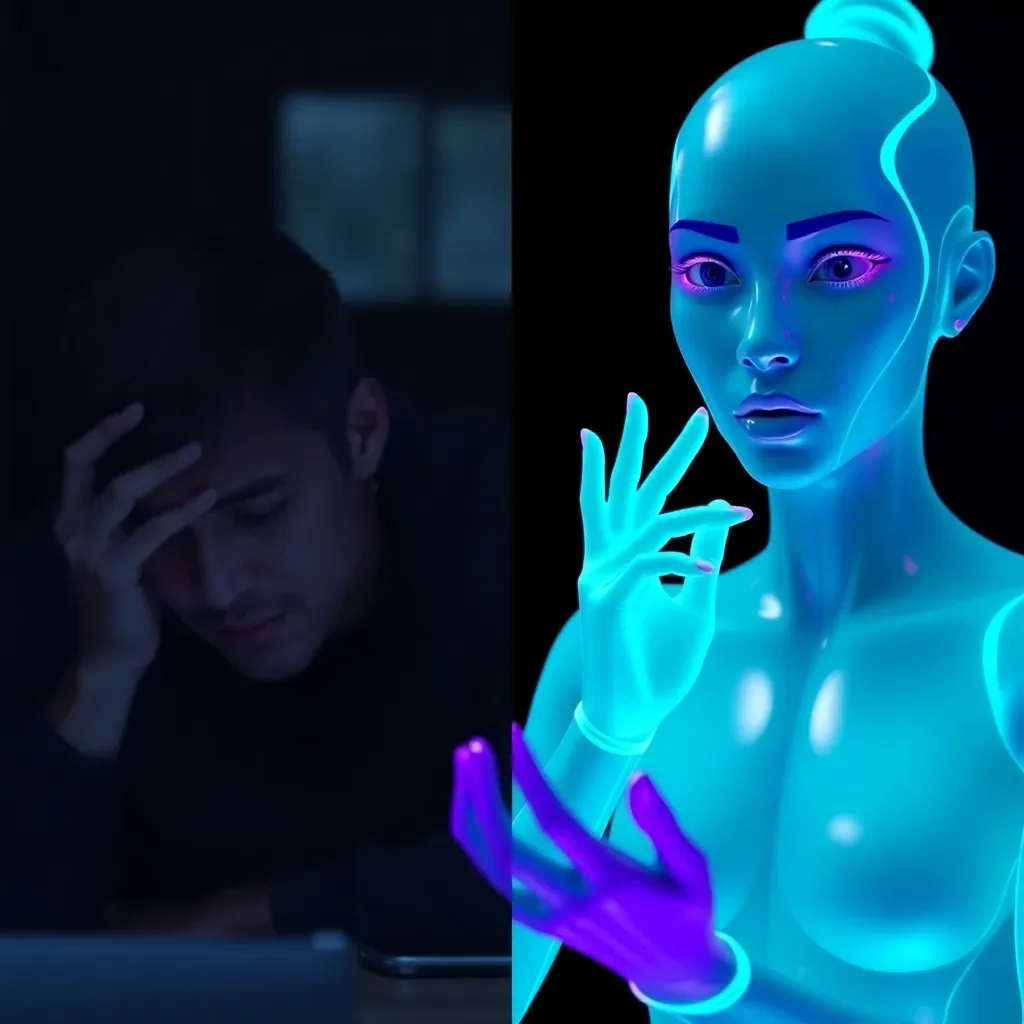
Resemblance to a real face. A synthetic character accidentally resembles a known person or employee without consent.
Fake experience. The phrase “I used this for a month” is unacceptable if it’s not a real person with real experience.
Incorrect voice. A synthetic voice may violate rights if it imitates a real performer.
Ethical Distinction: AI UGC vs. Deepfake
AI UGC can be ethical if:
- it is clear that it is a synthetic advertising format;
- there is no imitation of a specific person without consent;
- there is no fake personal experience;
- AI is not hidden where disclosure is required;
- others’ voices and faces are not used.
A deepfake in the bad sense is when AI content creates the impression that a real person said or did something they did not. That is why for synthetic people, voices, and user formats, it is important to plan disclosure, rights, and verification in advance.
FAQ
Will viewers understand that AI UGC is “not real”? Sometimes yes. If facial expressions, voice, or text are unnatural, the audience quickly notices. But the main question is not whether they will notice, but whether the brand honestly discloses the synthetic nature of the material where required, and does not pass off AI as a real customer.
Do I need to disclose AI UGC? In the EU, often yes, if it involves a synthetic human, synthetic video, voice, or deepfake-like material. In the US, rules depend on the state, platform, type of advertising, and use of a person’s likeness. For international campaigns, it’s better to plan disclosure in advance.
Can you use a real person’s face or voice? Only with permission. You cannot use a person’s image, voice, facial expressions, or recognizable likeness without consent. For the US, rights to image and voice are especially important, including laws like the Tennessee ELVIS Act.
Conclusion
VibeVO can produce AI advertising in user-generated formats: talking heads, synthetic characters, banners, product demonstrations, localizations, and dozens of variants for testing. The key is not to pass off synthetic material as a real testimonial and to consider AI disclosure in advance.
Ready to test AI UGC for your brand? Learn more on the service page, compare with real creators here, or explore the glossary of terms: AI UGC, AI Character Video, EU AI Act Article 50.