Author: Alexey “Konus” Bogdanovich

  • Google Ads: New Customer Lifecycle Goals for Search and Shopping

    Google Ads: New Customer Lifecycle Goals for Search and Shopping

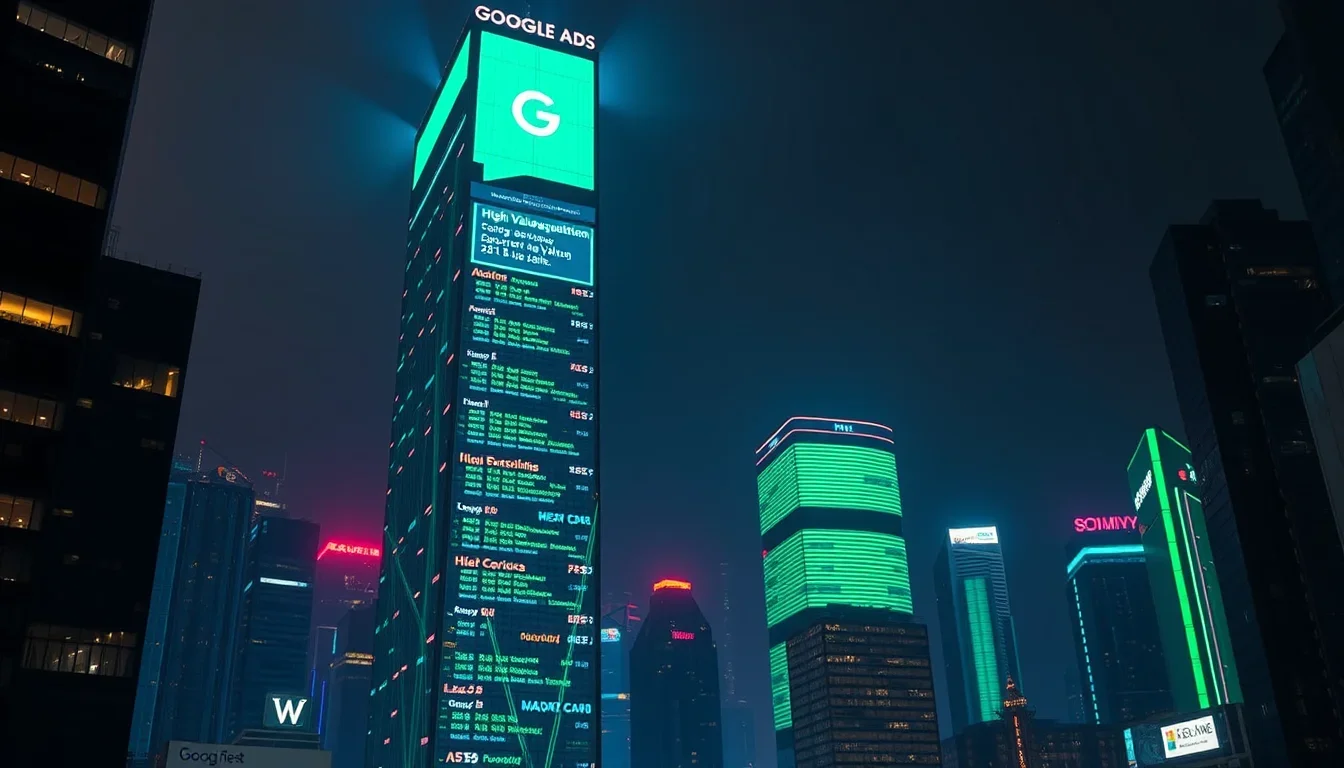
    Google Ads continues to evolve, offering advertisers new, more advanced tools to optimize advertising campaigns. Innovative customer lifecycle goals have recently been implemented, allowing businesses to manage budgets more effectively and significantly increase return on investment. This significant update, announced by Ginny Marvin, a Google Ads representative, on LinkedIn, includes “High Value acquisition” modes for Shopping and “Customer Retention” for Search, Shopping, and Performance Max.

    The rollout of these features began in October, with retention modes becoming widely available after successful beta testing. This follows the appearance of the “Customer Lifecycle Optimization” section in conversion goals, noticed in August 2026, which consolidated settings for acquiring, re-engaging, and retaining loyal customers.

    High Value Acquisition in Shopping: Focus on Profitability

    The “High Value acquisition” mode is now available for shopping campaigns. This allows advertisers to focus on attracting users who are more likely to make valuable purchases.

    How to define a “valuable” customer?

    • Large first order: This is one obvious indicator, but not always the most profitable.
    • Repeat purchases and profitability: Often a more reliable indicator of long-term value. A customer making regular small purchases can bring more profit than one who made a single large purchase with a significant discount.

    “Retailers need to decide which customers justify a higher acquisition cost. A large first order can be one indicator, but repeat purchases and profitability may require a different definition of the customer list,” notes Google.

    Using this data allows Google to more accurately determine which new customers should be prioritized, leading to optimization of advertising spend.

    Expanding Customer Retention Modes: Three Strategies for Different Tasks

    Google is also implementing three customer retention modes for Performance Max, Search, and Shopping campaigns. It is important to note that Google’s support page does not yet fully reflect these changes, indicating their novelty.

    1. Re-engagement

    This mode allows you to bring back “dormant” customers. You can create a list of customers who haven’t made a purchase in a long time and upload it as a Customer Match audience in Google Ads, labeling them as “lost customers.”

    • Example: If a customer usually buys coffee every 30 days and hasn’t done so for 90 days, they are a potential target for re-engagement. However, if a customer bought a refrigerator 90 days ago, they are unlikely to need a new one now.
    • Tip: For retailers selling a variety of goods, more specific lists are required than just “everyone who hasn’t bought in three months.”

    2. Retention-only

    Select this mode if the campaign budget is intended exclusively for working with selected segments of existing customers.

    3. Loyalty

    This mode aims to stimulate repeat purchases among already loyal customers. Previously available only in Performance Max and Shopping, it is now expanding its capabilities.

    Google Ads: New Customer Lifecycle Goals for Search and Shopping — illustration 2

    Purchase History as a Key Factor in Bidding

    With these updates, a customer’s purchase history plays a more significant role in determining bidding priorities. This means that Google’s advertising systems can use data on past user behavior to decide whether to pay more for their acquisition or retention.

    For retailers, this means: the ability to fine-tune advertising strategies, reduce costs for attracting irrelevant audiences, and increase customer lifetime value (LTV). This helps avoid the “headache” of ineffective advertising campaigns and saves budget by focusing on the most promising segments.

    Frequently Asked Questions

    How to choose a contractor for setting up Google Ads with new goals?

    When choosing a contractor, pay attention to their experience with customer lifecycle goals and their ability to analyze customer behavior data. It is important that the agency understands how to define a “valuable” customer for your business and how to use the new modes for maximum return on investment.

    Should current Search and Shopping campaigns be reviewed?

    Yes, absolutely. The introduction of new Google Ads modes provides a unique opportunity to optimize existing campaigns. It is recommended to audit current strategies and adapt them to the new features to achieve better results and save stress.

    What is cheaper: attracting new customers or retaining old ones?

    As a rule, retaining existing customers is significantly cheaper than acquiring new ones. The new Google Ads features offer tools for an effective balance between these two strategies, allowing you to choose the most cost-effective path depending on business goals.

    Conclusion

    The expansion of customer lifecycle goals in Google Ads is an important step towards more intelligent and profitable marketing. Using “High Value acquisition” and “Retention” modes allows companies not only to attract traffic but also to build long-term relationships with customers, increasing their LTV.

    We recommend businesses to immediately study these updates and integrate them into their advertising strategies. If you need help setting up and optimizing campaigns with the new features, our experts are ready to provide comprehensive consultations and support so you can order everything in one place and get maximum benefit without extra effort.


  • Full Video Production Cycle: Lumen5 Integrates with Claude, ChatGPT, Zapier, and Make

    Full Video Production Cycle: Lumen5 Integrates with Claude, ChatGPT, Zapier, and Make

    In modern marketing, efficiency is key to success. How many browser tabs do you have open right now? Probably quite a few. Transferring texts from one tool to another, searching for a brand book, coordinating with the team – all this takes up precious time and nerves. Imagine being able to shorten this path, getting a ready-made, brand-compliant video without leaving your familiar AI assistant or by fully automating the process. With Lumen5, this has become a reality thanks to new integrations with Claude, ChatGPT, Zapier, and Make, offering full-cycle video production.

    Now you can order everything in one place: from video editing to posting, replacing an entire SMM team. This is not only budget savings but also a significant relief for your nerves. All created videos automatically appear in your Lumen5 workspace, where you can always make final edits before publishing. Artificial intelligence does the rough work, and you maintain control.

    Comprehensive Short Video Production: Forget the Routine

    Lumen5 + Claude: from Draft to Finished Video

    Claude excels at a task that usually consumes hours: transforming lengthy reports, articles, or scattered notes into coherent, engaging text. Previously, after creating the perfect script, you had to transfer it to a video editor and start over. Now, thanks to the Lumen5 connector, this step is skipped.

    • Script Preservation: Lumen5 uses your script word-for-word for voiceover, ensuring full compliance with the approved text.
    • Context: Claude can summarize voluminous documents (reports, articles, notes) into a short script and create a video within a single dialogue.
    • Flexibility: The ability to work in Claude Code allows developers to create videos (e.g., for product updates) without leaving the terminal.
    • Customization: You can specify a particular template, AI voice, brand book, or leave the choice to Lumen5.

    “If Claude is your tool for perfecting a long draft, then the integration with ChatGPT is the express lane.”

    Lumen5 + ChatGPT: Video on Demand

    Add the Lumen5 app to ChatGPT, describe your needs, and Lumen5 will write the script and create the video. One sentence is enough to start, without the need to pre-write a script or open a new tab.

    • Quick Start: A single-line prompt is enough to create a promo, a social media clip, or a review.
    • Using Existing Scripts: If you already have a script, simply paste it, and Lumen5 will use it for voiceover.
    • Voice Selection: Listen to various AI voice options by accent, gender, and tone to find the perfect one for your video.
    • Status Tracking: Ask ChatGPT about the video status or a list of recently requested videos, getting links when they are ready.
    • Branding: Integration supports brand books, ensuring that even the quickest requests comply with your corporate identity.

    Lumen5 + Zapier: no-code automation

    The Lumen5 app for Zapier allows you to automatically create videos when new content (posts, products, updates) appears, without the need for coding. This is an ideal solution for those looking for social media content outsourcing.

    • Triggers: Start video creation from your CMS, online store, CRM, forms, or spreadsheets.
    • Unified Style: Set up your workspace and style once, and all created videos will match your brand.
    • Easy Setup: Log in to Lumen5 via Zapier, grant access, and Zapier will take care of the rest.
    • Flexibility: Lumen5 can write a script for you if you provide post text or a brief description.

    AI vs. Real Clipping Comparison: In this case, AI offers automation that can be significantly cheaper than manual clipping, especially for mass content production.

    Lumen5 + Make: for advanced automations

    The upcoming Lumen5 app for Make is designed for routing, filtering, and batch processing content into ready-made videos within existing scenarios. These are the quality criteria for mass posting, taken to the absolute.

    • Batch Processing: Create videos for each table row or feed item, with individual scripts, templates, or voices.
    • Content Type Branching: Send each item to a separate template, voice, or brand book. For example, a product launch will get a promo, and a “how-to” article will get a tutorial video.
    • Reliability: Using idempotency keys prevents the creation of duplicate videos when the scenario is run again.
    • Availability: Currently, you can use Lumen5 in Make via the HTTP module and the Lumen5 Video Creation API using an API key.

    Is it worth unique content or new? With Make, you can automate the creation of unique videos for each product or article, which is significantly more effective than creating one general video.

    Whichever integration you choose, the principle remains the same: your videos go into the Lumen5 workspace, use your brand books and templates, and open in the Lumen5 editor for final refinement.

    Full video production cycle: Lumen5 integrates with Claude, ChatGPT, Zapier and Make — illustration 2

    Frequently Asked Questions

    Can I create Lumen5 videos from Claude or ChatGPT?

    Yes. Using the Lumen5 connector in Claude (including Claude Code) or the Lumen5 app in ChatGPT, you can request a video in a conversation and get a link to the finished video in minutes.

    Do I need to write a script first?

    No. Provide a brief description, and Lumen5 will write the script. If you already have a script, Lumen5 will use it word for word for the voiceover.

    Will my videos be on brand?

    Yes. You can request a specific brand book, template, AI voice, or blueprint from your workspace. In Zapier, you set up your workspace and style once when creating a Zap.

    Can I edit videos created through integration?

    Yes. Each video opens in the Lumen5 editor, allowing you to review and adjust it before publishing.

    Who can create videos through integration with Claude?

    Anyone who has permission to create videos in your Lumen5 workspace. Users with view or review permissions can view content but not create videos, just like in the Lumen5 app.

    Can I automate video creation without code?

    Yes. The Lumen5 app for Zapier allows you to trigger video creation from your CMS, store, CRM, forms, or spreadsheets without writing code or managing API keys.

    Conclusion: How to choose a video content contractor

    These integrations were created because we constantly heard the same thing: the difficulty is not in the ideas, but in their implementation, in transferring content from one tool to another. Lumen5 has come to where your ideas already live. If you are looking for a full cycle of short video production that will save you time and resources, and replace a team with a service, these solutions are for you.

    Quality criteria when choosing a contractor include not only the final product, but also the efficiency of the process. Lumen5 offers exactly that: reduction of routine, automation, and preservation of creative control. Learn more or book a demo to see how teams turn articles, scripts, and ideas into polished, branded videos.

    • For those working with long documents: start with Claude.
    • For quick ideas: start with ChatGPT.
    • For automation when new content appears: start with Zapier.
    • For high-volume or multi-step processes: keep an eye on Make (or start today with the API).
  • AI Content Sites: A New Threat to the Advertising Market and Business

    AI Content Sites: A New Threat to the Advertising Market and Business

    In the world of digital advertising, a new “headache” is emerging for businesses – the rapid growth of websites filled with low-quality AI-generated content (AI Slop Sites). These resources, disguised as ordinary platforms, pose a serious threat to legitimate market players and can jeopardize brand reputation. How to choose a contractor and avoid becoming a victim of fraudsters when placing ads on such resources? Read more about this below.

    Introduction: The Rise of AI Sites and Challenges for Ad Tech

    In the world of digital advertising, a new “headache” is emerging for businesses – the rapid growth of websites filled with low-quality content, generated by artificial intelligence (AI Slop Sites). These resources, disguised as ordinary platforms, pose a serious threat to legitimate market players and can jeopardize brand reputation. How to choose a contractor and avoid becoming a victim of fraudsters when placing ads on such resources? Read more about this below.

    DecryptAds Research: The Scale of the Problem and “Risky Geos”

    According to DecryptAds research, the number of websites using AI-generated content is growing exponentially. Initially, the analysis was conducted on examples of websites with culinary recipes, but similar schemes are used for news aggregators, automotive, anime, and gaming forums.

    It’s breathtaking to realize that thousands of such resources are already integrated into ad networks.

    “The idea that US citizens, including potentially government officials, could be accessing these sites, their data could be collected by ad tech, and potentially they could be targeted by malicious ad schemes, raises serious cybersecurity concerns,” said Zach Edwards, co-founder and head of product and research at DecryptAds.

    DecryptAds found that monetization of such resources is often carried out through SSPs (Sell-Side Platforms), which work with advertising partners from so-called “risky geos”. These include countries associated with high levels of cybercrime or having strained relations with the US, such as Russia, China, Cyprus, Turkey, and the UAE. This creates additional risks for businesses.

    How do AI sites deceive advertising systems?

    These resources use various tactics to bypass moderation systems and maximize ad impressions:

    • Human Content Mimicry: Sites create the appearance of real human authorship using AI-generated avatars, stock images, or even altered photos of celebrities like Emily Blunt.
    • Violation of Google’s Rules: New Google Search rules, effective this month, explicitly state: “Fabricating creator profiles (e.g., using AI-generated photos, fictitious names, or false credentials to make content appear as if it was written by human experts) is a form of deception. Any form of deception makes a page untrustworthy to both users and our automated quality systems, and is a signal of a low-quality page.” However, some SSPs believe that these rules apply only to Google’s search business and do not extend to Google Ads.
    • Manipulation of Viewability Metrics: Sites are literally “stuffed” with ad units positioned to artificially inflate viewability metrics, but offering questionable value to the advertiser. This is similar to the situation with MFA (Made for Advertising) sites.
    • Content Copying and “Uniquification”: They duplicate viral trends or copy popular pages from other sites, creating “almost identical” versions that clearly haven’t been human-vetted.

    Problems of Detection and Accountability

    One of the main problems is the difficulty in identifying such resources. Networks of AI sites are designed to look as natural as possible. DecryptAds’ research identified over 2,100 such sites that have infiltrated the programmatic advertising chain through convoluted reseller relationships.

    SSP Responsibility: Zach Edwards emphasizes that SSPs are not always directly to blame. The complexity of the programmatic chain allows unscrupulous operators to hide. Nevertheless, this raises the question of the need for more thorough vetting of publishers when connecting to platforms.

    Сайты с AI-контентом: новая угроза для рекламного рынка и бизнеса — illustration 2

    Market Player Reactions

    • HBAgency: This SSP, according to DecryptAds, monetizes 1,631 of the 2,116 detected AI sites. A representative from HBAgency stated that the company thoroughly vets publishers and also uses independent third-party providers to combat fraud. HBAgency does not operate in sanctioned countries such as Russia, Belarus, Iran, and North Korea.
  • MonetizeMore: This SSP was observed monetizing 11 AI sites. The company’s CEO, Kean Graham, stated that they do not place ads on these resources and are conducting an internal review to identify and deactivate sites that do not meet their standards.
  • Ezoic: This SSP, which, according to DecryptAds, monetizes 407 AI sites, disputes the idea that AI authorship automatically makes content low-quality. The company claims to evaluate content based on quality and usefulness, not on how it was created, rejecting over 98% of site applications.
  • Mintegral: This ad tech provider, based in China, denied direct ad placement on the mentioned site dailytastekitchen.com and noted that the company’s geographical location should not be a basis for generalized assumptions about data security.

How to Protect Your Business: Contractor Selection Criteria

For businesses aiming for effective comprehensive promotion through short videos and outsourcing content for social media, it is crucial to carefully select a contractor. Here is a checklist to help you avoid “headaches” and financial losses:

  1. Transparency: Demand full transparency regarding the platforms where your ads will be placed.
  2. Check ads.txt and sellers.json: These files, though imperfect, are the only public tool for verifying relationships between publishers and ad tech vendors.
  3. Contractor Reputation: Choose companies with a proven reputation and positive reviews. Ask about their methods for combating fraud and low-quality traffic.
  4. Compliance with Google Standards: Ensure your partner adheres to Google’s new guidelines for content quality and authorship.
  5. Traffic Audit: Request reports on traffic sources and their quality. Use third-party tools for auditing.
  6. Geographical Restrictions: Discuss with the contractor the possibility of excluding “risky geos” from your ad targeting.
  7. Content Uniqueness: Prioritize partners who value uniqueness and the creation of original content, rather than just repurposing or AI-generated materials.

Frequently Asked Questions

What are “AI Slop Sites”?

“AI Slop Sites” are websites whose content is primarily generated by artificial intelligence, often of low quality, and which are used to deceive advertising systems for profit.

Why do “risky geos” pose a threat?

“Risky geos” are countries associated with high levels of cybercrime, a lack of data transparency, or strained relations with other states, which increases cybersecurity and data privacy risks.

How Google Fights AI Sites?

Google has updated its guidelines, stating that fabricating creator profiles (e.g., using AI-generated avatars) is a form of deception and indicates low page quality, leading to a drop in search rankings.

Should you order everything from one place?

Yes, ordering everything from one place from a reliable partner who offers full-cycle video production turnkey and SMM team replacement can significantly save your budget and nerves. The main thing is to carefully choose such a partner, using the above criteria.

Conclusion: The Importance of Vigilance and a Strategic Approach

The growth of AI sites is not just a technical problem; it’s a challenge for the entire advertising industry. For businesses that aim to order a banner, editing, and posting, the key is not only effectiveness but also the security of advertising campaigns. In conditions where AI or real clipping become a matter of choice, and comparing repurposing and shooting from scratch comes to the forefront, a strategic approach to partner selection is necessary. Only vigilance, demanding transparency, and focusing on proven methods will allow you to avoid pitfalls and effectively develop your brand. Do not let mass posting quality criteria become an empty sound. Protect your budget and reputation!

  • Brands Boost SEO Through Content Series and Jimi Hendrix’s Legacy

    Brands Boost SEO Through Content Series and Jimi Hendrix’s Legacy

    In an era dominated by artificial intelligence in search, brands like Fender and Marshall are forced to rethink their strategies. They are investing in branded content to improve visibility in AI models and chatbots, which are now used by 7 out of 10 American consumers for product research. This is not just a trend, but a necessity for companies striving to remain relevant. Brands are boosting SEO through content series and the legacy of Jimi Hendrix, demonstrating how traditional companies adapt to the new realities of digital marketing.

    A Comprehensive Approach to SEO: How Brands Adapt to AI Search

    The modern digital landscape is constantly changing, and with the advent of artificial intelligence in search engines, brands have to find new ways to maintain their visibility. Companies like Fender and Marshall are actively investing in branded content not only to attract consumer attention but also to optimize their presence for AI models and chatbots.

    These tools are becoming increasingly popular: 7 out of 10 American consumers already use them to search for products and information. For brands, this means that traditional SEO methods are no longer sufficient. It is necessary to create content that will not only be informative and appealing to humans but also easily interpretable and valuable to artificial intelligence algorithms.

    Fender: From Transactional Site to Storytelling Platform

    Fender, the world-renowned guitar manufacturer, has taken significant steps to rethink its online presence. According to interim CMO Kelly Magrath, their goal is to transform the website from a simple marketplace into “a front door that we can use as a storytelling platform.”

    • Video Content: The updated Fender website features short but impactful videos. They not only tell the brand’s history but also showcase legendary musicians, such as Jimi Hendrix, who played their guitars. Attention is also paid to the craftsmen who create these instruments, emphasizing their skill and dedication.
  • Social Media: A significant portion of this editorial content is actively distributed through Fender’s own social channels, including YouTube. Here, you can find entire video series dedicated to important milestones, such as the 75th anniversary of the Telecaster model, or detailed demonstrations of effects pedals.
  • Goal: The primary objective of these efforts is to improve Fender’s visibility in the early stages of product discovery and the consumer journey. By creating rich and diverse content, Fender aims to be top-of-mind when consumers are looking for information about musical instruments.
  • Marshall Group: Revitalizing Musical History to Promote the Brand

    Marshall Group, a renowned manufacturer of amplifiers and headphones, also actively uses content marketing to strengthen its brand. They launched a unique YouTube series called “Dead Venues.”

    In this series, new music bands perform on the stages of long-gone but legendary clubs, such as London Fog or China Chalet. This approach allows Marshall not only to support the young music scene but also to remind people of its rich heritage in the world of music.

    “We’re challengers. We’re known as an iconic guitar amp brand, and as we move into new categories, we really need to rethink what we want to be in the eyes of consumers,” — Christine Kennedy Grant, VP of Brand Marketing at Marshall Group.

    The “Dead Venues” campaign, launched in May, aims to create a strong connection between supporting the modern live music scene and the company’s products. Special attention is paid to standing out in the highly competitive headphone market, where Marshall seeks to take a leading position, relying on its history and cultural influence.

    The Impact of Content on AI Search and Consumer Behavior

    According to a survey conducted by Skyword, 7 out of 10 consumers in the US actively use ChatGPT or other AI summaries when searching for products and companies. This data highlights the critical importance of content that can be effectively used by AI models to form answers and recommendations.

    Why is content becoming a key success factor in AI search?

  • Originality — Key to Differentiation: Emma Sibbles, Head of Content at IDHL, emphasizes that unique, original content reflecting a brand’s expertise and perspective is valued much higher by AI platforms. Unlike keyword-stuffed posts, such content demonstrates genuine value and authority.
  • Emily Stutzman, CEO of creative agency Happylucky, adds: “A brand with a real point of view, expertise, examples, experience, and helpful context provides a much richer source for an AI platform to pull from than a blog post designed to ‘sprinkle’ 20-30 keywords.”

    Not Just AI: The Human Factor and Brand Building

    It’s important to note that these content creation efforts are not solely aimed at “robot readers.” They also serve the crucial function of brand building for human customers. Content that tells stories, demonstrates values, and expertise creates a deep emotional connection with the audience.

    Бренды усиливают SEO через контент-серии и наследие Джими Хендрикса — illustration 2

    According to Ben Hennes, Chief Creative Officer at Happylucky, “A brand that consistently publishes original ideas, helpful experiences, distinctive opinions, and firsthand experiences creates a knowledge base that can become a brand advantage when consumers are searching.” This means that quality content serves a dual purpose: optimizing for AI and strengthening loyalty among consumers.

    Strategies and Prospects: What’s Next?

    Marketers worldwide are actively responding to these changes in the search landscape. A Kantar survey showed that 75% of marketers plan to increase spending on visibility in AI assistants next year. This indicates widespread recognition of the importance of adapting to the new reality of search marketing.

    Jim Yu, founder and CEO of SEO company BrightEdge, advises: “One of the best places to start is with content where you have the right to win.” This means creating content that aligns with the brand’s core expertise and values, where the company can demonstrate its uniqueness and authority.

    Stephanie Estes, Media Director at The Shipyard agency, notes that her agency is actively experimenting with its own content, creator activity, and how “promoting” brand-created videos on platforms like YouTube can help their perception by LLMs (large language models). This highlights the importance of not only creating content but also strategically distributing it.

    Frequently Asked Questions

    What is full-cycle turnkey video production and how does it help with AI search?

    Full-cycle turnkey video production is a comprehensive set of services for creating video content, covering all stages: from idea and script development to shooting, editing, post-production, and publication. In the context of AI search, high-quality, original videos, similar to those created by Fender or Marshall, provide AI models with a rich source of information about the brand, its history, products, and values. This significantly improves the brand’s citability and visibility in AI-generated responses, as AI prefers reliable, unique, and in-depth data, which is often contained in professionally created video content.

    How to choose a contractor for creating video content optimized for AI search?

    When choosing a contractor for full-cycle video production that will be optimized for AI search, pay attention to the following key criteria:

    1. Storytelling experience: Ensure that the contractor is capable of creating an engaging and emotionally resonant narrative that will effectively convey your brand’s key messages to the target audience.
    2. Understanding of SEO and AI: It is important that the contractor’s team has an understanding of how content will be perceived not only by people but also by search engines and AI models. This includes knowledge of best practices for video structuring, metadata usage, and keywords.
    3. Production quality: High image and sound quality are critical for content perception. Professionally produced video inspires more trust and better holds attention.
    4. Portfolio: Review the contractor’s work examples. Successful projects for other brands, especially in your niche, can be a good indicator of their competence.
    5. Comprehensive approach: An ideal contractor offers not only video creation but also a strategy for its distribution, including optimization for YouTube, social media, and other platforms, which is an integral part of AI optimization.

    Is it worth investing in repurposing old content or creating new content from scratch for AI optimization?

    Both approaches have their advantages and can be effective depending on your goals and resources. Repurposing existing content (e.g., turning long articles into short videos, infographics, or audio podcasts) can be a cost-effective way to increase the amount of data available to AI. This allows you to extract additional value from already created materials.

    However, creating new, original content from scratch, designed specifically for AI search, often yields better results. Such content is initially formed taking into account the requirements for uniqueness, depth, expertise, and structure, which are highly valued by AI models. It allows the brand to take a leading position for new or niche queries.

    The best strategy is a combination of both approaches: repurposing valuable old content to expand its reach and creating new, strategically important content that will be purposefully optimized for modern AI algorithms and search engines.

    Conclusion

    The era of AI search requires brands to deeply rethink their approach to content. Investing in original, high-quality storytelling, as successfully demonstrated by Fender and Marshall, becomes not just a way to attract audience attention, but also a key factor for improving visibility in the ever-changing digital landscape. For your brand to be visible in AI responses and stand out from competitors, it is necessary to order a full cycle of video production that will not only tell your unique story but also be carefully optimized for modern search algorithms and AI models. Contact us today to find out how we can help your brand become a leader in the era of AI search and effectively utilize the potential of content marketing.

  • Publicis Sells AI Solutions Directly to CEOs, Bypassing Traditional Pitches

    Publicis Sells AI Solutions Directly to CEOs, Bypassing Traditional Pitches

    The French group Publicis Groupe is changing its strategy, directly addressing CEOs of companies who are concerned about the challenges of artificial intelligence (AI) and changes in consumer behavior. This was announced by the group’s chairman and CEO, Arthur Sadoun. “We are increasingly seeing CEOs getting involved in our work,” Sadoun told analysts during the third-quarter earnings call. He added that CEOs show great interest in AI, understanding that to maintain leadership in their companies, they need to understand this technology.

    Publicis: A New Approach to Selling AI Solutions Directly to CEOs

    Why Are CEOs Interested in AI?

    According to Sadoun, top management’s concern about AI has driven client spending and new contracts for Publicis in the third quarter. This is confirmed by a recent victory over PepsiCo, which Publicis won without a traditional tender. At the same time, the group declined to participate in a competitive tender for Coca-Cola’s media business.

    “It has to start from the top,” Sadoun emphasized, speaking about the implementation of AI strategies.

    Publicis Sapient, the technology services division, played a “key role” in securing “the two biggest contracts of the year without a pitch.” It also helped the group secure three “AI-powered transformation assignments this year outside of traditional tender processes.”

    Record Results and Revenue Growth

    This tactic brought Publicis a “record” number of new business wins in the third quarter, according to the group’s earnings report. Sadoun noted that new clients contributed to a 2% net organic growth, equivalent to 300 million euros (335.5 million dollars) in additional revenue by 2027.

    • Publicis led the industry in new business wins in the first half of 2026, according to COMvergence.
    • This was influenced by the “new market reality” after Omnicom acquired Interpublic Group last year.

    Fewer competitors mean more opportunities to compete on capabilities and business cases, rather than price. The shrinking competitive field also contributes to some clients opting out of formal reviews.

    Managing Conflicts and Client Expectations

    Sadoun believes this will not lead to an increase in client conflicts. “The three players [Publicis, Omnicom, and WPP] are large enough to manage conflicts,” he said, provided that agencies are transparent with brands and maintain data “firewalls” to ensure client confidentiality.

    Turbulence among major competitors was not in vain. “Some have opted to outsource their IT specialists,” Sadoun noted, hinting at Omnicom’s recent decision to outsource hundreds of IT and development jobs. “Clients don’t expect us to reorganize, lay off people, or stop acquisitions. They expect us to invest on their behalf,” he added.

    AI’s Impact on Revenue and Strategy

    Increased spending, driven by AI, led to a 5% increase in net revenue to 3.529 billion euros ($3.95 billion) compared to the same period in 2025. Net revenue in North America grew by 4.4% and accounted for 59% of the group’s revenue.

    Publicis sells AI solutions directly to CEOs, avoiding traditional pitches — illustration 2

    Publicis’ media business accounted for 62% of its revenue in the quarter. Sadoun emphasized that much of the underlying revenue growth was driven by client spending to get ahead of consumer AI use for product discovery and shopping.

    “Clients need to adapt how they reach and engage with [consumers],” he said. “The need to adapt is immediate. Clients are willing to allocate budgets faster because moving too slowly can mean losing market share.”

    Ramon Laguarta of Pepsico recently spoke to investors, defending the company’s decision to hand its global media account to Publicis Groupe. Agencies like Goodway Group are implementing synthetic data stacks into media planning, while clients are using the technology for product design and creative strategy.

    Frequently Asked Questions

    How to choose a contractor for full-cycle video production?

    When choosing a contractor for full-cycle short video production, it’s important to pay attention to their portfolio, experience with companies in your industry, pricing transparency, and the availability of specialists for all stages: from idea to posting. Ask about their capabilities for social media content outsourcing and how they ensure integrated promotion through short videos.

    Is unique content or new content better?

    The decision between repurposing existing content and creating new content depends on goals and budget. Unique content can be a more economical option for quickly obtaining content, while shooting from scratch provides maximum originality and control over the message. It’s important to assess what best suits your strategy and will allow you to effectively order both a banner, an edit, and posting.

    What’s cheaper – AI or real clipping?

    AI-clipping vs. Human Clipping: What to Choose?

    AI-clipping can be significantly cheaper and faster for mass production of short videos from long materials. However, for content requiring a subtle understanding of context, creativity, or a specific style, real human clipping may be more effective. Compare cost and quality to understand what is best for your project and how to choose a clipping service.

    How to choose a clipping service?

    When choosing a video clipping service, pay attention to the following criteria: processing speed, result quality (especially if AI is used), integration capabilities with your platforms, flexibility in style customization, and availability of additional services such as adding subtitles or graphics. Clarify how they ensure mass-posting quality criteria.

    Conclusion

    Publicis’ shift to direct sales of AI solutions to CEOs demonstrates a deep understanding of changing market needs. In an environment where AI transformation is becoming critical for business survival, companies are looking for partners who can provide full-cycle video production turnkey and comprehensive solutions. This emphasizes the importance of choosing a reliable partner who can replace an SMM team and offer all services in a single window, ensuring budget and nerve savings. If you aim to effectively use AI for marketing and need expert support, consider contacting us to discuss your tasks.

  • Buyer Habits by Generation: What Brands Need to Know for Successful Campaigns

    Buyer Habits by Generation: What Brands Need to Know for Successful Campaigns

    Are you planning comprehensive promotion through short videos or looking for how to order everything in one place? Understanding the purchasing habits of different generations is key to creating content that truly works. After all, how people discover products, trust them, and make purchases varies significantly. Let’s break down how these differences affect your video campaigns and why replacing your SMM team with outsourcing, taking these nuances into account, might be more profitable.

    Imagine you’re launching a campaign for a new sunscreen. 25-year-old Anna sees her favorite TikTok blogger enthusiastically talking about the product. She reads comments, uses a promo code, and buys through TikTok Shop.

    At the same time, her 62-year-old mother, Larisa, learns about the same cream from a friend, searches for it on Amazon, reads reviews, and adds it to her cart for her next pharmacy purchase. These scenarios, though fictional, demonstrate real differences in consumer behavior.

    According to a Later survey from March 2026, which included 1079 consumers, 66% made purchases discovered on social media. Among Generation Z, this figure rose to 79%, and among Millennials — to 76%. However, the process of discovery, trust, and purchase is not universal for all generations.

    Product Discovery: Where and How Does Your Audience Find Information?

    When it comes to promotion, it’s important to understand where your target audience will first encounter the product and what content will grab their attention. If the brief for creators is written for a “digital shopper” in general, it mistakenly assumes that one message, format, and link will suit everyone.

    • Millennials (35% of the survey sample) actively engage with content created by bloggers and make social purchases. They prefer short videos and live streams.
    • Generation Z is also very active on social media, but they are attracted to long videos and Stories.
    • Boomers often begin their purchasing journey outside of social media. They most often look for information offline or on Amazon, and also respond better to text formats and discussion threads.

    “Before choosing a format, ask yourself where this audience is most likely to first encounter the product,” experts advise.

    For example, Paige DeSorbo successfully demonstrates how social shopping can be organic for a young audience by integrating products into her fashion content on Instagram. At the same time, Beth Jalali, in her blog “Style at a Certain Age,” targets women 50+, offering detailed articles and YouTube videos about Amazon finds and seasonal style. Each approach reflects where and how the audience prefers to receive information.

    The value of factors such as seller reputation, verified reviews, expert opinions, and blogger recommendations varies greatly across generations:

    • Boomers rely most heavily on seller reputation. A message like “available from a trusted retailer” may be more convincing to them than a blogger’s recommendation.
    • Generation Z and Millennials are more receptive to blogger and expert recommendations, and are also open to verifying information using AI. Millennials also actively study detailed, verified reviews.

    Imagine a new skincare product. One buyer will trust a dermatologist explaining the ingredients. Another will want to see a blogger use it for several weeks, then study reviews from people with a similar skin type. A third will feel more comfortable seeing the product in a store where they regularly shop. Choosing a contractor who can take these nuances into account is crucial.

    Blogger Influence: How to Drive Purchases Across Different Generations?

    66% of respondents made purchases discovered on social media. This figure rises to 79% for Generation Z and 76% for Millennials. For these groups, social content is not just a source of inspiration, but a direct incentive to search for a product, save, click, or purchase.

    Boomers are much less likely to make purchases influenced by blogger content. This does not mean that bloggers are irrelevant to the older generation, but their posts may need reinforcement: detailed product information, reviews, retailer data, or the opportunity to see the product in a store.

    “Decide whether the blogger should stimulate product search, lead to a click on the seller’s website, support evaluation, or directly lead to a purchase on the platform,” experts emphasize.

    Place of Purchase: Where Does the Audience Complete Their Journey?

    In our survey, Generation Z actively made purchases through TikTok Shop. Boomers, on the other hand, still prefer traditional online stores and in-store purchases. It is important to remember that the place where influence occurs does not always coincide with the place of purchase.

    For example, after seeing an advertisement for mascara on TikTok, a consumer may buy it at the nearest supermarket. In such a case, although a direct click is not tracked, the blogger’s content has fulfilled its purpose. For such cases, outsourcing content for social networks should include strategies for measuring influence, such as brand awareness growth, purchase intent, or sales growth in retail chains, in addition to direct attribution.

    Artificial Intelligence: Generational Attitudes Towards AI Shopping Tools

    The survey revealed a significant gap in attitudes towards AI. Generation Z and millennials are much more aware of and comfortable with AI shopping tools. They are approximately 3 times more likely than boomers to trust AI recommendations as much as or even more than human recommendations.

    Привычки покупателей по поколениям: что нужно знать брендам для успешных кампаний — illustration 2

    Only 5% of boomers trust AI recommendations more than human ones, compared to approximately 16% among Generation Z and millennials. This is important to consider as AI features are increasingly integrated into the purchasing process. For one audience, an AI assistant might be a convenience, for another, an unnecessary step.

    “Consider AI as one possible part of the buyer’s journey. Think about whether your audience will welcome this help or prefer a human recommendation,” experts advise.

    How to choose a video production contractor based on this data?

    When choosing a partner for full-cycle short video production or integrated promotion, ensure they understand these nuances. Criteria for mass posting quality and what to look for when ordering AI advertising should include a deep analysis of the target audience.

    Before writing a creative strategy, ask yourself the following questions:

    1. Where is this audience most likely to discover the product? (Social videos, Stories, Amazon, retailer’s website, or physical store?)
    2. What evidence will convince them? (Blogger’s experience, expert explanation, verified reviews, or a familiar retailer?)
    3. What should they do after watching the content? (Watch another video, search for the product, use a promo code, buy on TikTok Shop, visit a store, or find it at an offline point?)
    4. Will AI help this audience, or will a human recommendation be more convincing?

    Then integrate these answers into your brief:

    • For Generation Z: Combine a blogger’s demonstration with a promo code and a direct link to TikTok Shop.
    • For millennials: Use formats such as short videos or live streams, and provide easy access to detailed, verified reviews.
    • For boomers: Provide clear product information, make retail availability clear, and show how the content relates to their familiar shopping options.

    The essence is to build a campaign around a specific person, not an average buyer who may not exist. Generational shopping trends give marketers a more useful way to segment audiences. Discovery, trust, influencer impact, purchasing, and comfort with AI all vary by age. A campaign can span multiple generations, but each group will need its own path from “I saw this” to “I’m ready to buy.”

    Frequently Asked Questions

    What is “full-cycle, turnkey video production”?

    Full-cycle, turnkey video production means that you order all stages of video content creation from a single contractor: from idea and script to shooting, editing, placement, and analytics. This allows you to order everything in one place, which significantly saves time and resources, reducing the client’s “headache.”

    Should I choose AI clipping or real clipping for short videos?

    The choice between AI clipping and real clipping depends on your target audience and budget. For Generation Z and millennials, who are more open to AI, automated solutions can be effective. However, for boomers, who prefer human recommendations, more organic and “live” content created by a human will have a greater response. It is important to find a balance between economy and efficiency, considering what is cheaper – AI or real, and whether uniqueness or newness is worth it.

    How to choose a contractor for video cutting and posting?

    When choosing a contractor for video cutting and mass posting, pay attention to their experience with different generations, their ability to adapt content for specific platforms, and the availability of analytical tools. A good contractor will be able to offer you a single window for all services, including ordering both a banner, cutting, and posting, as well as providing clear quality criteria for mass posting.

    What is the difference between repurposing and shooting from scratch?

    Repurposing is adapting existing content for new formats or platforms (for example, turning a long video into several short clips for TikTok). Shooting from scratch is creating completely new content. Repurposing can be more economical, but shooting from scratch allows you to create unique content that perfectly matches your campaign and target audience. The decision depends on your goals, budget, and whether uniqueness or newness is worth it for your task.

    Before you dive into your next influencer brief, ask yourself: what generation is this campaign actually for? The answer will help you choose the right influencers, formats, proof points, and places to shop from the start.

    Need support in creating effective campaigns that consider generational characteristics? Explore Later’s influencer marketing services and start planning and executing campaigns that deliver results with a customized influencer marketing strategy. Subscribe to our newsletter to receive news, trends, and social media tips directly to your inbox!

    English content

  • UGC Ads: What Makes Converting Videos Stand Out

    UGC Ads: What Makes Converting Videos Stand Out

    UGC advertising (User-Generated Content) has become one of the most powerful tools in a marketer’s arsenal. It allows brands to leverage the real feedback and creativity of their customers to create advertising campaigns. In this material, we will analyze the key aspects of successful UGC advertising, look at examples, and discuss how AI generators and UGC marketplaces are changing the rules of the game.

    In today’s world, where consumers increasingly value authenticity and trust, UGC advertising stands out as a powerful tool. It doesn’t just sell a product, but also builds a community, using real voices and customer experiences. Let’s dive into what makes UGC video advertising so effective and how brands can leverage its potential to achieve outstanding results.

    Why is UGC video advertising so effective?

    Integrating user-generated content into a marketing strategy brings many benefits. First and foremost, it significantly increases brand trust and authority. When potential customers see real people enjoying a product, it acts as powerful social proof, encouraging them to make a purchase.

    Key benefits of UGC video:

    • High CTR and low cost per click: UGC videos typically have higher click-through rates and lower cost per click compared to traditional advertising, making them a cost-effective option.
    • Production savings: Brands can significantly reduce costs associated with professional video shoots, highly paid actors, and expensive equipment. Instead, they use content created by their own customers, which is often perceived as more authentic and relatable.
    • Community building: UGC not only increases engagement but also fosters a sense of community around the brand. This is especially true when people see others enjoying the product, which encourages them to join in.

    “UGC video advertising is effective because it combines authenticity, community, and cost savings. It’s a smart choice for brands that want to connect with their target audience,” — Michael Holmes, Founder and CEO of Vidpros.

    Types of user-generated video content

    One of the most effective types of user-generated video content is reviews and testimonials. These videos capture the authentic experiences of satisfied customers, transforming written feedback into compelling visual stories.

    When potential buyers see and hear real people discussing the quality, functionality, and overall satisfaction with a product, it provides an unfiltered view that is incredibly persuasive. Testimonials and endorsements serve as powerful catalysts for building a community of loyal customers. They offer valuable insights into how a product performs in real-world conditions, making them an essential component of any UGC video strategy.

    What to remember when creating UGC video ads

    The most important part of successful UGC video content is authenticity. People quickly recognize when something looks fake or too rehearsed, which can lead to a loss of interest.

    To create effective UGC video ads, focus on sharing real customer experiences. Don’t over-script or put too much pressure on customers. Instead, allow them to naturally express their honest opinions and experiences. This approach will help your ads resonate better with viewers.

    Integrating UGC across platforms

    While UGC is typically created on platforms like Instagram and TikTok, it’s important to use these videos in other marketing areas as well. Social media plays a crucial role in distributing UGC and reaching new audiences. UGC can work very well in email campaigns, on landing pages, and in online advertising.

    By distributing the same authentic content in different places, you can reach more people. Each platform has its own rules, so be sure to adapt your UGC video content to each one. This will help you achieve better results and connect with new audiences.

    The role of AI and marketplaces in a UGC strategy

    In today’s digital world, AI tools can help brands create and enhance UGC video content. AI-powered UGC video generators streamline the process by automatically collecting and editing user-generated videos, ensuring they are ready for various platforms.

    These AI tools analyze customer reviews, social media posts, and other UGC to create engaging video ads that can be distributed across social media and ad networks. By using AI, brands can save time and focus more on building trust and relationships with their audience.

    UGC marketplaces for video advertising connect companies with creators who want to create content for them. These marketplaces offer a wide range of content, so brands can choose from different user videos. For example, TikTok Creator Marketplace (now part of TikTok One) allows brands to work with creators and order UGC specifically created for advertising.

    How to choose a contractor for full-cycle video production?

    If you want to order everything in one place — from idea to posting, it is important to carefully choose a contractor. Pay attention to the following criteria:

    • Portfolio: Evaluate the quality and diversity of completed projects.
    • Experience: Give preference to companies with experience in your niche.
    • Transparency: Clear pricing and a clear workflow.
    • Reviews: Study the opinions of other clients.
    • Integrated approach: Availability of services for creating, editing, optimizing, and placing content.

    Examples of successful UGC use

    GoPro: adventures through the eyes of users

    GoPro is known for its successful marketing campaigns based on user-generated content. They often use videos created by satisfied customers in their advertising. These videos show real adventures and stories filmed with GoPro cameras, demonstrating the quality and versatility of the product naturally.

    The brand repurposes this UGC video content into advertising that not only highlights the product but also celebrates the GoPro community. By using authentic footage from real users, GoPro effectively builds trust and encourages engagement from adventurers.

    Starbucks: annual red cup campaigns

    Starbucks’ annual red cup campaigns are a great example of successful UGC. Each holiday season, Starbucks invites customers to share photos and videos of their personalized red cups. Videos featuring these personalized cups showcase customers’ creativity and foster a sense of belonging.

    UGC-реклама: что отличает конвертирующие видео от остальных — illustration 2

    This increases engagement and turns customer experiences into engaging content. Starbucks then incorporates these videos into their advertising, giving it a personal touch that connects with their audience.

    Nike: “You Can’t Stop Us”

    Nike’s “You Can’t Stop Us” campaign is a great example of how UGC can blend well with professional video editing. The brand used real clips of athletes from around the world, mixed with professional footage, to convey a powerful message of perseverance and resilience. By combining UGC with traditional video, Nike created high-quality advertising that personally connected with viewers.

    Airbnb: #AirbnbExperiences

    Airbnb has long used UGC to highlight customer stories. Their #AirbnbExperiences campaign encouraged users to share videos of their trips, giving future travelers a glimpse into real adventures and accommodations. These videos were featured in paid ads, helping to solidify Airbnb’s reputation as a provider of unique and authentic travel experiences.

    Stages of UGC Ad Production: From Brief to Publication

    An efficient workflow transforms raw footage from creators into a finished ad without unnecessary back-and-forth. Here are six stages that turn a UGC ad from brief to published ad:

    1. Briefing and Concept: Clearly define objectives and desired message.
    2. Content Collection: Obtain video materials from users (organically or through marketplaces).
    3. Pre-selection: Choose the highest quality and most suitable videos.
    4. Assembly and Editing: Add brand elements, subtitles, music.
    5. Optimization: Adapt the video to the requirements of various platforms.
    6. Publication and Testing: Launch the campaign and monitor metrics.

    Automated tools have become very fast at the mechanical parts of editing — trimming silence, generating subtitles, balancing levels. However, they cannot yet make decisions. Here are five areas where a human editor still determines how well a UGC ad will perform:

    • Choosing the best opening: Capturing attention from the first seconds.
    • Identifying key moments: Highlighting the most compelling parts of the video.
    • Creating a cohesive narrative: Combining different fragments into a single story.
    • Optimizing for platforms: Adapting to the format and audience preferences.
    • Adding an emotional component: Enhancing impact through music and effects.

    It is this production discipline that bridges the gap between UGC and polished brand commercials in important metrics.

    Monitoring Performance and ROI

    Monitoring the performance of your UGC video ads is important for measuring ROI. Use analytics tools to track engagement growth, clicks, and conversions. This data will help you understand what works for your audience and will guide your future UGC campaigns.

    One of the benefits of UGC is that it provides a constant stream of new content. This allows brands to continuously test and improve their advertising over time, ensuring its relevance and effectiveness.

    Quality vs. Quantity

    While you may want to collect as much UGC as possible, it’s more important to focus on quality. Good UGC videos that are bright, clear, and contain valuable content are more likely to grab viewers’ attention. This doesn’t mean that UGC needs to be professionally produced, but it should represent the brand positively and authentically. Companies like GoPro and Starbucks have excelled by selecting the best UGC videos for use in their advertising.

    Frequently Asked Questions

    What is UGC advertising?

    UGC (User-Generated Content) advertising refers to promotional materials created by ordinary users or customers of a product/service, rather than by the brand itself. It includes videos, photos, reviews, and other formats used in marketing campaigns to build trust and engagement.

    Why is UGC video advertising so effective?

    UGC video advertising is effective due to its authenticity, ability to create social proof, low production costs, and high audience engagement. People trust content created by real users more than traditional advertising.

    How do AI tools help in creating UGC videos?

    AI tools can automate the collection, editing, and optimization of UGC videos. They help analyze content, add brand elements, create subtitles, and adapt videos for different platforms, significantly speeding up and reducing the cost of the production process.

    Should you pay for UGC content?

    While organic UGC is great, offering incentives (contests, giveaways, mentions) can encourage more customers to participate. However, it’s important not to overdo incentives, as this can lead to the creation of less authentic content.

    Conclusion

    UGC video advertising is becoming one of the most effective tools in modern digital marketing. By focusing on authenticity and using content from real customers, brands can build trust and a sense of community, which is often lacking in traditional advertising. The use of UGC video editing and AI tools can make these ads even more appealing and effective.

    If you want to create high-quality UGC video ads or need help with editing existing content, our team of experts is ready to assist. Contact us today to learn how we can improve your UGC video advertising and achieve a better ROI!

  • How to Create Professional AI Videos with Gemini Omni: A Complete Guide

    How to Create Professional AI Videos with Gemini Omni: A Complete Guide

    Want to create professional videos without filming or hiring a team? Wondering how to use AI-generated video intros to grab attention on social media? In this article, you will learn how to create an AI avatar, produce catchy video hooks, edit existing material, and assemble long videos from 10-second clips using Google Gemini Omni. No more racking your brain over choosing a contractor or wasting nerves searching for specialists – all this can be done in one place, reducing costs and time.

    Introduction: Revolutionizing Video Production with Google Gemini Omni

    In today’s world, where visual content reigns supreme, creating high-quality videos is becoming a key success factor for brands and individual content creators. However, traditional video production often involves high costs and complex processes. This is where Google Gemini Omni comes in, offering a revolutionary solution. This tool allows you to create professional videos using advanced artificial intelligence technologies, making the process accessible, fast, and cost-effective.

    What is Google Gemini Omni (OmniFlash)?

    Google Gemini Omni, officially known as OmniFlash, is the successor to Veo3 – Google’s first AI video generator. Omni is built on Google’s “world models”, which were trained on an extensive YouTube video library. This training gave it a unique understanding of movement, environment, people, and speech intonations, which sets it apart from other AI video tools.

    Thanks to this, you get unique and high-quality videos that are difficult to distinguish from those shot by professionals. OmniFlash opens new horizons for content creation, allowing users to embody the boldest ideas without the need for expensive equipment or specialized skills.

    Access to Gemini Omni: Levels and Plans

    Omni is available on several platforms, making AI video creation accessible at different levels. The easiest way is through the Gemini app, available on desktop and mobile devices. Within the Gemini chat interface, by clicking the “plus” button, you will see the “Video” option, which launches Omni in the background.

    • Gemini App: Ideal for beginners. Subscription starts at $20/month.
    • Google Labs: For advanced editing and modification features.
    • Third-party aggregators: Open Art and Higgs Field, which combine several AI models.

    According to Eva Whitaker, a basic Gemini subscription for $20 a month is sufficient to start. The more expensive “ultra” tier at $200 a month includes access to all Google tools, but most users won’t need it right away. Credits are consumed for each generation, with higher resolution and longer clips requiring more credits.

    Starting with the lowest tier and purchasing additional credits as needed will allow you to control costs.

    “For those serious about AI video production, Eva recommends combining a direct Google Labs subscription with a third-party aggregator. The aggregator provides access to multiple AI models from a single dashboard, while Google Labs unlocks the full Omni editing capabilities.”

    Creating an AI Avatar: Your Digital Twin

    Unlike clones created by HeyGen, which generate talking-head videos from a long script, an avatar is an “AI twin”: a digital representation of a real person that can be placed into any scene or scenario using text prompts. This allows for unique content and makes it as personalized as possible.

    Avatar Creation Process

    The avatar creation process takes about five minutes. Open the Gemini app on your phone, tap the plus button, and scroll to “avatar.” The app will guide you through a capture sequence similar to Face ID: look left, right, up, down. Then it will display nonsensical sentences for you to read aloud to record your voice.

    The intentionally strange text is designed to capture natural speech patterns without overthinking pronunciation.

    • Lighting: Natural light works best.
    • Audio: Minimize background noise for a clean voice recording.
    • Clothing: Choose a versatile outfit, as it will become the default outfit.
    • Hats and glasses: Avoid them during recording so that the AI does not distort the face.
    • Tone of voice: Speak naturally to maintain flexibility in future generations.

    Once created and named, the avatar syncs across platforms. This means that a user who created their avatar on their phone can also summon it in Google Labs on the desktop by typing the “@” symbol followed by the avatar’s name.

    Effective Prompts for AI Video: The Four-Element Formula

    Effective prompts for AI video follow what Eva Whitaker calls the “four-element prompt formula”: subject, action, environment, and camera. Omni responds well to natural language, meaning the days of formatting prompts in JSON or coded syntax are over.

    1. Subject: Who or what appears in the video (e.g., @avatar_name).
    2. Action: What the subject is doing (dancing, talking to the camera).
    3. Environment: The setting (a beach in Mexico, a kitchen).
    4. Camera: The camera’s position and movement relative to the subject.

    Eva advises starting simple and iterating. For example, if the first generation places the subject too far from the camera, the next prompt adds: “she stands close to the camera” or “she approaches the camera.” Each generation shows how Omni handles different types of instructions.

    Including a script in the prompt is crucial. Without it, Omni will generate its own dialogue, which sometimes leads to interesting coincidences, but more often to unusable audio.

    How to Create Professional AI Videos with Gemini Omni: A Complete Guide — illustration 2

    Creating Engaging Video Hooks for Social Media

    The primary use case Eva recommends for Gemini Omni is creating attention-grabbing hooks for short videos on TikTok, Instagram, YouTube Shorts, and other platforms. The concept is simple: shoot a standard talking-head video the traditional way, then use Omni to create a visually striking 2-3 second hook to open the video. This allows for maximum audience engagement as quickly and effectively as possible.

    Hook Examples and Creation Process

    Eva created hooks where her avatar is slimed Nickelodeon-style, has a cake shoved in her face while wearing an evening gown, stands in a park where tennis balls fall from the sky, rides a buffalo in front of a house for sale sign, skydives onto a lawn next to a “for sale” sign, and walks across a kitchen counter as a six-inch avatar, saying: “The only small thing in this kitchen is me.”

    Speed of creation is part of the appeal. Eva created the buffalo-riding hook while waiting in line for coffee: she opened the Gemini app on her phone, summoned her avatar, asked it to ride a buffalo in front of a house for sale sign, using a Zillow photo as a reference image, and had the finished clip by the time she picked up her order. This mobile workflow allows for polished hooks to be created anywhere, without a desktop computer or editing software.

    The “Captain Obvious” Method for Creative Ideas

    Eva uses LLMs to generate AI video hook concepts rather than brainstorming them alone. The initial process starts with describing a topic and asking for creative visual hooks. The initial suggestions from any LLM are typically predictable, and this is where Eva’s “Captain Obvious” technique comes in.

    This method allows for guiding the LLM away from its default, predictable suggestions to more creative and distinctive ideas. When the LLM suggests a predictable visual, such as a person sitting at a computer with too many tabs open to represent “AI overload,” Eva tells it:

    “That’s too obvious. That’s something anyone could come up with. Give me something smarter, more creative, something that makes people stop and think, ‘What was that?’”

    This redirection consistently leads to more creative and distinctive concepts. When combining an AI-generated hook with a traditionally filmed talking head video, visual continuity is important. If the avatar appears in different clothing than in the video, the transition feels jarring. Eva’s solution is to take a screenshot from the video and upload it as a reference image, then ask Omni to dress the avatar in the same clothing. The hook clips and talking head video are then edited together in CapCut, Instagram Edits, or a similar tool.

    Editing Existing Videos with Gemini Omni

    Gemini Omni can alter existing videos using natural language prompts, making editing that once required a professional editor accessible to anyone. These capabilities, available through Google Labs and aggregator platforms, go far beyond simple generation. Real footage, shot on a phone or AI-generated, can be uploaded and transformed with a text description of the desired change. This allows for budget savings on post-production and quick results.

    Editing Capabilities

    • Changing the environment: A summer park can be transformed into a winter one with a single prompt.
    • Adding motion graphics: Animated text overlays with ingredient names can be added to a cooking video.
    • Changing the subject’s clothing: A character can change outfits at your request.
    • Removing objects from a scene: Remove unwanted elements from the frame.
    • Transforming a person into a cartoon version: Create a unique visual style.
    • Complete background change: A talking head video can be transported to a beach or a news studio.

    Tip: Videos uploaded for editing should be trimmed to 10 seconds or less. Omni provides a built-in trimming tool, so longer footage can be cut to the appropriate segment before applying modifications.

    Creating Long Videos from 10-Second Clips

    The 10-second generation limit does not prevent the creation of longer AI video content. This requires prior planning and a third-party editor. For a 90-second video, the approach is to generate nine 10-second clips and edit them together. The key is to plan what the last frame of each clip looks like and how it transitions into the first frame of the next clip.

    Eva suggests using an LLM for this planning, giving it the full concept and specifying the limitations: “create me a 90-second video consisting of 10-second segments, and give me transition recommendations”. The LLM will suggest transition strategies and help plan each segment.

    Frequently Asked Questions

    Here we have collected answers to the most frequent questions about Google Gemini Omni.

    How to get started with Gemini Omni?
    Start with the Gemini app, available on desktop and mobile devices. A subscription starting from $20/month will allow you to explore the basic features. For more advanced capabilities, consider Google Labs or third-party aggregators.
    What are the limitations of Gemini Omni?
    The main limitation in the Gemini app is the generation limit (about 5-6 videos per hour). Google Labs and aggregators offer more generous limits. Avatars are limited to 10-second clips, which need to be edited to create longer videos.
    Can I use my avatar on different platforms?
    Yes, once created, the avatar is synchronized across platforms. You can create it on your phone and use it in Google Labs on your computer.
    How to achieve high-quality avatar?
    The recording environment plays an important role: natural lighting, minimal background noise, versatile clothing. Avoid hats and glasses during recording. Speak naturally to maintain flexibility in future generations.
    How does Gemini Omni help save budget?
    Using AI tools like OmniFlash allows you to replace a team with a service, reducing video production costs. You can order a full cycle of video production in one place, from avatar creation to editing and posting, which is significantly cheaper than hiring individual specialists.

    Conclusion: Full-Cycle Turnkey Video Production

    Google Gemini Omni (OmniFlash) is a powerful tool for creating professional videos using AI. It allows not only to generate unique avatars and captivating hooks but also to edit existing videos and assemble long videos from short segments. This is an ideal solution for those who want to get a full cycle of short video production, comprehensive promotion through videos, and content outsourcing for social networks, replacing an SMM team with one service.

    Start using Gemini Omni today to save budget and nerves by creating high-quality video content that truly captures the audience’s attention. Order everything in one place and see how effective this approach is!

  • Meta One: How Meta’s Enhanced Subscriptions Focus on AI and Your Business

    Meta One: How Meta’s Enhanced Subscriptions Focus on AI and Your Business

    In an ever-changing digital landscape where budget and peace of mind are paramount, Meta is launching a new service, Meta One. This is not just another update, but a strategic move aimed at providing enhanced artificial intelligence capabilities and premium features to Facebook, Instagram, and WhatsApp users. For business owners and SMM specialists, this could be the solution to many headaches, offering a single window for content and promotion management.

    New AI Tools for Content Creators

    Meta One provides access to advanced AI tools that will help you create and edit images, generate videos, and use the “Restyle” feature on Instagram. These technologies are based on Muse AI models, in which Meta invested $14.3 billion in 2025, bringing in Scale AI CEO Alexandr Wang to lead its AI projects.

    This means you get access to powerful tools developed by industry experts.

    Subscription Plans for Users and Businesses

    Meta offers several subscription tiers to meet different needs:

    • Core ($7.99/month): Includes Facebook Plus, Instagram Plus, and WhatsApp Plus features, with enhanced AI usage.
    • Premium ($19.99/month): Offers even more AI capabilities than Core, justifying the higher price.

    For businesses and content creators, the following plans are available:

    • Essential (from $14.99/month): Tools for presence management, extended access to Meta Business Agent for customer responses, a verified badge and channel in WhatsApp Business App, and impersonation detection.
    • Advanced (from $49.99/month): Additional features such as scheduling stories 30 days in advance, link support in organic posts and Reels, exportable analytics, deep audience analysis, team member access support, more connected devices, and more credits for newsletters.
    • Expert (from $149/month): Maximum level of access to Meta Business Agent features and capabilities.
  • Max (from $499/month): The highest level of features and capabilities of Meta Business Agent.
  • “Meta One is not just a set of features, it’s a comprehensive solution that allows businesses to order everything in one place, from content creation to its promotion, saving time and resources,” comments our SMM expert.

    Financial Performance and Growth Prospects

    Previous Meta subscriptions, launched in March, have already shown impressive results. According to Appfigures, Instagram’s daily global revenue reached $1.2 million as of September 9, and Facebook’s reached $528,000.

    This is an increase of 475% and 143% respectively compared to the previous week. US users contributed 32% to Instagram’s revenue and 39% to Facebook’s revenue, which is 10% higher than the historical baseline.

    Analysts also predict significant growth: BNP Paribas expects Meta subscriptions to generate $13.5 billion by 2028, and Truist estimates potential revenue of $20 billion by 2030. These figures confirm that investing in Meta One can be justified.

    Meta One: A Solution for Your Business

    For companies looking to replace a team with a service or wanting to understand what’s cheaper — AI or real clipping, Meta One offers an attractive alternative. New plans include an improved profile for showcasing websites, locations, and reviews, as well as a prominent “Subscribe” button on Reels and automatic invitations for engaged users.

    Meta One: how enhanced Meta subscriptions focus on AI and your business — illustration 2

    In the future, Meta plans to add even more features, including end-to-end marketing, operational activities, content creation, and optimization.

    How to choose a contractor and what to look for?

    When choosing a service similar to Meta One, it is important to consider several criteria:

    1. Service comprehensiveness: Can the service cover all your needs — from creation to posting?
    2. AI capabilities: How advanced are the AI tools and how can they improve your content?
    3. Analytics and reporting: Does the service provide deep analytics to track results?
    4. Support and scalability: Is there an option to expand features as your business grows?

    Meta One, with its multi-tiered subscriptions and continuous development of AI tools, aims to become such a comprehensive solution that will help your business effectively manage content and achieve goals.

    Frequently Asked Questions

    What is Meta One and how does it differ from previous Meta subscriptions?

    Meta One is a new comprehensive subscription service that combines and expands the capabilities of Facebook, Instagram, and WhatsApp, focusing on artificial intelligence tools. Unlike previous subscriptions, Meta One offers deeper AI integration for content creation and editing, as well as specialized plans for businesses and creators.

    Should I switch to Meta One if I’m already using other content creation tools?

    If you are looking for a complete short video production cycle and want to order everything in one place, Meta One can be a cost-effective solution. It significantly reduces the cost of various services and simplifies content management by providing powerful AI tools within a single platform.

    What advantages does Meta One offer for small businesses?

    For small businesses, Meta One offers features such as enhanced access to Meta Business Agent for effective customer interaction, a verified badge to build trust, and content planning tools. This allows you to replace an SMM team or significantly enhance its capabilities, minimizing the headaches of disparate solutions.

    Conclusion

    Meta One represents a significant step forward in the evolution of Meta platforms, offering businesses and content creators powerful AI-driven tools. If you are tired of searching for individual contractors and want to outsource social media content through a single window, then these new subscriptions are worth considering.

    Evaluate how Meta One can save your budget and nerves by providing comprehensive solutions for your marketing tasks. Don’t miss the opportunity to contact us to learn how we can help you integrate these tools into your strategy.

  • Video Marketing: How to Build a Strategy Your Team Can Actually Implement

    Video Marketing: How to Build a Strategy Your Team Can Actually Implement

    Many companies face a problem: their video marketing strategy looks brilliant on paper, but in practice, it turns out to be unfeasible due to limited resources. This article is not just a list of tools, but a practical guide for scaling video production, based on real experience. We will show you how to create a strategy that your team, whether an internal department or an external partner, can effectively implement, avoiding burnout and overload. The key is to align ambitions with actual production capacity, as this is most often the bottleneck.

    A video marketing strategy is a document that clearly defines target audiences, funnel stages, formats, distribution channels, budget, realistic production frequency, and success metrics. It requires making concrete decisions. In contrast, a video plan is simply a list of videos (“three product reviews,” “two webinars,” “four founder interviews”). The plan tells you what to shoot, but doesn’t explain why these formats and channels were chosen, or how success will be measured.

    The difference between a strategy and a plan is the difference between a collection of disparate videos and a cohesive effort that leads to measurable results in the sales funnel. A successful video strategy is always synchronized with the company’s overall marketing strategy. It ensures that each video actively contributes to achieving global marketing goals, rather than existing in isolation. Such a document, approved by marketing and sales management, is your strategy.

    Why Video is the Best Marketing Tool in 2026?

    The statement that video attracts more attention than other formats was relevant back in 2018. Today, video is becoming the primary marketing format due to three key changes:

    1. Loss of third-party signals has reduced the accuracy of programmatic advertising.
    2. AI-generated content has flooded search results. Google reviews and ChatGPT answers reduce the amount of textual information, decreasing clicks. Video, especially with recognizable faces and voices, is much harder to condense into a few sentences.
    3. Short video platforms increase session watch time. According to HubSpot’s 2024 State of Marketing report, 21% of marketers believe that short videos yield the highest ROI. A SundaySky 2025 buyer survey showed that 83% of consumers want more video content from brands.

    Wyzowl has been recording an increase in the use of video in marketing annually since 2017. It is important to rely on verified data. For example, it can be argued that video on product pages significantly increases the intent to purchase, especially in e-commerce for products requiring serious consideration.

    Also, video in email increases CTR, and mobile devices generate more than 50% of video views (Statista). This data can be confidently used in presentations.

    Video Content at Each Stage of the Sales Funnel

    While the concept of a sales funnel may seem trite, it is the only way to link video production to actual revenue. Structuring a video campaign across the entire sales funnel helps guide a potential customer from initial brand awareness to purchase.

    1. Awareness (Top of Funnel)

    At this stage, many brands focus too much on aesthetics and not enough on quantity. The goal is to ensure brand visibility in social media feeds.

    • Formats: short social media videos (15-45 seconds), influencer interviews (1-3 minutes), animated explainers (e.g., “what is product-led growth”), behind-the-scenes footage.
    • Channels: TikTok, Reels, Shorts, organic LinkedIn.
    • Metrics: reach, watch-through rate, subscriber growth, brand search query growth.

    2. Demand Generation (Middle of Funnel)

    The audience already knows what product category they are looking for, but has not yet chosen a specific solution.

    • Formats: product reviews (90 seconds – 3 minutes), shortened webinar recordings (5-8 minutes), comparison videos (“X vs. Y in 2026”), demo segments for specific use cases.
    • Channels: paid YouTube advertising (pre-roll), private landing pages, long YouTube videos, sponsored content on LinkedIn.
    • Metrics: video completion rate, conversion via forms, contribution to MQL.

    These educational videos and detailed product demonstrations help buyers understand technical differences and accelerate purchase intent.

    3. Conversion (Bottom of Funnel)

    The audience has several solution options and is choosing the most suitable provider.

    • Formats: customer testimonial videos (4-7 minutes), in-depth feature reviews, ROI demonstrations, competitive analysis.
    • Channels: sales team library (in proposals, on client pages), LinkedIn and YouTube retargeting, paid placements for search queries.
    • Metrics: pipeline contribution, sales cycle length for engaged accounts, deal size for engaged accounts.

    4. Retention (post-purchase)

    The audience is already your customer.

    • Formats: series of educational videos for onboarding, new release announcements, libraries of educational materials, update videos from leadership.
    • Channels: in-product prompts and modals, customer email newsletters, LMS or knowledge base, communication with the customer success department.
    • Metrics: feature adoption rate, reduction in support tickets, contribution to NRR (net retention revenue).

    5. Advocacy (champion engagement)

    Customers are ready to recommend you.

    • Formats: presentations at customer summits, joint videos with partners, collections of user testimonials, panel discussions with executives.
    • Channels: customer events, partner channels, Slack and Discord communities.
    • Metrics: referral pipeline volume from advocates, loyalty program participation, attendance at customer summits.

    Five Steps to an Effective Video Marketing Strategy

    We use this process with all our clients, and it takes 2-3 weeks depending on the number of participants.

    Step 1: Define Target Audience Segments

    Identify 2-4 segments based on buying behavior. For example, “RevOps leaders in mid-sized SaaS companies evaluating attribution platforms” is better than just “B2B marketers.” For each segment, record:

    • Where do they spend their time (publications, podcasts, communities)?
    • What are their main work stresses this quarter?
    • What content have they engaged with previously?
    • What decision criteria are most important to them?

    “Don’t skip interviews. Ten 30-minute calls with customers will provide more useful information than any $40,000 market research.”

    Step 2: Define the Goal and Metrics for Each Segment

    For each segment, choose one primary goal and 1-2 metrics. Don’t measure too much. Demand-stage video is evaluated by completion rate and form conversion. Conversion-stage video is evaluated by its impact on pipeline and sales cycle. Retention video is evaluated by feature adoption rate.

    Видеомаркетинг: как построить стратегию, которую ваша команда реально сможет реализовать — illustration 2

    Be specific: “video on the /pricing/ page increases demo requests from 2.1% to 2.6%” is a good metric, unlike “video increases MQL.”

    Step 3: Match Segments and Goals with Video Formats

    Based on the previous sections, create a list of formats: “for the RevOps director segment, we release one 5-minute customer testimonial video monthly, four 60-second versions of this video for LinkedIn, and one 3-minute feature overview quarterly.” This list will form the basis for production briefs.

    Step 4: Choose Distribution Channels

    Many strategies lose credibility by listing all channels as “omnichannel.” Limit yourself to 2-3 channels per segment and commit to publishing content consistently, at least once a week. Example: “4 posts per week on LinkedIn (organic style), 2 long videos per month on YouTube, an always-on budget of $8000/month for paid retargeting on LinkedIn, quarterly updates to the video library for the sales department.”

    If you cannot ensure this level of consistency, start with fewer channels.

    Step 5: Define the Measurement and Review Process

    Decide in advance: monthly performance review, quarterly strategy revision, annual strategy update. Create a unified dashboard (Looker, Google Analytics 4, HubSpot) that includes all metrics from step 2, as well as performance metrics (number of videos released vs. planned, average publication time, video cost).

    If you only release 60% of the planned volume, the strategy is not working, regardless of engagement metrics.

    Matching Strategy to Editor Bandwidth: A Realistic View

    This aspect is often overlooked. One in-house video editor, working at a steady pace, can produce approximately 80-120 minutes of finished video per month. This translates to 8-12 ten-minute videos, 20 five-minute videos, or hundreds of 30-second clips (given ready source material).

    The volume varies depending on editing complexity, use of B-roll, motion graphics, and the number of iterations. Two editors do not double the production volume but increase it by approximately 1.7 times due to review cycles, asset management, and the time a senior editor spends reviewing a junior editor’s work.

    Typical Production Capacity Scenarios:

    1. Scenario A: 1 in-house editor.
      • Cost: $7,000–$8,000/month.
      • Output: 8–10 finished videos/month.
      • Support: one funnel stage (usually awareness/demand generation) with minimal coverage for one additional stage. Insufficient for a full-cycle strategy.
    2. Scenario B: 1 in-house editor + partial production partner.
      • Cost: $10,000–$14,000/month.
      • Output: 15–25 finished pieces/month.
      • Support: two funnel stages with periodic support for others.
  • Scenario C: 2 full-time editors + production partner (for short-form and motion graphics).
  • If your strategy requires Scenario C output and your budget aligns with Scenario A, the strategy is doomed to fail. You must either reduce the scope of the strategy or increase production capacity. There are no compromises here that lead to success.

    Video Tools: Not a Panacea

    Many strategies mention video tools, mistakenly believing that low prices create more power. This is not the case. Using WeVideo for $4.99/month will not increase content volume; it will simply make the “keyboard” for your editor more accessible.

    Wistia (from $99/month), Vimeo (from $12/month), InVideo AI (from $40/month), Loom (from $12.50/month for asynchronous messages) – all these are useful tools, but they should be chosen after solving the production capacity problem, not before.

    The Downside of Video Marketing: What is Often Left Unsaid

    While the benefits of video are widely publicized, the drawbacks are often ignored. Here are the real challenges we face daily:

    Frequently Asked Questions

    What is a video marketing strategy and how does it differ from a video plan?

    A video marketing strategy is a comprehensive document that defines the target audience, funnel stages, formats, channels, budget, production frequency, and success metrics. It explains why and how videos will be created. A video plan is a simple list of videos to be produced, without justification or metrics.

    What three key changes make video the primary marketing format today?

    Firstly, the loss of third-party signals has reduced the accuracy of programmatic advertising. Secondly, AI-generated content has flooded search results, making text less valuable. Thirdly, short-form video platforms significantly increase watch time per session.

    How do I determine if my budget can support my chosen video marketing strategy?

    Assess your current production capacity (number of editors, their workload) and align it with the required content volume. One in-house editor